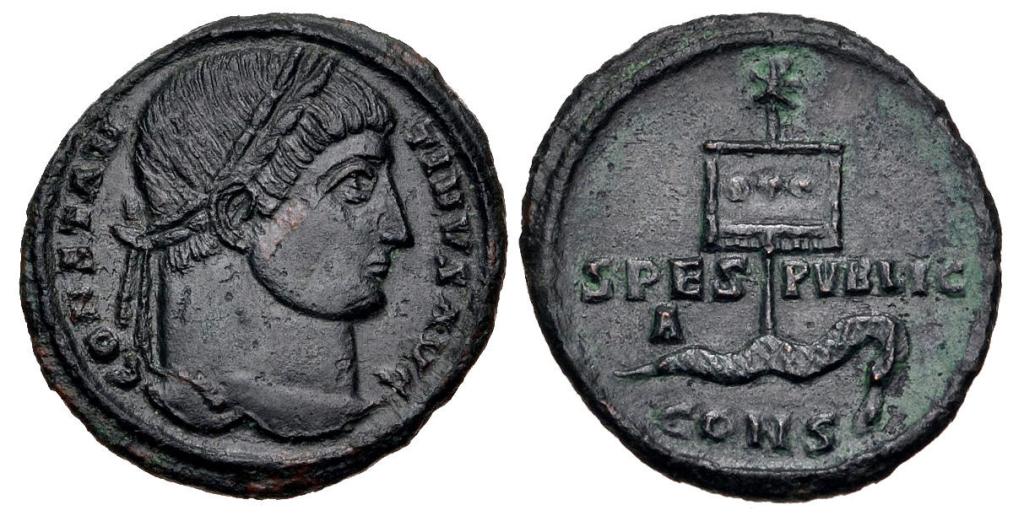
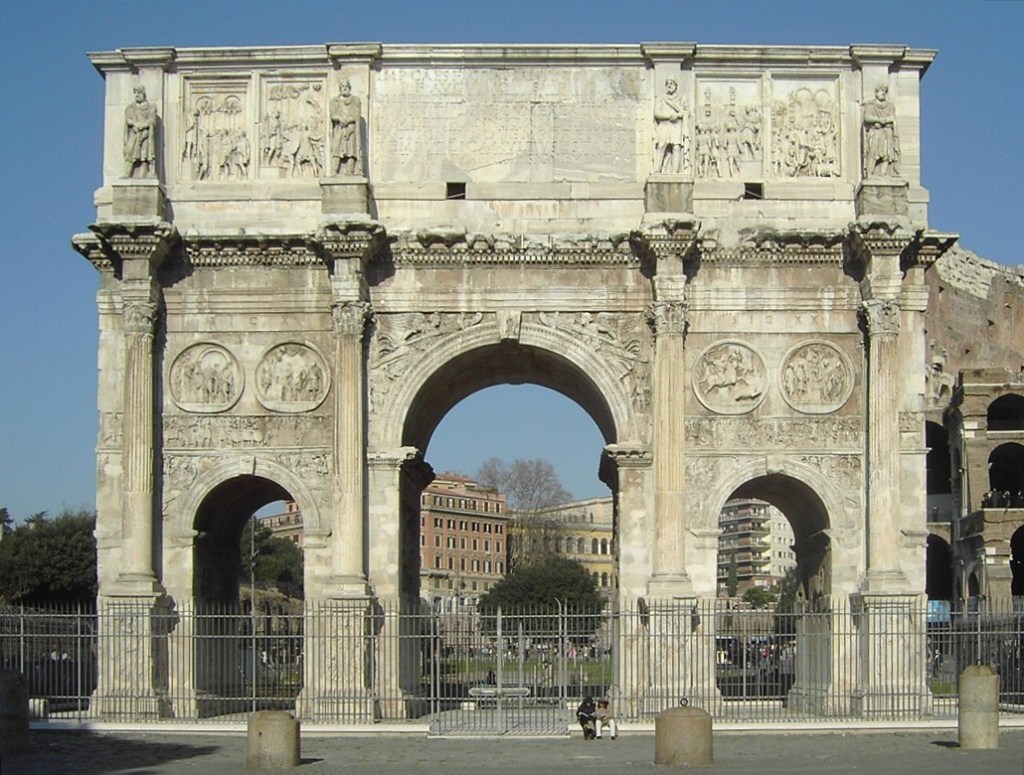
Constantine changed the church’s public position, but the decades after him show how complicated that change really was.
By the time Constantine died in 337 AD, Christianity was legal, favored, public, wealthy in new ways, and entangled with imperial power. Bishops could meet openly. Church buildings could be restored or built with imperial support. Christian disputes could reach the emperor’s court. The Council of Nicaea had confessed the Son as truly God. But Nicaea did not end the controversy. In many ways, it clarified the battlefield.
The question after Constantine was no longer simply whether Christianity would survive persecution.
The question was what emperors would do with the church once they claimed to favor it.
Some emperors defended Christianity. Some tried to control it. One rejected it and attempted a pagan revival. Some were personally Christian but doctrinally hostile to Nicaea. Some were restrained. Some were coercive. By the end of the century, Theodosius would make Nicene Christianity the official religious standard of the empire.
But the story does not end with the emperor standing over the church. It ends with an emperor being rebuked by a bishop and called to repentance.
The church gained imperial favor.
But the emperor entered the church.
And once inside, he came under the judgment of Christ.
The Creed Constantine Left Behind
Constantine ruled from 306 to 337 AD. This episode does not need to retell his whole story. His vision before the Milvian Bridge in 312, his patronage of the church, and his role at the Council of Nicaea in 325 deserve separate treatment. For this arc, what matters is what Constantine left behind.
He left a church that was no longer illegal.
He also left a creed.
At Nicaea in 325, the bishops confessed that the Son of God was not a creature, not a lesser divine being, and not external to the eternal life of God. The creed spoke with language meant to shut the door on Arius’s claim that the Son had a beginning.
“God from God, Light from Light, true God from true God.”
The Creed of Nicaea, 325 AD.
Then came the decisive confession:
“Begotten, not made, being of one substance with the Father.”
The Creed of Nicaea, 325 AD.
The phrase “of one substance” comes from the Greek word homoousios. It does not mean that the Father and the Son are the same person. It means the Son shares the same divine being as the Father. He is not made. He is not outside God. He is truly God from the Father eternally.
The creed also rejected Arian slogans directly.
“Those who say, ‘There was when He was not,’ and, ‘Before He was begotten He was not,’ and that He came into being from things that were not, the catholic and apostolic Church anathematizes.”
The Anathemas of Nicaea, 325 AD.
The word catholic here means the universal church confessing the apostolic faith. It is not a reference to later Roman Catholic versus Protestant categories. In this fourth-century setting, it means the whole church’s confession of the apostolic faith against teachings judged to be outside it.
Constantine wanted unity. But after his death in 337, the Nicene settlement did not immediately triumph. Instead, the empire entered decades of rival councils, exiled bishops, imperial pressure, theological formulas, and bitter conflict over the identity of Christ.
Nicaea gave the church a creed.
The emperors after Constantine tested whether that creed would survive imperial power.
Constantius II: A Christian Emperor Against the Nicene Cause
Constantius II was one of Constantine’s sons. He ruled from 337 to 361 AD, and after the death or defeat of his brothers and rivals, he became sole emperor from 353 to 361 AD.
He was not a pagan persecutor. He was a Christian emperor. That is why his reign is so important. Under Constantius, Nicene Christians learned that danger could come not only from rulers who hated Christianity, but also from rulers who claimed Christianity while resisting the Nicene confession of Christ.
Constantius favored anti-Nicene and non-Nicene formulas. The theological landscape was complicated. Not every opponent of Nicaea repeated Arius word for word. Some wanted to say that the Son was “like” the Father. Others wanted to avoid the word “substance” altogether. But Nicene bishops feared that these formulas weakened the confession that the Son is truly and eternally God.
Ammianus Marcellinus, a pagan historian writing around 390 AD, did not care about defending Nicene theology. His concern was that Constantius turned Christian doctrine into imperial chaos.
“The plain and simple religion of the Christians he confused by old-womanish superstition.”
Ammianus Marcellinus, Res Gestae, 21.16.18, c. 390 AD.
Ammianus says Constantius did not heal the disputes, but multiplied them.
“By subtle and involved discussions about dogma, rather than by seriously trying to make them agree, he aroused many controversies.”
Ammianus Marcellinus, Res Gestae, 21.16.18, c. 390 AD.
He also mocked the constant movement of bishops to councils under imperial sponsorship.
“Throngs of bishops hastened hither and thither on the public post-horses to the various synods, as they call them.”
Ammianus Marcellinus, Res Gestae, 21.16.18, c. 390 AD.
That outside witness matters. Ammianus was not asking which creed was true. He was watching the machinery of empire become tangled in Christian controversy. Bishops traveled at public expense. Councils multiplied. The emperor tried to pull church doctrine and church order toward his own will.
From the Nicene side, the problem was much deeper. Athanasius of Alexandria believed Constantius was not merely confused. He believed the emperor had become a persecutor of the truth.
Athanasius wrote History of the Arians around 358 AD, while the conflict was still alive. His language is severe because he believed the emperor had turned Christian power against Christ.
“Who, then, that has witnessed these things, can call him a Christian, and not rather the image of Antichrist?”
Athanasius, History of the Arians, 67, c. 358 AD.
That sentence should not be softened too quickly. Athanasius was not saying Constantius was a pagan. He was saying something more frightening. A man could be a Christian emperor, call councils, speak about unity, favor bishops, and still become an enemy of Christ if he used power against the truth.
This was the great crisis after Constantine.
The church had survived persecution from outside.
Now it had to survive coercion from inside a Christian empire.
Sirmium: When Imperial Theology Tried to Avoid Nicaea
One of the clearest examples of the pressure under Constantius came in 357 AD with the so-called Second Creed of Sirmium. Nicene writers later called it the “Blasphemy of Sirmium” because it tried to remove the language that protected the Nicene confession.
The creed objected to the terms “essence” and “substance,” including the Nicene word homoousios.
“There ought to be no mention of any of these at all, nor exposition of them in the Church.”
Second Creed of Sirmium, issued 357 AD, preserved in Athanasius, On the Councils, 28, c. 359 AD.
It gave a reason that sounded pious.
“For the reason and consideration that there is nothing written about them in the divine Scriptures.”
Second Creed of Sirmium, issued 357 AD, preserved in Athanasius, On the Councils, 28, c. 359 AD.
At first glance, that might sound like a return to biblical language. But Nicene defenders saw the danger. Arians and anti-Nicenes could use biblical words while changing their meaning. They could say Christ is Son, but mean a created son. They could say Christ is Word, but mean a made instrument. They could say Christ is God, but mean a subordinate divine being.
This is why the controversy was not a petty fight over a technical term. The dispute over one word, homoousios, was really a dispute over salvation.
If Christ is a creature, God himself has not come to save us.
If Christ is truly God, then in him the Creator has entered creation to redeem it.
Jerome later looked back on the confusion after the councils of Ariminum and Seleucia in 359 AD and summarized the crisis in one famous sentence.
“The whole world groaned and was astonished to find itself Arian.”
Jerome, Dialogue Against the Luciferians, 19, c. 379 AD.
Jerome’s sentence is rhetorical. It does not mean every Christian in the world carefully chose Arian theology. It means that imperial pressure and compromise formulas had made it seem, for a moment, as if the Nicene faith had been overwhelmed.
The emperor wanted unity.
The church had to ask whether unity without truth was faithfulness at all.
Athanasius Under Constantius: Flight and the Limits of Imperial Power
Athanasius had been bishop of Alexandria since 328 AD. By the time Constantius became sole emperor, Athanasius had already become the living symbol of Nicene resistance. His enemies understood that if they wanted to weaken Nicaea, they had to remove him from Alexandria.
In 356 AD, soldiers entered a church in Alexandria during a vigil. Athanasius later described the scene in his Apology to Constantius, written around 356 AD.
“He burst into the Church with his soldiers, while we were engaged in our usual services.”
Athanasius, Apologia ad Constantium, 25, c. 356 AD.
He says the attack came during worship.
“It was a vigil, preparatory to a communion on the morrow.”
Athanasius, Apologia ad Constantium, 25, c. 356 AD.
Athanasius escaped. His enemies mocked him for fleeing, but he answered in Apology for His Flight, written around 357 AD. He did not deny that he fled. He argued that flight from persecution could be biblical and faithful. Moses fled. David fled. Elijah fled. Paul escaped. Christ himself told his disciples to flee from one city to another when persecuted.
Then Athanasius turned the accusation back on his persecutors.
“For if it be a bad thing to flee, it is much worse to persecute.”
Athanasius, Apology for His Flight, 1, c. 357 AD.
He continued:
“Let them cease to conspire, and they who flee will forthwith cease to do so.”
Athanasius, Apology for His Flight, 1, c. 357 AD.
This is more than self-defense. Athanasius refused to let violent men define courage for their victims. He would not let persecutors demand that the faithful stand still so they could be destroyed.
Constantius could command armies. He could exile bishops. He could summon councils. He could pressure clergy.
But he could not make the Son of God a creature.
Julian: The Emperor Who Tried to Reverse the Christian Turn
Julian ruled as sole emperor from 361 to 363 AD. Christians later called him Julian the Apostate because he had been raised in a Christian imperial world, but rejected Christianity and turned to the old gods.
Julian was not merely nostalgic. He was a philosopher emperor. He understood that paganism could not defeat Christianity simply by reopening temples and restoring sacrifices. He wanted pagan religion to become morally disciplined, socially organized, intellectually serious, and publicly charitable.
Ammianus Marcellinus admired Julian in many ways. Writing around 390 AD, he says Julian openly revealed his pagan devotion once he became sole emperor.
“He made no secret of his attachment to the worship of the gods.”
Ammianus Marcellinus, Res Gestae, 22.5.1, c. 390 AD.
Julian restored sacrifices, reopened temples, honored pagan priests, and tried to rebuild the old cultic life of the empire. But his campaign against Christianity was subtler than the persecution of Diocletian. He did not simply want martyrs. He wanted Christianity weakened socially and culturally.
One of his strategies was to recall exiled Christian bishops. That might sound merciful, but Ammianus explains the motive. Julian knew Christians were divided, and he expected their quarrels to weaken them.
“No wild beasts are so hostile to mankind as are most of the Christians in their deadly hatred of one another.”
Ammianus Marcellinus, Res Gestae, 22.5.4, c. 390 AD.
That sentence is unfair as a total judgment on the church, but it exposes a real scandal. The decades after Nicaea had produced rival bishops, accusations, exiles, riots, and imperial pressure. Julian believed Christian division could do more damage to the church than pagan persecution.
Julian also understood Christian charity. In his Letter to Arsacius, written around 362 AD, he complained that Christianity had grown because Christians cared for strangers, the poor, and the dead.
“Their benevolence to strangers, their care for the graves of the dead, and the pretended holiness of their lives.”
Julian, Letter to Arsacius, c. 362 AD.
Then came his famous admission:
“The impious Galilaeans support not only their own poor but ours as well.”
Julian, Letter to Arsacius, c. 362 AD.
Julian called Christians “Galilaeans” because he wanted to make Christianity sound local and provincial rather than universal. He called Christianity “atheism” because Christians rejected the pagan gods. But his complaint is one of the strongest pagan testimonies to Christian mercy.
The church’s care for the poor had become so visible that an enemy of Christianity saw it as a threat.
Julian did not answer Christian charity by saying mercy was useless. He tried to make pagan priests imitate it. He wanted hostels, public generosity, moral discipline, and care for the needy.
Christian charity had become public apologetics.
Julian and Christian Education: A Cultural Strike
Julian also attacked Christian education. Classical education was built on authors like Homer, Hesiod, the tragedians, and the orators. Christian teachers often taught those texts while rejecting the gods honored in them. Julian argued that this was dishonest.
His Rescript on Christian Teachers, issued in 362 AD, begins with a serious claim about education.
“I hold that a proper education results, not in laboriously acquired symmetry of phrases and language, but in a healthy condition of mind.”
Julian, Rescript on Christian Teachers, issued 362 AD.
Then he attacks Christian teachers as hypocrites.
“When a man thinks one thing and teaches his pupils another, in my opinion he fails to educate exactly in proportion as he fails to be an honest man.”
Julian, Rescript on Christian Teachers, issued 362 AD.
If Christians rejected the gods of the classical authors, Julian said they should teach their own Scriptures instead.
“Let them betake themselves to the churches of the Galilaeans and expound Matthew and Luke.”
Julian, Rescript on Christian Teachers, issued 362 AD.
This was not martyrdom by sword. It was cultural exclusion. Julian understood that teachers shape the future. If Christians could be removed from elite education, their influence among the governing classes would be weakened.
Ammianus admired Julian, but even he thought this policy was cruel.
“But this one thing was inhumane, that he forbade teachers of rhetoric and literature to practise their profession, if they were followers of the Christian religion.”
Ammianus Marcellinus, Res Gestae, 22.10.7, c. 390 AD.
That pairing is important. Julian thought he was defending intellectual honesty. Ammianus, a pagan admirer of Julian, still judged the policy inhumane.
Julian’s reign was short. He died during a Persian campaign in 363 AD. His pagan revival collapsed quickly.
But he understood something many casual Christians did not.
Christianity had become more than a private belief. It had become a whole way of life, with doctrine, charity, schools, bishops, Scriptures, and public memory.
Jovian: A Brief Christian Reset
After Julian died in 363 AD, the army chose Jovian. He ruled only from 363 to 364 AD, so we should not overstate his importance. He did not have time to reshape the empire. But symbolically, he mattered.
Later Christian historians remembered Jovian as the emperor who restored Christian imperial identity after Julian’s pagan experiment. Theodoret wrote his Ecclesiastical History around 449 AD, long after the events, so his account should be read as Christian memory rather than a transcript. Still, it shows how Christians interpreted Jovian’s accession.
Theodoret says Jovian hesitated to accept the throne because he was Christian and did not want to command an army shaped by Julian.
“I am a Christian, and cannot command men such as these.”
Theodoret, Ecclesiastical History, 4.1, c. 449 AD, describing events of 363 AD.
According to Theodoret, the soldiers answered that they too were Christians.
“You shall command Christians.”
Theodoret, Ecclesiastical History, 4.1, c. 449 AD, describing events of 363 AD.
Socrates Scholasticus, writing around 439 AD, also presents Jovian as quickly showing Christian commitment.
“Jovian, who had been proclaimed emperor, immediately gave proof of his attachment to the Christian religion.”
Socrates Scholasticus, Ecclesiastical History, 3.22, c. 439 AD, describing events of 363 AD.
Jovian’s reign was too short to settle the Nicene controversy. But his accession marked the end of Julian’s pagan reversal.
After Jovian, the empire’s question was no longer whether paganism would permanently reclaim the throne.
The question was which kind of Christianity would shape imperial rule.
Valentinian I: Personal Christianity with Political Restraint
After Jovian’s death in 364 AD, Valentinian I became emperor. He appointed his brother Valens to rule the East, while Valentinian ruled the West from 364 to 375 AD.
Valentinian was Christian, but his religious policy was comparatively restrained. Ammianus Marcellinus, writing around 390 AD, praises him for not forcing his own religious convictions on his subjects.
“He troubled no one on account of religion.”
Ammianus Marcellinus, Res Gestae, 30.9.5, c. 390 AD.
Ammianus explains what that restraint looked like.
“He did not command that anyone should worship this or that.”
Ammianus Marcellinus, Res Gestae, 30.9.5, c. 390 AD.
And again:
“He did not bend the necks of his subjects to his own belief by threatening edicts.”
Ammianus Marcellinus, Res Gestae, 30.9.5, c. 390 AD.
This does not make Valentinian a modern secular ruler. He was a Christian emperor in a Christianizing empire. But compared with Constantius and Valens, he was less eager to settle doctrinal disputes by force.
His reign also brought Ambrose to the episcopate. Ambrose was not yet baptized when he was chosen bishop of Milan in 374 AD. He was a Roman official trying to calm a divided city after the death of the previous bishop. Milan was split between Nicene and anti-Nicene factions. Later tradition says the people suddenly cried out for Ambrose himself.
Paulinus of Milan wrote a Life of Ambrose around 422 AD. He preserves the famous cry:
“Ambrose is bishop.”
Paulinus of Milan, Life of Ambrose, 6, c. 422 AD, describing events of 374 AD.
The details of the crowd’s cry belong partly to Christian memory, especially the story that it began with a child. But the central event is historical. Ambrose moved with astonishing speed from imperial official to baptized Christian, then bishop.
Theodoret, writing around 449 AD, says Valentinian approved of Ambrose because rulers themselves needed bishops who could correct them.
“We who rule may sincerely bow our heads before him.”
Theodoret, Ecclesiastical History, 4.6, c. 449 AD, describing events of 374 AD.
That line matters for the arc of the century. Constantine had imagined the emperor as guardian of the church’s outward peace. Valentinian, at least in Christian memory, could imagine a bishop before whom rulers might bow their heads.
Valentinian’s personal Christianity did not become a campaign of constant religious coercion. His restraint stands out precisely because the fourth century gave many examples of the opposite.
He reminds us that a Christian emperor did not have to treat every theological dispute as a matter for imperial threats.
Valens: A Christian Emperor Against Nicene Christians
Valens, the brother of Valentinian I, ruled the East from 364 to 378 AD. He was Christian, but he favored anti-Nicene theology, especially the Homoian position.
The Homoians preferred to say that the Son was “like” the Father, while avoiding the Nicene language of essence or substance. To Nicene Christians, this was not a harmless compromise. The question was whether the Son is truly God. If Christ is not truly God, then Christian worship and salvation are damaged at the root.
Valens used imperial pressure against Nicene bishops. The most famous confrontation in Christian memory was with Basil of Caesarea.
Basil was bishop, theologian, monk, preacher, organizer of charity, and defender of Nicene faith. He was not fighting for a word because he loved controversy. He believed the church’s worship of Father, Son, and Holy Spirit required the full deity of the Son and the Spirit.
Basil’s own work On the Holy Spirit, written around 375 AD, shows how practical his Trinitarian theology was. He connects the Spirit directly to salvation and Christian living.
“Through the Holy Spirit comes our restoration to paradise, our ascent into the kingdom of heaven, our return to the adoption of sons.”
Basil of Caesarea, On the Holy Spirit, 15.36, c. 375 AD.
He continues:
“Our liberty to call God our Father, our being made partakers of the grace of Christ, our being called children of light.”
Basil of Caesarea, On the Holy Spirit, 15.36, c. 375 AD.
This was not abstract speculation. Basil believed Trinitarian doctrine described the actual salvation of Christians. The Father sends, the Son redeems, the Spirit sanctifies. If the Son or the Spirit is reduced to creaturely status, the Christian life itself is misunderstood.
Gregory of Nazianzus, Basil’s friend, preached his funeral oration for Basil around 381 AD. Gregory tells the famous story of Basil’s confrontation with the imperial prefect Modestus. The prefect threatened Basil with confiscation, exile, torture, and death. Basil replied that such threats had little power over a man who possessed almost nothing, saw the whole earth as God’s, had a frail body, and regarded death as the road to God.
Gregory summarizes Basil’s answer:
“Threaten boys with these things.”
Gregory of Nazianzus, Oration 43, 50, c. 381 AD.
When Modestus said no one had ever spoken to him like that, Basil answered:
“Perhaps you have never before met a bishop.”
Gregory of Nazianzus, Oration 43, 50, c. 381 AD.
Because Gregory was Basil’s friend and admirer, this should not be treated like a courtroom transcript. It is a funeral oration, shaped to honor Basil. But it preserves the meaning of the conflict. Imperial power could threaten a bishop, but it could not easily force a Basil to surrender the creed.
Theodoret, writing later around 449 AD, preserves another saying attributed to Basil.
“The emperor’s friendship I hold to be of great value if conjoined with true religion.”
Theodoret, Ecclesiastical History, 4.19, c. 449 AD, describing events under Valens.
Then Basil adds the warning:
“Otherwise I doom it for a deadly thing.”
Theodoret, Ecclesiastical History, 4.19, c. 449 AD, describing events under Valens.
This does not mean Basil despised rulers. He believed Christians should honor authority and seek peace. But imperial friendship becomes spiritually deadly when it requires betrayal of the faith.
Valens died at the Battle of Adrianople in 378 AD, a catastrophic defeat against the Goths. Later Christian writers often treated his death as judgment because of his opposition to Nicene Christians. We should be careful here. The military causes of Adrianople were complex. But in Christian memory, Valens became a warning.
A man could be Christian and still oppose the church’s confession of Christ.
That is one of the sober lessons of the fourth century.
Gratian: The West Turns Against the Old Public Religion
Gratian became Augustus in the West in 367 AD and ruled as senior western emperor after the death of Valentinian I in 375 AD. His reign helped move the empire further away from public support for pagan worship.
The old religion had not disappeared under Constantine. Temples remained. Pagan senators still held office. Traditional rites continued. The Roman Senate still included men deeply attached to ancestral religion.
By Gratian’s reign, the question had become sharper.
Could a Christian emperor continue publicly honoring the old gods?
The controversy over the Altar of Victory in the Roman Senate shows the change. The pagan senator Symmachus asked for the altar to be restored. His Relatio 3, written in 384 AD, is one of the most eloquent pagan pleas from the late fourth century.
Symmachus appealed to ancestral religion.
“We ask, then, for peace for the gods of our fathers.”
Symmachus, Relatio 3, 384 AD.
He reminded the emperor that all people share the same world.
“We gaze up at the same stars; the sky is common to all.”
Symmachus, Relatio 3, 384 AD.
Then came his most famous line:
“It is not by one path alone that men may arrive at so great a mystery.”
Symmachus, Relatio 3, 384 AD.
To modern readers, Symmachus can sound generous and tolerant. But Ambrose saw the matter differently. For Ambrose, a Christian emperor could not publicly fund or honor worship that Christians understood as idolatry. The issue was not whether pagans existed. The issue was whether a Christian ruler could support pagan worship with imperial authority.
Ambrose wrote against the restoration of pagan privileges in 384 AD.
“You have given your faith to God; keep your faith.”
Ambrose, Letter 17, 384 AD.
He also imagined what the church might say to an emperor who adorned pagan temples.
“The Church does not seek your gifts, because you have adorned the temples of the heathen with gifts.”
Ambrose, Letter 17, 384 AD.
This was another stage in the century’s transformation. Christians were no longer only asking for the freedom to worship. Christian bishops were now asking whether the empire could continue to honor the old gods at all.
Gratian’s reign did not erase paganism. Pagan aristocrats continued to argue. Old customs persisted. But the direction was clear.
The empire’s public religion was being judged by the claims of Christ.
Valentinian II: Ambrose and the Question of Church Buildings
Valentinian II became emperor as a child in 375 AD and ruled in the West until 392 AD. Because he was young, his court was heavily influenced by his mother Justina, who favored the anti-Nicene or Homoian party.
This led to a major confrontation with Ambrose in Milan in 386 AD. The imperial court pressured Ambrose to surrender a basilica for Homoian worship. This was not merely a property dispute. Church buildings represented worship, doctrine, and public authority. If the emperor could command a Nicene bishop to hand over a church for anti-Nicene worship, then imperial power could decide which confession occupied the sacred spaces of the city.
Ambrose refused.
In Letter 20, written in 386 AD, Ambrose acknowledged that the church paid taxes. He did not deny ordinary civil obligations.
“If he asks for tribute, we do not deny it. The lands of the Church pay tribute.”
Ambrose, Letter 20, 386 AD.
Then he drew the line:
“But the Church belongs to God, and therefore it ought not to be assigned to Caesar.”
Ambrose, Letter 20, 386 AD.
Ambrose compared the demanded basilica to Naboth’s vineyard. Naboth refused to surrender his inheritance to King Ahab. Ambrose saw the church as God’s inheritance, not imperial property.
“Naboth would not give up the vineyard of his fathers, and shall I give up the Church of Christ?”
Ambrose, Letter 20, 386 AD.
In the same crisis, Ambrose preached against Auxentius, the Homoian bishop supported by the court. His sermon, delivered in 386 AD, contains one of the most important principles in Christian political theology.
“The emperor is within the Church, not above the Church.”
Ambrose, Sermon Against Auxentius, 36, 386 AD.
This line must be explained carefully. Ambrose was not saying bishops should govern the empire. He was not saying civil authority is illegitimate. He was saying that a Christian emperor is not spiritually above the body of Christ. He is a member of the church, not its lord.
This conflict prepared the way for Ambrose’s later confrontation with Theodosius. Ambrose had already learned to say no to imperial pressure. He had already argued that sacred things do not belong to Caesar.
The emperor may rule the empire.
But he does not own the church.
Theodosius: A Nicene Emperor in a Divided East
Theodosius I came to power in the East in 379 AD, after Valens died at Adrianople in 378 AD. The empire was militarily shaken, and the eastern church was divided. Constantinople, the imperial city of the East, had long been dominated by anti-Nicene leadership.
Theodosius entered this world as a committed Nicene Christian. Ancient church historians connect his baptism directly with Nicene faith.
Socrates Scholasticus wrote his Ecclesiastical History around 439 AD. He says Theodosius became seriously ill at Thessalonica and desired baptism. Before receiving it, Theodosius asked Bishop Ascholius what doctrine he held.
“He inquired of the bishop what faith he held.”
Socrates Scholasticus, Ecclesiastical History, 5.6, c. 439 AD, describing events of 380 AD.
When he learned that Ascholius confessed the Nicene faith, Theodosius received baptism gladly.
“He was most gladly baptized by the bishop.”
Socrates Scholasticus, Ecclesiastical History, 5.6, c. 439 AD, describing events of 380 AD.
This matters. Theodosius did not merely identify as Christian in a broad cultural sense. He identified with the Nicene confession. His faith was doctrinally defined.
In 380 AD, Theodosius issued the law often called the Edict of Thessalonica. It was issued in the names of Theodosius, Gratian, and Valentinian II. This law went far beyond Constantine’s policy of toleration.
Constantine had legalized Christianity.
Theodosius defined true Christianity.
The law begins:
“It is our desire that all the various nations should continue to profess that religion.”
Theodosian Code, 16.1.2, issued February 27, 380 AD.
It identifies that religion with apostolic faith.
“Which was delivered to the Romans by the divine Apostle Peter.”
Theodosian Code, 16.1.2, issued February 27, 380 AD.
Then it defines the faith in Trinitarian terms.
“We shall believe in the single deity of the Father, the Son and the Holy Spirit.”
Theodosian Code, 16.1.2, issued February 27, 380 AD.
The law names those who follow this confession.
“We command that those persons who follow this rule shall embrace the name of Catholic Christians.”
Theodosian Code, 16.1.2, issued February 27, 380 AD.
Again, Catholic here means the universal orthodox church as defined by Nicene communion. It is not a reference to later Roman Catholic versus Protestant divisions.
The law then condemns dissenters with severe language.
“The rest, however, we adjudge demented and insane.”
Theodosian Code, 16.1.2, issued February 27, 380 AD.
This is one of the great turning points in church history. Christianity was no longer merely protected by imperial law. Nicene Christianity was now the official religious standard of the empire.
The empire that once tried to suppress Christians now commanded its peoples to confess the Trinity.
Theodosius in Constantinople: Nicene Christianity Takes the Churches
Theodosius did not leave Nicene policy on parchment. He acted on it in Constantinople.
For decades, the city’s major churches had been controlled by anti-Nicene clergy. Gregory of Nazianzus had come to the city to minister to a small Nicene community. His congregation met in a house church called Anastasia, meaning resurrection, because Nicene faith was being restored there.
When Theodosius entered Constantinople in 380 AD, he confronted Demophilus, the anti-Nicene bishop. Socrates Scholasticus, writing around 439 AD, says Theodosius asked whether Demophilus would accept the Nicene faith and live in unity. Demophilus refused.
Theodosius ordered him out.
“Since you reject peace and harmony, I order you to quit the churches.”
Socrates Scholasticus, Ecclesiastical History, 5.7, c. 439 AD, describing events of 380 AD.
That line shows Theodosius’s understanding of Christian public order. Peace meant Nicene unity. Those who rejected that unity would not control the churches.
To Nicene Christians, this was restoration. To those removed, it was imperial coercion. Both realities should be seen. The theology being restored was the theology that would become central to historic Christianity. But the restoration came through imperial command.
In 381 AD, the Council of Constantinople confirmed the Nicene faith and gave fuller language concerning the Holy Spirit.
“And in the Holy Spirit, the Lord and giver of life.”
The Creed of Constantinople, 381 AD.
Then the creed confesses the Spirit’s divine worship.
“Who with the Father and the Son together is worshiped and glorified.”
The Creed of Constantinople, 381 AD.
This was not a minor addition. Some Christians who rejected Arius still hesitated to confess the full divinity of the Holy Spirit. The creed places the Spirit with the Father and the Son in the worship of the church.
Gregory of Nazianzus, who preached his famous theological orations in Constantinople around 380 AD, pressed the point directly.
“What then? Is the Spirit God? Most certainly.”
Gregory of Nazianzus, Oration 31, 10, c. 380 AD.
Then he adds:
“Is He consubstantial? Yes, if He is God.”
Gregory of Nazianzus, Oration 31, 10, c. 380 AD.
This helps explain what Theodosius was enforcing. Nicene Christianity was not merely an anti-Arian slogan. It was the full confession of the one God in Father, Son, and Holy Spirit.
Theodosius did not invent this theology. Athanasius, Basil, Gregory of Nazianzus, Gregory of Nyssa, Hilary of Poitiers, and many others had defended and refined it through decades of controversy.
But Theodosius gave it imperial force.
The doctrine had been defended by bishops.
Now it was enforced by law.
Theodosius and Pagan Worship: The Old Public Religion Loses Protection
Theodosius also moved against traditional pagan worship more forcefully than Constantine had done. Paganism did not disappear in a moment. Temples remained. Local customs continued. Aristocratic pagans still wrote, argued, and served in public life. Rural practices persisted. Laws do not instantly transform a civilization.
But the direction of imperial policy changed sharply.
A law issued in 391 AD condemned sacrifice.
“No person shall pollute himself with sacrificial victims.”
Theodosian Code, 16.10.10, issued 391 AD.
Another law, issued in 392 AD, forbade sacrifice before images.
“No one shall sacrifice an innocent victim to senseless images.”
Theodosian Code, 16.10.12, issued 392 AD.
The same law also targeted private acts of household devotion.
“No person shall venerate with secret wickedness his lar with fire, his genius with wine, his penates with fragrant odors.”
Theodosian Code, 16.10.12, issued 392 AD.
This is a major reversal in Roman religious imagination. What older Romans had viewed as piety, Christian emperors increasingly described as pollution and idolatry.
The old gods no longer held the empire’s official loyalty. Public sacrifice, once central to Roman civic religion, was now condemned by Christian law.
This does not mean every pagan vanished or every temple closed overnight. Historical change is rarely that clean. But the legal and symbolic transformation was enormous.
Rome’s public religious center had moved.
The empire no longer asked how Christianity could be tolerated within Roman religion.
It asked how Roman religion could continue within a Christian empire.
Theodosius and Ambrose: The Emperor Must Repent
The most famous story about Theodosius is not only about doctrine. It is about repentance.
In 390 AD, a riot broke out in Thessalonica. In response, imperial forces massacred many inhabitants. Ancient sources differ on the details and the number killed, and later Christian memory shaped the event dramatically. But the moral center is clear. Theodosius bore responsibility for an act of imperial vengeance.
Ambrose, bishop of Milan, confronted him.
Here we need to distinguish evidence carefully. Ambrose’s own letter to Theodosius, written in 390 AD, is primary evidence from the bishop himself. Later, Theodoret gives a more dramatic narrative in which Ambrose stops Theodosius at the church door. Theodoret’s account may preserve the remembered meaning of a real confrontation, but Ambrose’s letter is the firmer witness.
Ambrose wrote as a pastor. He was not denying that Theodosius was emperor. He was denying that an emperor could approach the altar without repentance.
“Sin is not taken away but by tears and penitence.”
Ambrose, Letter 51, 390 AD.
Ambrose then made the Eucharistic issue plain.
“I dare not offer the sacrifice, if you intend to be present.”
Ambrose, Letter 51, 390 AD.
The word “sacrifice” here refers to the Eucharistic offering, not pagan sacrifice. Ambrose is speaking as a bishop responsible for the altar. Communion cannot be separated from repentance.
Theodoret, writing around 449 AD, gives the confrontation its dramatic form. He has Ambrose ask Theodosius how he could enter the church after shedding innocent blood.
“With what eyes will you look upon the temple of our common Lord?”
Theodoret, Ecclesiastical History, 5.17, c. 449 AD, describing events of 390 AD.
Then he presses the horror of bloodguilt.
“How will you stretch forth your hands still dripping with the blood of unjust slaughter?”
Theodoret, Ecclesiastical History, 5.17, c. 449 AD, describing events of 390 AD.
According to Theodoret, Theodosius accepted rebuke and did public penance. Whether every detail happened exactly as Theodoret narrates it, the theological meaning is powerful. The emperor who enforced Nicene Christianity had to submit to Christian discipline.
Theodoret also preserves a later moment in which Theodosius tried to enter the sanctuary area reserved for clergy. Ambrose corrected him.
“The purple makes emperors, but not priests.”
Theodoret, Ecclesiastical History, 5.18, c. 449 AD, describing events under Theodosius.
This line is important because it does not deny imperial authority. It defines its limit. The emperor remains emperor, but his imperial dignity does not make him a priest.
Ambrose’s principle from the earlier basilica conflict explains the meaning of this moment.
“The emperor is within the Church, not above the Church.”
Ambrose, Sermon Against Auxentius, 36, 386 AD.
This does not mean bishops should govern the empire. It does not mean civil authority is illegitimate. It means that a Christian ruler is not spiritually above the body of Christ. He is a member of the church, accountable to God, subject to repentance, and answerable to the gospel he claims to defend.
Theodosius could legislate against heresy.
Ambrose reminded him that he could not legislate away sin.
The Personal Faith of Theodosius
Theodosius is often remembered as the emperor who made Nicene Christianity imperial law. That is true, but it is not the whole story. The sources also present him as a ruler whose public policy was tied to personal religious commitment.
Theodosius came to power in the East in 379 AD, after Valens died at Adrianople in 378 AD. The empire was militarily shaken, and the eastern church was divided. Constantinople had long been dominated by anti-Nicene leadership. Theodosius entered that world not as a vague Christian ruler, but as a Nicene Christian emperor.
Socrates Scholasticus, writing around 439 AD, says that Theodosius became seriously ill at Thessalonica around 380 AD and desired baptism. Before receiving it, he asked Bishop Ascholius what doctrine he held.
“He inquired of the bishop what faith he held.”
Socrates Scholasticus, Ecclesiastical History, 5.6, c. 439 AD, describing events of 380 AD.
When Theodosius learned that Ascholius confessed the Nicene faith, he received baptism gladly.
“He was most gladly baptized by the bishop.”
Socrates Scholasticus, Ecclesiastical History, 5.6, c. 439 AD, describing events of 380 AD.
This detail matters. Theodosius was not merely using Christianity as a convenient public language. At least in the way the church historians remembered him, his imperial identity was joined to a specific confession of the Trinity. He was baptized into the Nicene faith, and he governed as an emperor who believed that faith should define the public religion of the empire.
That same year, 380 AD, the law often called the Edict of Thessalonica declared Nicene Christianity to be the official religious standard of the empire.
“It is our desire that all the various nations should continue to profess that religion.”
Theodosian Code, 16.1.2, issued February 27, 380 AD.
The law identified that religion with apostolic faith.
“Which was delivered to the Romans by the divine Apostle Peter.”
Theodosian Code, 16.1.2, issued February 27, 380 AD.
Then it defined the faith in Trinitarian terms.
“We shall believe in the single deity of the Father, the Son and the Holy Spirit.”
Theodosian Code, 16.1.2, issued February 27, 380 AD.
The law named those who followed this confession as Catholic Christians.
“We command that those persons who follow this rule shall embrace the name of Catholic Christians.”
Theodosian Code, 16.1.2, issued February 27, 380 AD.
The word Catholic here means the universal orthodox church as defined by Nicene communion. It is not a reference to later Roman Catholic versus Protestant divisions. In this fourth-century setting, it means the church confessing the apostolic and Nicene faith against teachings judged to be outside it.
The law also condemned dissenters with severe language.
“The rest, however, we adjudge demented and insane.”
Theodosian Code, 16.1.2, issued February 27, 380 AD.
This was a massive change from Constantine’s day. Constantine had legalized Christianity and favored the church. Theodosius defined true Christianity by law. His personal faith was not merely private devotion. It became imperial policy.
But Theodosius’s personal faith also meant that he could not stand outside the moral demands of the church. He was not only the emperor who enforced Nicene Christianity. He was also a baptized Christian who could be corrected, disciplined, and called to repentance.
That became clear after the massacre at Thessalonica in 390 AD. Ambrose of Milan wrote to Theodosius not as a political revolutionary, but as a bishop to a Christian emperor whose soul was in danger.
“Sin is not taken away but by tears and penitence.”
Ambrose, Letter 51, 390 AD.
Ambrose also made clear that Theodosius could not approach the Eucharist as though bloodguilt did not matter.
“I dare not offer the sacrifice, if you intend to be present.”
Ambrose, Letter 51, 390 AD.
The word “sacrifice” here refers to the Eucharistic offering, not pagan sacrifice. Ambrose was speaking as a bishop responsible for the altar. Communion could not be separated from repentance.
Later, Theodoret gives the scene in a more dramatic form. Writing around 449 AD, he says Ambrose confronted Theodosius with the horror of what had happened.
“With what eyes will you look upon the temple of our common Lord?”
Theodoret, Ecclesiastical History, 5.17, c. 449 AD, describing events of 390 AD.
Then he has Ambrose press the emperor’s bloodguilt.
“How will you stretch forth your hands still dripping with the blood of unjust slaughter?”
Theodoret, Ecclesiastical History, 5.17, c. 449 AD, describing events of 390 AD.
Theodoret’s account is later Christian memory, not a transcript. Ambrose’s own letter is the firmer evidence. But both witnesses point to the same theological meaning. The emperor who made Nicene Christianity imperial law still had to repent like every other Christian.
Theodosius’s faith was imperial, doctrinal, and public.
But it was also personal enough that he could be judged by the gospel he claimed to defend.
Conclusion: The Humbling of Rome Before Christ
The arc from Constantius to Theodosius is not a simple story of darkness giving way to light. It is a story of tests.
Constantius II ruled from 337 to 361 AD. He showed that a Christian emperor could become dangerous when he tried to manage doctrine through force. He wanted unity, but his pressure wounded the Nicene cause. Athanasius, writing around 358 AD, believed Constantius had turned Christian power against Christ.
“Who, then, that has witnessed these things, can call him a Christian, and not rather the image of Antichrist?”
Athanasius, History of the Arians, 67, c. 358 AD.
That line is severe, but it captures the new post-Constantinian danger. The church had survived persecution from pagan rulers. Now it had to survive pressure from Christian rulers who wanted to bend the church toward imperial unity.
Julian ruled from 361 to 363 AD. He tried to reverse the Christian turn. He restored pagan worship, reopened temples, attacked Christian education, and tried to exploit Christian division. Ammianus Marcellinus, a pagan historian writing around 390 AD, says Julian recalled exiled bishops partly because he expected Christians to fight one another.
“No wild beasts are so hostile to mankind as are most of the Christians in their deadly hatred of one another.”
Ammianus Marcellinus, Res Gestae, 22.5.4, c. 390 AD.
Julian also saw something else. Christianity had become powerful not only through imperial favor, but through mercy. In his Letter to Arsacius, written around 362 AD, Julian complained that Christians supported both their own poor and pagan poor.
“The impious Galilaeans support not only their own poor but ours as well.”
Julian, Letter to Arsacius, c. 362 AD.
That is one of the strongest pagan testimonies to Christian charity in the fourth century. Julian hated Christianity, but he could not ignore the public force of Christian mercy.
Jovian ruled only from 363 to 364 AD. His reign was brief, but it marked the failure of Julian’s pagan reversal. Later Christian historians remembered him as the emperor who restored Christian imperial identity after Julian’s death.
Valentinian I ruled in the West from 364 to 375 AD. He was Christian, but he was comparatively restrained in religious policy. Ammianus praised him because he did not force his subjects into his own belief.
“He did not bend the necks of his subjects to his own belief by threatening edicts.”
Ammianus Marcellinus, Res Gestae, 30.9.5, c. 390 AD.
Valens ruled in the East from 364 to 378 AD. He was also Christian, but he favored anti-Nicene theology and pressured Nicene bishops. In Christian memory, his conflict with Basil of Caesarea became one of the great examples of a bishop resisting imperial pressure. Theodoret, writing around 449 AD, preserves Basil’s warning about imperial friendship.
“The emperor’s friendship I hold to be of great value if conjoined with true religion.”
Theodoret, Ecclesiastical History, 4.19, c. 449 AD, describing events under Valens.
Then comes the warning:
“Otherwise I doom it for a deadly thing.”
Theodoret, Ecclesiastical History, 4.19, c. 449 AD, describing events under Valens.
Basil was not despising rulers. He was saying that imperial favor becomes spiritually deadly when it requires the betrayal of the faith.
Gratian ruled as western emperor from 367 to 383 AD. His reign helped move the West away from public support for pagan worship. By his time, Christian bishops were no longer merely asking whether Christians could worship freely. They were asking whether a Christian emperor could continue publicly honoring the old gods.
Symmachus, writing in 384 AD, pleaded for Rome’s ancestral religious customs.
“It is not by one path alone that men may arrive at so great a mystery.”
Symmachus, Relatio 3, 384 AD.
Ambrose answered from the other side. For him, a Christian emperor could not fund or honor worship that Christians understood as idolatry.
“You have given your faith to God; keep your faith.”
Ambrose, Letter 17, 384 AD.
Valentinian II ruled from 375 to 392 AD. His conflict with Ambrose in 386 AD showed that even a Christian emperor could become a threat when imperial power demanded sacred space for anti-Nicene worship. Ambrose refused to surrender a basilica for Homoian use.
“The Church belongs to God, and therefore it ought not to be assigned to Caesar.”
Ambrose, Letter 20, 386 AD.
In the same crisis, Ambrose stated one of the most important principles in Christian political theology.
“The emperor is within the Church, not above the Church.”
Ambrose, Sermon Against Auxentius, 36, 386 AD.
That sentence does not mean bishops should govern the empire. It does not mean civil authority is illegitimate. It means that a Christian emperor is not spiritually above the body of Christ. He is a member of the church, not its lord.
Then came Theodosius. He ruled from 379 to 395 AD. He completed the legal transformation. Nicene Christianity became the official religious standard of the empire. Anti-Nicene bishops lost churches. The Council of Constantinople in 381 AD confirmed the full Trinitarian confession. Pagan sacrifice was increasingly restricted by law.
A law issued in 392 AD forbade sacrifice before images.
“No one shall sacrifice an innocent victim to senseless images.”
Theodosian Code, 16.10.12, issued 392 AD.
The same law targeted private acts of household devotion.
“No person shall venerate with secret wickedness his lar with fire, his genius with wine, his penates with fragrant odors.”
Theodosian Code, 16.10.12, issued 392 AD.
The old public religion of Rome had lost imperial protection. Nicene Christianity now stood at the center of the empire’s official religious identity.
But the fourth-century story does not end with law.
It ends at the altar.
Theodosius could legislate against heresy, but Ambrose reminded him that he could not legislate away sin. He could defend the Nicene faith, but he still had to repent after Thessalonica. He could command armies, remove bishops, and issue religious laws, but he could not approach the Eucharist as a man above accountability.
That is why this century should not be treated as a simple triumph story or a simple corruption story. Imperial favor brought real gifts. Christians could worship openly. Bishops could gather in councils. Doctrine could be clarified. The Nicene confession could be defended in public. The full Trinitarian faith of Father, Son, and Holy Spirit became the public confession of the empire.
But imperial favor also brought danger. Emperors could pressure bishops. Councils could be manipulated. Exile could become a tool of doctrine. Christian rulers could confuse unity with truth. Orthodoxy could be defended by law, but law could never replace repentance, holiness, or faith.
That is the lesson of the emperors after Constantine.
The church gained protection, but it also gained temptation.
The emperor gained Christian identity, but he also gained accountability.
By the end of the fourth century, the Roman emperor was no longer outside the church looking in. He was inside the church, under the same Christ, judged by the same gospel, and called to the same repentance as every other Christian.
That is the arc from Constantius to Theodosius.
Not simply the Christianization of Rome.
The humbling of Rome before Christ.