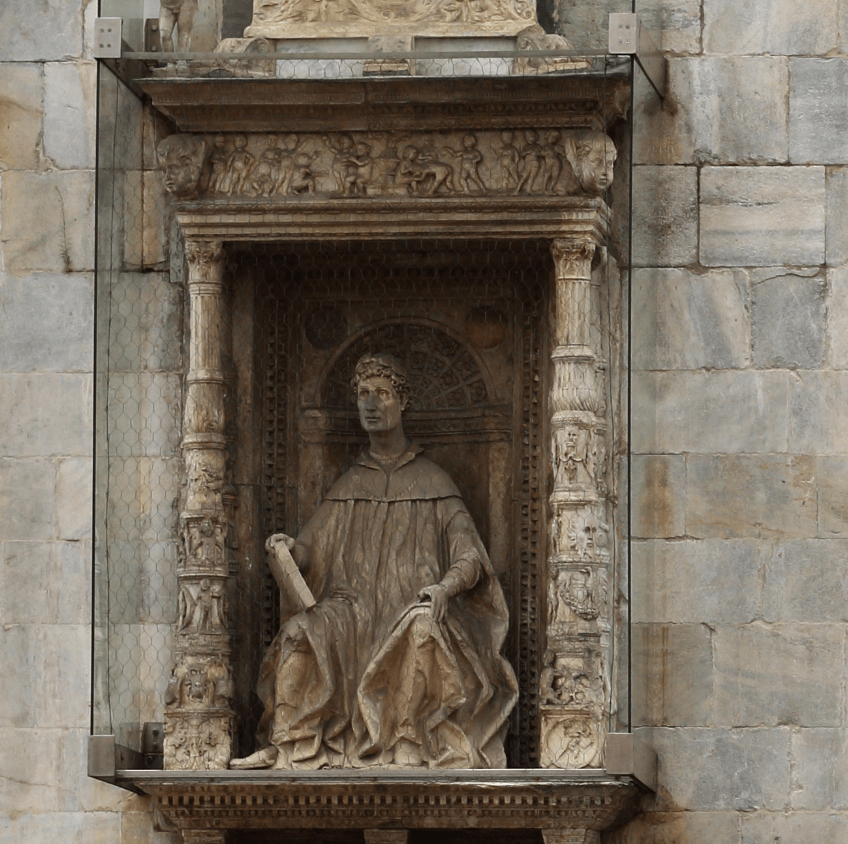
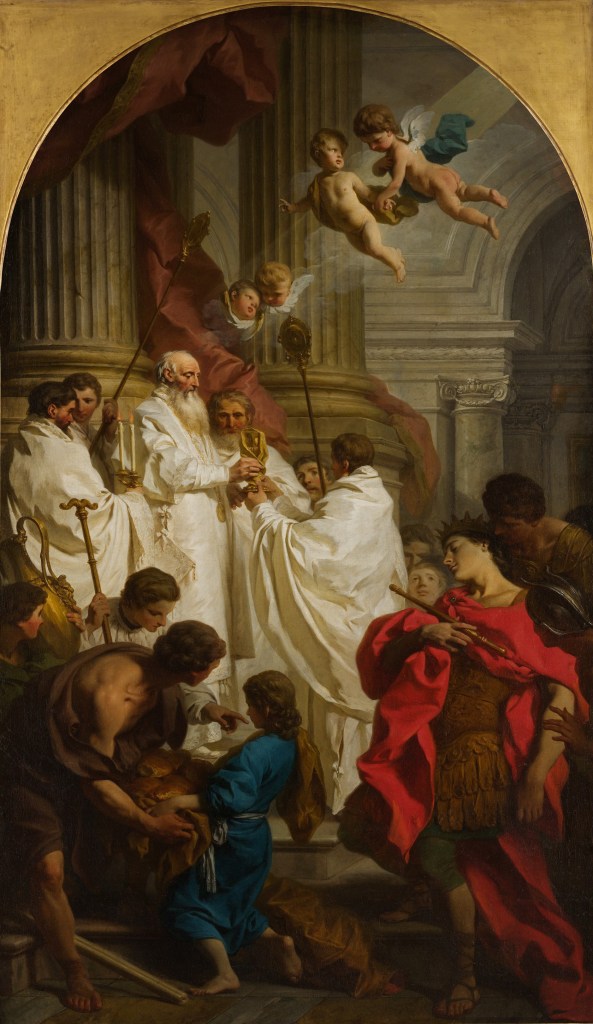
John Chrysostom was one of the greatest preachers in Christian history. He was a child of Antioch, a student of rhetoric, a son shaped by widowhood, a young man drawn away from law courts and theater, a priest who calmed a terrified city, a bishop who challenged imperial luxury, and an exile who kept writing after the empire took away his pulpit.
His words defended the poor. His words comforted the grieving. His words challenged the powerful. His words reshaped church budgets, embarrassed wealthy households, drew crowds into night prayers, and made imperial politics answer to Christian mercy.
Chrysostom means Golden Mouth. His life shows what can happen when a preacher believes words are not decoration, but medicine, warning, and public judgment.
The Boy from Antioch
John did not step into history as a fully formed saint. He began as a boy in Antioch, one of the great cities of the eastern Roman Empire. Antioch was crowded, wealthy, theatrical, religiously divided, and full of ambition. Its streets carried the sounds of merchants, lawyers, teachers, beggars, monks, soldiers, and preachers. It was a city where public speech mattered.
John came from a family of standing. He was not born poor. He was not born obscure. Ancient historians describe him as the son of Secundus and Anthusa, with access to the kind of education that could have led him into the courts, politics, or public honor.
“John was from Antioch in Coele Syria, the son of Secundus and Anthusa, from a noble family. He studied rhetoric with Libanius the sophist and philosophy with Andragathius.”
Socrates Scholasticus, Ecclesiastical History, Book VI, chapter 3, c. 439 AD.
Palladius, who wrote one of the earliest accounts of John’s life, adds that John’s father held military rank and that John had an older sister.
“John was from Antioch, the child of honorable parents. His father held military command in Syria, and his only sibling was an older sister.”
Palladius, Dialogue on the Life of John Chrysostom, chapter 5, c. 408 to 409 AD.
The picture is vivid: a respected household in Antioch, a father connected to imperial service, a mother left to hold the family together, and a son whose gifts were obvious early.
But John’s father died when John was still very young. The most moving testimony comes from John himself in On the Priesthood, where he remembers his mother Anthusa pleading with him not to abandon her for the ascetic life.
“My child, heaven did not will that I should long enjoy your father’s goodness.”
John Chrysostom, On the Priesthood, Book I, §5, c. 386 to 391 AD.
Then she names the wound that shaped their household.
“His death came soon after the pains I suffered giving birth to you, leaving you an orphan and me a widow before my time.”
John Chrysostom, On the Priesthood, Book I, §5, c. 386 to 391 AD.
Before John was the Golden Mouth, he was the child of a grieving mother. Anthusa refused remarriage, preserved the household, and poured herself into her son’s future.
“None of these things drove me into a second marriage or made me bring another husband into your father’s house.”
John Chrysostom, On the Priesthood, Book I, §5, c. 386 to 391 AD.
She also reminds him that she kept his inheritance intact and spent what was needed for his education.
“I kept your inheritance whole, and I spared no expense needed to give you an honorable position.”
John Chrysostom, On the Priesthood, Book I, §5, c. 386 to 391 AD.
This is the human beginning of Chrysostom’s story. A widow protects a household. A gifted son receives elite training. The city waits with all its temptations. The church waits too.
Anthusa and the Cost of Renunciation
When John later wanted to leave home for the ascetic life, Anthusa stopped him with grief. She did not argue theology first. She spoke as a mother who had already buried a husband and did not want to lose her son while still alive.
“In return for all these benefits, I ask one favor: do not plunge me into a second widowhood. Do not revive the grief that has now been laid to rest.”
John Chrysostom, On the Priesthood, Book I, §5, c. 386 to 391 AD.
That line belongs near the beginning of any honest Chrysostom story. It keeps him human.
The young John was not simply choosing between holiness and worldliness in the abstract. He was choosing while his mother sat beside him, reminding him of birth, death, sacrifice, loneliness, and obligation.
Anthusa even tells him that if she were dragging him into worldly business, he would have a reason to flee. But she insists that she is doing the opposite. She is giving him freedom to pursue the spiritual life while asking him not to abandon her.
“If I drag you into worldly cares and force you to handle business, then do not let natural affection, upbringing, or custom restrain you. Flee from me as from an enemy.”
John Chrysostom, On the Priesthood, Book I, §5, c. 386 to 391 AD.
Then she gives him the condition.
“But if I do everything to give you leisure for your journey through life, let this bond at least keep you beside me.”
John Chrysostom, On the Priesthood, Book I, §5, c. 386 to 391 AD.
This answers one of the hardest questions modern readers have about early monasticism: how did Christian leaders justify leaving responsibility to their own families in order to become monks?
The answer was not supposed to be, “My family no longer matters.” It was supposed to be, “God comes first, and because God comes first, family must be cared for rightly, not used as an excuse against obedience.”
John’s own story shows that family obligation mattered. His mother’s grief mattered. He did not treat her as disposable. The pull of monastic renunciation had to be weighed against the duty owed to the woman who had raised him.
Other Christian leaders made the same point by presenting renunciation as something that required provision, not neglect. Athanasius tells the story of Antony, the famous Egyptian monk. Antony hears the Gospel command to sell everything and follow Christ. But he does not simply abandon his younger sister. First, he arranges matters for her.
“Antony gave the ancestral property to the villagers, so that it would no longer burden him or his sister.”
Athanasius of Alexandria, Life of Antony, §2, c. 356 to 362 AD.
Then Antony sells the remaining goods and gives them away, while still keeping something for his sister’s care.
“He sold the remaining goods, gathered a large sum of money, and gave it to the poor, keeping only a little for his sister.”
Athanasius of Alexandria, Life of Antony, §2, c. 356 to 362 AD.
Only after that does Antony enter the ascetic life.
“After entrusting his sister to known and faithful virgins, he devoted himself outside his house to discipline.”
Athanasius of Alexandria, Life of Antony, §3, c. 356 to 362 AD.
So early Christian renunciation was not meant to be selfish escape. At its best, it tried to put earthly family under God without pretending earthly family was worthless.
John’s own mother forced him to face that tension before he ever became famous.
Education, Law, Theater, and the World of Performance
John’s education placed him under Libanius, one of the most famous pagan rhetoricians of late antiquity. This matters because Chrysostom’s preaching was not merely sincere. It was trained. He knew how to construct an argument, sharpen an image, pace a sentence, and make a crowd feel the weight of a moral choice.
Sozomen preserves the famous line attributed to Libanius. When Libanius was asked who should succeed him, he supposedly answered that it would have been John, if Christianity had not claimed him.
“It would have been John, if the Christians had not taken him from us.”
Sozomen, Ecclesiastical History, Book VIII, chapter 2, c. 440 to 450 AD.
That sentence is almost cinematic. Picture the aging pagan master looking at the Christian church and seeing, in John, a student who might have inherited his own rhetorical world.
Sozomen says John’s natural ability was cultivated by elite study.
“His natural gifts were excellent, and he improved them by studying under the best teachers.”
Sozomen, Ecclesiastical History, Book VIII, chapter 2, c. 440 to 450 AD.
This also answers a question that modern readers often miss: why would a career in law be connected to the theater?
Because in John’s world, law was not only paperwork. A legal career was a rhetorical career. The courtroom was a public stage for persuasion, status, reputation, and applause. The theater was another public stage, one devoted openly to spectacle and pleasure. Chrysostom groups them together because both belonged to the same urban world of display.
John himself describes his younger life in exactly those terms.
“It was impossible for a man who haunted the law courts and was excited by the pleasures of the stage to spend much time with someone fastened to his books and never entering the marketplace.”
John Chrysostom, On the Priesthood, Book I, §4, c. 386 to 391 AD.
That is John before the halo: educated, restless, ambitious, familiar with courts, drawn to theater, and not yet fully given to ascetic life.
The preacher who later warned Christians against spectacle had once felt the pull of spectacle himself.
How Did John Convert?
The sources do not give us an Augustine-style conversion scene. There is no garden, no child’s voice, no single dramatic moment where John turns from public ambition to Christ. What we have is quieter and probably more realistic.
John seems to have been raised near Christian life, then became decisively serious as a young adult. His conversion was not so much a sudden change of religion as a gradual reorientation of desire. He turned away from courts, theater, ambition, and public vanity. He turned toward Scripture, church, baptism, ascetic discipline, and pastoral vocation.
Socrates says John was preparing for legal life, but recoiled from what he saw in the courts.
“When he was about to enter the practice of civil law, he considered the restless and unjust life of those who devote themselves to the courts, and he turned toward a quieter way of life.”
Socrates Scholasticus, Ecclesiastical History, Book VI, chapter 3, c. 439 AD.
Then comes the decisive turn.
“He set aside the lawyer’s cloak, gave his mind to the reading of the sacred Scriptures, and attended church constantly.”
Socrates Scholasticus, Ecclesiastical History, Book VI, chapter 3, c. 439 AD.
That is the closest thing the early narratives give us to a conversion scene. He lays aside the legal habit. He reads Scripture. He frequents the church.
John himself describes this inward shift as an emergence from worldliness. In On the Priesthood, he remembers his close friend Basil, who was moving toward ascetic seriousness faster than John was.
“When it became our duty to pursue the blessed life of monks and the true philosophy, our balance was no longer even.”
John Chrysostom, On the Priesthood, Book I, §3, c. 386 to 391 AD.
John admits that Basil rose higher while he himself remained weighed down.
“His scale rose high, while I, still tangled in the desires of this world, dragged mine down and kept it low.”
John Chrysostom, On the Priesthood, Book I, §3, c. 386 to 391 AD.
Then comes one of the best autobiographical lines in all of Chrysostom’s writing.
“When I began to emerge a little from the flood of worldliness, he received me with open arms.”
John Chrysostom, On the Priesthood, Book I, §3, c. 386 to 391 AD.
That is John’s conversion in his own language: he began to emerge from “the flood of worldliness.”
Why Was John Baptized So Late?
This is important for modern readers. If John was raised in a Christian household, why was he not baptized as a baby?
The short answer is that fourth-century baptismal practice was not identical to what many later Christians expect. Infant baptism existed. Chrysostom himself knew and defended it.
“This is why we baptize infants too, even though they have no personal sins: so that they may receive sanctification, righteousness, adoption, inheritance, and become brothers and members of Christ.”
John Chrysostom, Baptismal Instruction 3, §6, c. 388 to 390 AD.
So John’s late baptism was not because the church knew nothing of infant baptism. It was because many Christian families in his world still delayed baptism until a person was older, trained, and ready to make the baptismal renunciations personally. Baptism was treated as a tremendous gift, but also as a frighteningly serious commitment.
Other major Christian voices from the same broad period show the same tension. Gregory of Nazianzus supported baptizing infants in danger, but when no danger was present he could recommend waiting until the child was old enough to understand something of the rite.
“Do you have an infant child? Do not let evil get its chance. Let the child be sanctified from infancy and consecrated to the Spirit from the earliest age.”
Gregory of Nazianzus, Oration 40 on Holy Baptism, §17, c. 381 AD.
But Gregory also shows why some waited.
“For other children, I give my opinion that they should wait until they are about three years old, when they can hear and answer something about the mystery.”
Gregory of Nazianzus, Oration 40 on Holy Baptism, §28, c. 381 AD.
Chrysostom later preached to adults preparing for baptism. These catechumens were not necessarily outsiders hearing Christianity for the first time. They were often people already in the orbit of the church, waiting for initiation at the proper season.
“Our fathers passed by the whole year and appointed this season for the children of the Church to be initiated.”
John Chrysostom, Instructions to Catechumens, First Instruction, §2, c. 388 to 397 AD.
Baptism was commonly associated with the great festal seasons, especially Easter. The candidates were instructed, exorcised, stripped of old clothing, and prepared to renounce Satan and enter the new life.
But there was another reason for delay, and it is harder for modern readers to understand. Many Christians feared sin after baptism. Baptism washed away past sins, but what if someone returned to serious sin afterward? Some delayed baptism because they treated it almost like a final cleansing to be saved until late in life.
Chrysostom hated that deathbed delay. He compares the joy of those who receive baptism awake, prepared, and in church with the misery of those who wait until they are sick and barely conscious.
“They receive it on their bed, but you receive it in the bosom of the Church. They receive it with lamentation and weeping, but you with joy and gladness.”
John Chrysostom, Instructions to Catechumens, First Instruction, §1, c. 388 to 397 AD.
He paints the sickbed scene almost like a dark room in a house of mourning. The family weeps. The patient is feverish. The priest’s arrival, which should mean eternal life, is treated as a sign that death has come.
“The entrance of the priest is thought to be a greater reason for despair than the doctor’s voice saying the patient will die.”
John Chrysostom, Instructions to Catechumens, First Instruction, §1, c. 388 to 397 AD.
Then Chrysostom asks what good baptism can do if the person is too far gone to understand the covenant being made.
“If he cannot recognize those present, or hear their voices, or answer the words by which he makes the blessed covenant with our common Master, what profit is there in initiation when he lies there like a corpse?”
John Chrysostom, Instructions to Catechumens, First Instruction, §1, c. 388 to 397 AD.
For Chrysostom, baptism should not be postponed until panic. The person coming to baptism should be conscious, morally alert, and ready.
“The one who approaches these holy and awesome mysteries must be awake and alert, free from the cares of this life, full of self-control and readiness.”
John Chrysostom, Instructions to Catechumens, First Instruction, §2, c. 388 to 397 AD.
At the same time, Chrysostom also warns against casual baptism. If a person is not willing to change, baptism should not be treated like a ritual shortcut.
“If anyone has not corrected the defects in his character or equipped himself with virtue, let him not be baptized.”
John Chrysostom, Instructions to Catechumens, Second Instruction, §2, c. 388 to 397 AD.
Then he explains why.
“The washing can remove former sins, but there is great fear and no small danger that we return to them and make the remedy into a wound.”
John Chrysostom, Instructions to Catechumens, Second Instruction, §2, c. 388 to 397 AD.
So why was John baptized late? Not because baptism was unimportant, but because it was treated as dangerously important.
His late baptism fits a fourth-century world in which a Christian home could raise a child inside the orbit of the church, while still waiting for a mature, public, sacramental commitment. The delay looks strange to modern eyes, but it made sense in a culture where baptism was seen as a decisive passage into a stricter life.
Palladius places John under the influence of Bishop Meletius of Antioch, who noticed his gifts and kept him close.
“Meletius, who ruled the church of Antioch, noticed the bright young man. He was drawn by the beauty of his character and kept him continually in his company.”
Palladius, Dialogue on the Life of John Chrysostom, chapter 5, c. 408 to 409 AD.
Then Palladius describes John’s baptism.
“He was admitted to the mystery of the washing of regeneration.”
Palladius, Dialogue on the Life of John Chrysostom, chapter 5, c. 408 to 409 AD.
The phrase “washing of regeneration” means baptism. John’s seriousness became sacramental. He did not merely admire Christian teaching. He entered the church’s life.
After that, he served as reader.
“After three years of attendance on the bishop, he advanced to become a reader.”
Palladius, Dialogue on the Life of John Chrysostom, chapter 5, c. 408 to 409 AD.
Before John became the preacher of Scripture, he became a reader of Scripture. Before he spoke the Bible to crowds, he stood inside the church’s discipline of hearing, reading, and serving the Word.
The Mountains, the Cave, and the Body That Broke
John’s conversion did not stop at church attendance. He was drawn to ascetic discipline. His conscience would not let him remain satisfied with ordinary city life.
Palladius says John turned toward the mountains outside Antioch.
“Because his conscience would not let him be satisfied with work in the city, he turned to the nearby mountains.”
Palladius, Dialogue on the Life of John Chrysostom, chapter 5, c. 408 to 409 AD.
There he attached himself to an ascetic elder named Syrus.
“There he met an old man named Syrus, who lived in discipline, and John resolved to share his hard life.”
Palladius, Dialogue on the Life of John Chrysostom, chapter 5, c. 408 to 409 AD.
Palladius says John spent four years in this discipline.
“With him he spent four years, battling against the rocks of pleasure.”
Palladius, Dialogue on the Life of John Chrysostom, chapter 5, c. 408 to 409 AD.
Then John withdrew still further, into a cave.
“He withdrew alone into a cave, eager to hide himself from the world, and stayed there for twenty-four months.”
Palladius, Dialogue on the Life of John Chrysostom, chapter 5, c. 408 to 409 AD.
The picture is severe: a young man once trained for public brilliance now hidden in cold solitude, studying Scripture, sleeping little, driving his body beyond its limits.
“For most of that time, he denied himself sleep while studying the covenants of Christ, so that he might better dispel ignorance.”
Palladius, Dialogue on the Life of John Chrysostom, chapter 5, c. 408 to 409 AD.
But the discipline damaged him.
“Two years without lying down by night or day deadened his stomach, and the cold damaged the functions of his kidneys.”
Palladius, Dialogue on the Life of John Chrysostom, chapter 5, c. 408 to 409 AD.
His body forced him back.
“Because he could not heal himself, he returned to the harbor of the church.”
Palladius, Dialogue on the Life of John Chrysostom, chapter 5, c. 408 to 409 AD.
That return matters. John did not become Chrysostom by escaping Antioch forever. He became Chrysostom because he came back to Antioch with Scripture in his bones and weakness in his body.
Palladius interprets the illness providentially.
“The Savior’s providence withdrew him by illness from ascetic labors for the good of the church, forcing him by weak health to leave the caves.”
Palladius, Dialogue on the Life of John Chrysostom, chapter 5, c. 408 to 409 AD.
The cave did not keep him. The church received him back.
From Reader to Priest
After his return, John entered ordained ministry. Palladius says he served the altar, then became deacon under Meletius.
“After serving the altar for five years, he was ordained deacon by Meletius.”
Palladius, Dialogue on the Life of John Chrysostom, chapter 5, c. 408 to 409 AD.
Then Flavian ordained him priest.
“Bishop Flavian ordained him presbyter.”
Palladius, Dialogue on the Life of John Chrysostom, chapter 5, c. 408 to 409 AD.
The young man who had left the law courts now entered the pulpit. The rhetorician became an expositor. The ascetic returned to the city.
Palladius remembers the Antiochene years as a period of brilliant ministry.
“For twelve years he was a shining light in the church of Antioch, giving dignity to the priesthood by the strictness of his life.”
Palladius, Dialogue on the Life of John Chrysostom, chapter 5, c. 408 to 409 AD.
This is the completed arc of his early life: orphaned son, educated rhetorician, restless young man, baptized Christian, reader, ascetic, broken-bodied returnee, deacon, priest, preacher.
Before the Golden Mouth, there was the child of Anthusa, slowly emerging from the flood of worldliness.
The Tax, the Riot, and Christian Politics
In 387, Antioch erupted over an imperial tax.
That matters. The crisis did not begin as abstract rebellion. It began with money, burden, fear, and resentment. An imperial order arrived from Theodosius requiring new tribute, and the people of Antioch reacted as though the city itself had been crushed.
John does not present the tax as easy. He says the tribute was regarded as intolerable.
“When the emperor’s letter came, ordering tribute to be imposed, which was thought to be so intolerable, everyone was in turmoil. Everyone argued against it, treated it as a heavy grievance, and said to one another, ‘Our life is not worth living. The city is ruined. No one will be able to stand under this heavy burden.’”
John Chrysostom, Homily 5 on the Statues, §10, 387 AD.
That is important. Chrysostom does not pretend the people were upset over nothing. He records their fear in concrete terms: life not worth living, city ruined, burden unbearable.
But he does not turn that grievance into a justification for revolt. When the crowd topples the imperial statues, John treats the act as lawless, reckless, and disastrous.
“When the rebellion had actually been carried out, certain thoroughly vile people trampled the laws underfoot, threw down the statues, and brought everyone into the greatest danger.”
John Chrysostom, Homily 5 on the Statues, §10, 387 AD.
So did John condemn the new tax? Not directly. He does not preach, “Theodosius is unjust for imposing this tribute.” His target is not tax policy in itself. His target is the spiritual disorder that the tax exposed: fear of poverty, mob rage, political panic, and the willingness to answer imperial pressure with destructive violence.
He makes the point by showing how quickly the people’s priorities changed. Before the riot, the loss of money felt unbearable. After the riot, with imperial punishment looming, money suddenly seemed unimportant.
“Now that we fear for our lives because of the emperor’s anger, the loss of money no longer stings us.”
John Chrysostom, Homily 5 on the Statues, §10, 387 AD.
Then he gives the new language of the terrified city.
“Let the emperor take our property. We will gladly be deprived of fields and possessions, if only someone will guarantee the safety of our bodies.”
John Chrysostom, Homily 5 on the Statues, §10, 387 AD.
That is Chrysostom’s pastoral move. He is not saying taxation is good. He is saying the riot revealed that the people feared losing money more than they feared sin. Once death became possible, they saw that property was not ultimate.
In other words, Chrysostom uses the political crisis to reorder Christian fear.
The people were allowed to feel the burden. They were allowed to plead. Their bishop could go to the emperor and ask for mercy. But they were not allowed to turn political fear into destructive violence.
Did Chrysostom Want People to Just Obey?
Not exactly.
He condemns revolt, but he does not preach political silence. His preferred response is not mob action but moral intercession. The people should not destroy statues. The bishop should go to the emperor. The church should plead for mercy. The ruler should be confronted by Scripture, prayer, tears, and public moral argument.
That is why Bishop Flavian’s mission matters so much.
After the riot, Flavian, the bishop of Antioch, leaves the city to plead with Theodosius. John praises him for risking his life on behalf of the people.
“He has gone to snatch so great a multitude from the wrath of the emperor.”
John Chrysostom, Homily 3 on the Statues, §1, 387 AD.
John imagines Flavian standing before Theodosius and appealing not merely to imperial convenience, but to Christian forgiveness.
“He will say, ‘Forgive us our debts, as we forgive our debtors.’”
John Chrysostom, Homily 3 on the Statues, §2, 387 AD.
That is not passive obedience. That is episcopal advocacy.
The bishop does not bring an army. He does not organize a counter-riot. He does not declare the emperor illegitimate. But he does confront the emperor. He brings Scripture into the palace. He asks the ruler to govern as a Christian.
John also expected ordinary citizens to resist destructive political frenzy. He does not let the wider city excuse itself by saying, “Only a few people did it.”
“The crime was committed by a few, but the blame comes on all.”
John Chrysostom, Homily 2 on the Statues, §10, 387 AD.
That line is severe. Chrysostom believed a city had moral responsibility for the disorder it tolerated. He says the people should have restrained the violent before the whole city was endangered.
“If we had taken them in time, cast them out of the city, chastised them, and corrected the sick member, we would not now be subject to this terror.”
John Chrysostom, Homily 2 on the Statues, §10, 387 AD.
Modern readers may hear that as harsh, and it is. But it clarifies his view. He is not telling Christians to be politically indifferent. He is telling them that they have a duty to prevent mob violence before it becomes collective disaster.
He even imagines the emperor accusing the innocent for failing to stop the guilty.
“It is not enough to say, ‘I was not present. I was not an accomplice. I did not take part in these acts.’”
John Chrysostom, Homily 2 on the Statues, §12, 387 AD.
Then he gives the imagined accusation.
“You did not check these things when they were being done. This too is a cause of accusation.”
John Chrysostom, Homily 2 on the Statues, §12, 387 AD.
So John’s view is not “obey the state no matter what.” It is closer to this: do not answer injustice with chaos, do not let rage become lawlessness, do not pretend innocence if you watched the city collapse and did nothing, but do speak, plead, restrain, intercede, and call rulers to mercy.
Chrysostom Also Challenges the Emperor
John condemns the riot, but he also uses the crisis to challenge imperial vengeance. In Homily 21 on the Statues, after Flavian returns with good news, John reports the bishop’s appeal to Theodosius. The speech he preserves is deeply political.
Flavian does not deny that Antioch sinned. He admits it. But then he asks the emperor to turn the offense into an opportunity for mercy.
“If you are willing, emperor, there is a remedy for the wound and a medicine for these evils, great as they are.”
John Chrysostom, Homily 21 on the Statues, §9, 387 AD.
Then he urges Theodosius not to answer destruction with destruction.
“Demand whatever penalty you wish, but do not let us become exiles from your former love.”
John Chrysostom, Homily 21 on the Statues, §9, 387 AD.
The most striking part is that Flavian argues mercy would be better politics than punishment. If the emperor burns or destroys the city, he gives the demons what they wanted. But if he forgives, he wins a greater victory.
“If you pull down, overturn, and raze the city, you will be doing the very things the demons have long desired.”
John Chrysostom, Homily 21 on the Statues, §9, 387 AD.
Then comes the alternative.
“But if you put away your anger and again declare that you love the city as before, you have given them a deadly blow.”
John Chrysostom, Homily 21 on the Statues, §9, 387 AD.
This is Christian political counsel. The bishop tells the emperor that mercy is not weakness. Mercy is victory.
Flavian even addresses the classic law-and-order objection: if Antioch goes unpunished, will other cities become more rebellious?
He says no.
“Do not entertain that empty fear, and do not listen to those who say that other cities will become worse and more contemptuous of authority if this city goes unpunished.”
John Chrysostom, Homily 21 on the Statues, §14, 387 AD.
Why not? Because Antioch has already been punished by fear. The suspense, terror, arrests, flight, and shame have chastened the city more effectively than destruction would.
“Not even if you had overturned other cities would you have corrected them as effectively as you have now, by chastising them through this suspense over their fate.”
John Chrysostom, Homily 21 on the Statues, §14, 387 AD.
Then Flavian gives one of the clearest political lines in the whole episode.
“It is easy to place the city under the rule of fear. But to make all people loving subjects, and to persuade them to be well disposed toward your government, is difficult.”
John Chrysostom, Homily 21 on the Statues, §15, 387 AD.
That line is crucial. Chrysostom’s world is not democratic, and he is not preaching modern civil resistance. But he is saying something politically serious: fear can control people, but mercy can win them.
The emperor can rule by terror. Or the emperor can rule by clemency. And for Chrysostom, the Christian emperor should choose clemency.
A Terrified City Learns What Glory Is
When deliverance came, John began with thanksgiving.
“Blessed be God, who does more than we ask or even imagine.”
John Chrysostom, Homily 21 on the Statues, §1, 387 AD.
But Chrysostom did not let the city treat rescue as mere relief. The crisis itself had become a teacher.
“Let us give thanks, not only because God calmed the storm, but because he allowed it to happen. Let us thank him, not only because he rescued us from shipwreck, but because he allowed us to fall into such distress.”
John Chrysostom, Homily 17 on the Statues, §1, 387 AD.
Fear stripped Antioch of its vanity. The city thought its glory was civic greatness. John said no. A city is not glorious because it is large, famous, or beautiful. A city is glorious when its people are virtuous.
“Learn what the dignity of a city is, and then you will see clearly that if its inhabitants do not betray it, no one else can take its dignity away.”
John Chrysostom, Homily 17 on the Statues, §10, 387 AD.
Then he gives the definition.
“A city’s dignity is not that it is a metropolis, or that it has large buildings, columns, porticoes, and public walks. Its dignity is the virtue and piety of its inhabitants.”
John Chrysostom, Homily 17 on the Statues, §10, 387 AD.
This is Chrysostom’s civic theology. Buildings do not make a city holy. Reputation does not make a city safe. Virtue does.
“If you can mention virtue, gentleness, almsgiving, night vigils, prayers, sobriety, and true wisdom of soul, then praise the city for these things.”
John Chrysostom, Homily 17 on the Statues, §15, 387 AD.
The whole incident gives us a useful window into how Christian leaders related to political acts.
They were not simply apolitical. Flavian’s embassy to Theodosius was political. Chrysostom’s sermons were political. The plea for mercy was political. The argument that imperial clemency would glorify Christianity before the whole empire was political.
John says exactly that.
“This matter is not only about this city. It concerns your own glory, or rather, the cause of Christianity in general.”
John Chrysostom, Homily 21 on the Statues, §13, 387 AD.
Then he imagines the world watching the emperor’s decision.
“If you decree a humane and merciful sentence, everyone will applaud the decision and glorify God.”
John Chrysostom, Homily 21 on the Statues, §13, 387 AD.
So the church’s role was not silence. It was moral pressure.
But it was not revolutionary violence either. Chrysostom’s basic framework is this: Christians may lament political burdens. Christians may plead for relief. Bishops may confront rulers. The church may call emperors to mercy. Citizens may restrain lawless violence. But Christians must not baptize mob rage as righteousness.
That is why the tax riot matters so much. It shows Chrysostom’s political theology in action. He does not sanctify the emperor’s tax policy. But he also refuses to sanctify the crowd’s rage. Instead, he turns both sides toward judgment.
The people must repent of violent disorder. The emperor must be summoned to mercy. The bishop must stand between them and plead for the city.
That is the drama of the Homilies on the Statues: not passive obedience, not revolution, but public Christian intercession in a city caught between imperial pressure and mob violence.
Christian Living Begins With the Body
Chrysostom loved fasting, but he hated religious performance that left the soul untouched. Fasting was not merely a change in diet. It had to become a change in life.
“Do you fast? Prove it to me by your works.”
John Chrysostom, Homily 3 on the Statues, §11, 387 AD.
Then he makes the whole body accountable.
“Do not let only the mouth fast. Let the eye, the ear, the feet, the hands, and all the members of the body fast too.”
John Chrysostom, Homily 3 on the Statues, §11, 387 AD.
The mouth must fast from slander. The eyes must fast from lust. The ears must fast from gossip. The hands must fast from greed and violence. The feet must fast from running toward evil.
For Chrysostom, religion that does not reach the body has not yet reached the person.
This was one of his most constant themes. Christian living was not confined to church services. It had to transform speech, habits, meals, business, marriage, clothing, entertainment, and money.
He often told ordinary believers that Scripture belonged in their homes, not only in the church.
“Let each of you, when he goes home, take the Bible in his hands and call together his wife and children, and let him repeat with them what has been said.”
John Chrysostom, Homily 5 on Matthew, §1, c. 390 to 397 AD.
He also warned laypeople not to excuse biblical ignorance by saying Scripture was only for monks or clergy.
“Do not say, ‘I am not a monk. I have a wife and children and the care of a household.’ This is what ruins everything, that you think the reading of Scripture belongs only to monks, when you need it more than they do.”
John Chrysostom, Homily 2 on Matthew, §5, c. 390 to 397 AD.
That is why Chrysostom’s preaching could feel so intrusive. He did not allow Christians to live one way in church and another way at home. If a person heard Scripture on Sunday, Chrysostom expected that Scripture to follow him back into the marketplace, the marriage bed, the kitchen, the dining room, and the treatment of servants and beggars.
Theater, Spectacle, and the Christian Imagination
John’s attacks on theater were not random puritanism. He had known the pull of spectacle himself, and he thought public entertainments trained the imagination in lust, cruelty, vanity, and applause. The problem was not merely that Christians attended a show. The problem was that they could leave worship and then immediately let another liturgy form them.
In one sermon on Matthew, he complains that people had heard his exhortations and then gone straight to the spectacle.
“After hearing our long exhortation, some of you ran off to the lawless spectacle and gave yourselves over to Satan’s assembly.”
John Chrysostom, Homily 6 on Matthew, §7, c. 390 to 397 AD.
He sees this as a contest over attention. The church teaches the hearer to repent. The theater teaches the hearer to desire, laugh, mock, and consume.
“How can I persuade you now, when after such words you have abandoned us and run to the theater?”
John Chrysostom, Homily 6 on Matthew, §7, c. 390 to 397 AD.
The rebuke is not just about where people spend an afternoon. Chrysostom believes repeated habits change what people love. If the Christian imagination is constantly trained by display, applause, and erotic performance, then sermons will become weaker inside the soul.
That is why he talks about theater in the same moral universe as law courts, oaths, greed, and luxury. He sees a city full of public performances, and he wants Christian worship to become the deeper performance that forms the person from within.
Wealth as a Trust, Not a Fortress
No theme in Chrysostom’s preaching is more relentless than wealth. He did not merely say wealth was dangerous. He said wealth was accountable. Money was not a private fortress. It was a trust.
“The rich man is not the one who possesses much, but the one who gives much.”
John Chrysostom, Homily 2 on the Statues, §15, 387 AD.
That sentence overturns ordinary economics. The rich person is not the one who stores the most. The rich person is the one who releases the most.
“God made you rich so that you may help the needy and gain release from your own sins by generosity to others.”
John Chrysostom, Homily 2 on the Statues, §20, 387 AD.
Then he presses harder.
“He gave you money, not so that you would lock it away for your destruction, but so that you would pour it out for your salvation.”
John Chrysostom, Homily 2 on the Statues, §20, 387 AD.
This is why Chrysostom could be loved by the poor and hated by the comfortable. He did not treat almsgiving as a decorative virtue. He treated it as a test of whether Christians had understood Christ.
In his sermons on Lazarus and the rich man, he goes further. He says that withholding from the poor is not morally neutral.
“Not to share our own wealth with the poor is theft from the poor and deprivation of their life.”
John Chrysostom, Discourse 2 on Lazarus and the Rich Man, §6, c. 388 AD.
Then he makes the claim even more sharply.
“The things we possess are not our own, but theirs.”
John Chrysostom, Discourse 2 on Lazarus and the Rich Man, §6, c. 388 AD.
This is the foundation of Chrysostom’s economic preaching. He is not merely urging kindness. He is attacking the idea that the wealthy can claim absolute moral control over surplus goods while others lack necessities.
For him, unused surplus becomes accusation.
Did Mercy Stop at the Church Door?
Here we need to answer a subtle question: did John expect Christians to treat poor Christians and poor nonbelievers the same?
The answer is nuanced. Chrysostom often gives special theological language to poor Christians. In one famous sermon, he calls the poor believer an altar of Christ. That is insider Christian language, rooted in the idea that believers are members of Christ’s body.
“When you see a poor believer, think that you are looking at an altar.”
John Chrysostom, Homily 20 on Second Corinthians, §3, c. 390 to 397 AD.
But that did not mean mercy stopped with Christians. In his sermons on Lazarus and the rich man, Chrysostom argues that need itself is the claim. The giver is not supposed to conduct a moral investigation before feeding someone.
“The person who is truly merciful should not demand an account of a man’s past life, but should simply relieve poverty and satisfy need.”
John Chrysostom, Discourse 2 on Lazarus and the Rich Man, §5, c. 388 AD.
Then he says the poor person has one plea.
“The poor man has only one plea: his poverty and his need.”
John Chrysostom, Discourse 2 on Lazarus and the Rich Man, §5, c. 388 AD.
And he removes the excuse of moral unworthiness.
“Demand nothing more from him. Even if he is the most wicked of all people, if he lacks necessary food, you ought to satisfy his hunger.”
John Chrysostom, Discourse 2 on Lazarus and the Rich Man, §5, c. 388 AD.
He compares the almsgiver to a harbor.
“The merciful person is like a harbor for those in need. A harbor receives all who have been shipwrecked and frees them from danger, whether they are evil or good.”
John Chrysostom, Discourse 2 on Lazarus and the Rich Man, §5, c. 388 AD.
Then he makes the rule plain.
“When you see someone suffering shipwreck on land through poverty, do not sit in judgment on him. Do not demand explanations. Relieve his distress.”
John Chrysostom, Discourse 2 on Lazarus and the Rich Man, §5, c. 388 AD.
So did John treat poor Christians and poor nonbelievers exactly the same? Not exactly in theological symbolism. Poor Christians could be described as members of Christ and as altars. But in urgent material need, the answer is yes: hunger is hunger, and the Christian must not refuse help by demanding worthiness first.
Chrysostom holds together the same balance Paul gives: do good to all, while giving special attention to the household of faith.
“Paul teaches us not to grow tired in doing good: indeed, to all, but especially to those of the household of faith.”
John Chrysostom, Discourse 2 on Lazarus and the Rich Man, §5, c. 388 AD.
That is Chrysostom’s rule: special love for the church, but indiscriminate mercy toward need.
Golden Vessels and Golden Souls
Chrysostom’s attack on luxury becomes especially sharp when he addresses Christians who decorate churches while neglecting the poor.
“Do you want to honor Christ’s body? Do not neglect him when he is naked. Do not honor him here with silk while you leave him outside cold and unclothed.”
John Chrysostom, Homily 50 on Matthew, §4, c. 390 to 397 AD.
He does not forbid beauty in worship. He forbids beauty that becomes a mask for cruelty.
“God does not need golden vessels. He needs golden souls.”
John Chrysostom, Homily 50 on Matthew, §4, c. 390 to 397 AD.
Then comes one of the most devastating questions in Christian preaching.
“What profit is there if Christ’s table is full of golden cups while Christ himself is dying of hunger?”
John Chrysostom, Homily 50 on Matthew, §4, c. 390 to 397 AD.
And the command follows immediately.
“First feed him when he is hungry, and then use what remains to adorn his table.”
John Chrysostom, Homily 50 on Matthew, §4, c. 390 to 397 AD.
Chrysostom does not allow the church to separate altar and street. The hungry person is not outside worship. The hungry person is where worship is judged.
“While adorning his house, do not overlook your suffering brother, for that brother is more truly a temple than the building is.”
John Chrysostom, Homily 50 on Matthew, §5, c. 390 to 397 AD.
This is one of the clearest places where Chrysostom rebukes lavish religious spending. He does not say churches should be ugly. He says beauty in worship becomes false when it is purchased at the cost of mercy.
The Poor as the Altar
Chrysostom’s most powerful image for the poor appears in his homily on Second Corinthians. He tells his congregation that mercy has its own altar.
“This altar is made of the very members of Christ, and the body of the Lord becomes your altar.”
John Chrysostom, Homily 20 on Second Corinthians, §3, c. 390 to 397 AD.
He then compares the church altar and the poor.
“You honor the altar because it receives Christ’s body, but you dishonor the one who is himself Christ’s body when you neglect him as he perishes.”
John Chrysostom, Homily 20 on Second Corinthians, §3, c. 390 to 397 AD.
The poor are not hidden away from sacred space. The altar of mercy is everywhere.
“You may see this altar lying everywhere, in the lanes and in the marketplaces, and you may sacrifice on it every hour.”
John Chrysostom, Homily 20 on Second Corinthians, §3, c. 390 to 397 AD.
Then he gives the practical conclusion.
“When you see such a beggar, do not insult him. Reverence him.”
John Chrysostom, Homily 20 on Second Corinthians, §3, c. 390 to 397 AD.
That is Chrysostom at his best. The poor person is not a social problem first. The poor person is a site of encounter with Christ.
Jewelry, Clothing, and the Adornment of Virtue
Chrysostom did not only rebuke the great public symbols of wealth. He also preached against daily displays of luxury: jewelry, expensive clothing, decorated horses, golden household goods, and the desire to be seen.
In his homily on First Timothy, he comments on Paul’s instruction that women should not adorn themselves with costly display. Modern readers will rightly notice that Chrysostom’s rhetoric here is shaped by ancient gender assumptions. But the larger moral pattern is broader than gender: he is attacking luxury as a visible performance of status.
“If you want to adorn yourself, do not adorn yourself with gold, but with modesty. Do not adorn yourself with pearls, but with good works.”
John Chrysostom, Homily 8 on First Timothy, on 1 Timothy 2:9 to 10, c. 398 to 404 AD.
He then shifts from outward decoration to virtue.
“The best ornament is mercy, humility, modesty, and hospitality.”
John Chrysostom, Homily 8 on First Timothy, on 1 Timothy 2:9 to 10, c. 398 to 404 AD.
That is his basic logic everywhere. The rich think adornment is what the eye sees. Chrysostom says true adornment is what the poor receive.
He could be even more cutting when he spoke about luxury goods. In his homily on Philippians, he imagines wealthy Christians spending lavishly on animals while people lack necessities.
“A horse is weighed down with gold, while Christ is hungry.”
John Chrysostom, Homily 10 on Philippians, on Philippians 3:18 to 21, c. 398 to 404 AD.
Then he presses the absurdity.
“What defense will we have, when we spend so much on horses and servants, while our Lord wanders hungry?”
John Chrysostom, Homily 10 on Philippians, on Philippians 3:18 to 21, c. 398 to 404 AD.
This is one of Chrysostom’s sharpest strategies. He takes the logic of Christian belief literally. If Christ is encountered in the poor, then luxury is not merely bad taste. It is a failure to recognize Christ in the place where he is suffering.
The Church Means Unity
Chrysostom preached Scripture into the divisions of real churches. Corinth was divided. Antioch was divided. Constantinople would divide around him. Yet his ideal of the church was not faction, but concord.
“If it belongs to God, it is united and one, not only in Corinth, but in all the world.”
John Chrysostom, Homily 1 on First Corinthians, §1, c. 390 to 397 AD.
Then he explains the very word church.
“The name of the church is not a name of separation, but of unity and harmony.”
John Chrysostom, Homily 1 on First Corinthians, §1, c. 390 to 397 AD.
This matters because Chrysostom was no stranger to conflict. He could be severe. He could provoke opposition. Yet his theology of the church was not party spirit. It was shared life under one Lord.
The Household Under Judgment
Chrysostom’s household preaching reflects ancient assumptions about gender and hierarchy. A modern reader should not pretend otherwise. But even within that framework, he turns authority into responsibility and presses husbands toward sacrificial love.
“You have seen the measure of obedience. Now hear the measure of love.”
John Chrysostom, Homily 20 on Ephesians, on Ephesians 5:25, c. 390 to 397 AD.
He does not let the husband hide behind authority. He makes Christ’s self-giving the measure.
“Do you want your wife to obey you as the church obeys Christ? Then care for her as Christ cares for the church.”
John Chrysostom, Homily 20 on Ephesians, on Ephesians 5:25, c. 390 to 397 AD.
Then he makes the demand almost unbearable.
“Even if you must give your life for her, even if you must be cut to pieces ten thousand times, do not refuse.”
John Chrysostom, Homily 20 on Ephesians, on Ephesians 5:25, c. 390 to 397 AD.
This is Chrysostom’s method everywhere. He takes the social world his audience inhabits and subjects it to judgment. The rich are judged by the poor. Husbands are judged by Christ’s sacrifice. Priests are judged by holiness. Congregations are judged by obedience.
No one gets to hide behind status.
The Terrifying Burden of Priesthood
Before he became Archbishop of Constantinople, Chrysostom wrote On the Priesthood. It is not a celebration of clerical importance. It is a book of trembling.
He roots pastoral ministry in Jesus’s words to Peter.
“The Lord said to the leader of the apostles, ‘Peter, do you love me?’ When Peter confessed that he did, the Lord added, ‘If you love me, tend my sheep.’”
John Chrysostom, On the Priesthood, Book II, §1, c. 386 to 391 AD.
For Chrysostom, ministry is love under command. The pastor leads because love has made him responsible.
But the pastor cannot heal by force.
“Christians above all people are not permitted to correct sinners by force.”
John Chrysostom, On the Priesthood, Book II, §3, c. 386 to 391 AD.
The spiritual physician must persuade.
“The wrongdoer must be made better, not by force, but by persuasion.”
John Chrysostom, On the Priesthood, Book II, §3, c. 386 to 391 AD.
Yet the office remains terrifyingly exalted.
“The priestly office is carried out on earth, but it belongs among heavenly ordinances.”
John Chrysostom, On the Priesthood, Book III, §4, c. 386 to 391 AD.
And preaching is the great instrument of healing.
“After we have gone wrong, there remains one appointed way of healing: the powerful application of the Word.”
John Chrysostom, On the Priesthood, Book IV, §3, c. 386 to 391 AD.
Then comes the line that shows why Chrysostom feared the priesthood.
“The soul of the priest ought to be purer than the sun’s rays.”
John Chrysostom, On the Priesthood, Book VI, §2, c. 386 to 391 AD.
That standard explains his urgency. Chrysostom believed preaching was medicine, judgment, rescue, and spiritual warfare. That conviction made him powerful. It also made him dangerous when rhetoric hardened into attack.
Constantinople: The Preacher Becomes the Bishop
In 398, John was taken from Antioch to become Archbishop of Constantinople.
This was not simply a promotion. It was a transfer from the pulpit of a great provincial city to the pulpit of the imperial capital. Constantinople was full of court politics, wealthy households, clerical rivalry, military anxiety, theological division, and imperial ceremony. In Antioch, John preached to a city. In Constantinople, every sermon could become a public event.
Palladius says the move had to be handled quietly because John was so beloved in Antioch.
“The governor summoned him to the shrines of the martyrs outside the city, put him in a public carriage, and entrusted him to the eunuch sent by Eutropius and the magistrate’s guard. In this way he reached Constantinople and was ordained bishop of that city.”
Palladius, Dialogue on the Life of John Chrysostom, chapter 5, c. 408 to 409 AD.
From the beginning, John’s episcopate was a preaching ministry. Palladius describes his first strategy in Constantinople as a mixture of reason and correction.
“John was ordained and took charge of affairs. At first, he tested his flock by playing to them on the pipe of reason. But at times he also used the staff of correction.”
Palladius, Dialogue on the Life of John Chrysostom, chapter 5, c. 408 to 409 AD.
That image captures his whole method. He did not simply scold. He reasoned, coaxed, warned, exposed, and corrected. But the correction was real.
Socrates, who is less friendly to John than Palladius, still says that John’s preaching in Constantinople made him famous.
“John, bishop of Constantinople, flourished in eloquence and became increasingly celebrated for his discourses.”
Socrates Scholasticus, Ecclesiastical History, Book VI, chapter 8, c. 439 AD.
The capital heard the Golden Mouth, and the capital reacted.
Preaching Reform in the Capital
John’s preaching in Constantinople was not just beautiful rhetoric. It became a reform program.
Palladius says John attacked injustice, greed, parasitic dependence on the wealthy, clerical laxity, extravagance, and spiritual laziness. His sermons did not stay in the air. They moved into account books, hospitals, night prayers, clergy habits, and aristocratic drawing rooms.
“He took action against injustice, pulling down greed, that metropolis of evils, in order to build a dwelling place for righteousness.”
Palladius, Dialogue on the Life of John Chrysostom, chapter 5, c. 408 to 409 AD.
Then Palladius describes the people John disturbed.
“He disturbed the many purse-worshippers and urged them to be content with their own earnings, not always chasing after the rich.”
Palladius, Dialogue on the Life of John Chrysostom, chapter 5, c. 408 to 409 AD.
That phrase, “purse-worshippers,” is perfect Chrysostom territory. In Constantinople, greed was not only a private vice. It was a social system. The rich had flatterers. The powerful had dependents. Clergy had patrons. Court life trained people to orbit wealth.
John preached against that entire world.
Then he turned from preaching to budgeting. Palladius says John examined the church’s finances and redirected money away from episcopal luxury and toward care for the sick.
“He examined the account books of the church treasurer and found expenditures that brought no benefit to the church. He ordered those grants to stop.”
Palladius, Dialogue on the Life of John Chrysostom, chapter 5, c. 408 to 409 AD.
Then John looked at the bishop’s own expenses.
“When he found extraordinary extravagance in the bishop’s expenses, he ordered the large sums spent there to be transferred to the hospital.”
Palladius, Dialogue on the Life of John Chrysostom, chapter 5, c. 408 to 409 AD.
And he did not stop at one hospital.
“Because the need for treatment was very great, he built other hospitals and appointed two devout priests over them, along with doctors, cooks, and kindly workers.”
Palladius, Dialogue on the Life of John Chrysostom, chapter 5, c. 408 to 409 AD.
This is essential to understand his preaching in Constantinople. John did not merely tell rich people to be generous. He tried to restructure the church’s use of money so that wealth moved toward the sick, the stranger, and the poor.
His pulpit became policy.
Night Prayers, Working Men, and a City Reorganized
John also expanded the devotional life of Constantinople. Palladius says he urged people to attend prayers at night, partly because working men had little leisure during the day.
“He urged the people to join in the intercessions offered during the night, because the men had no leisure during the day.”
Palladius, Dialogue on the Life of John Chrysostom, chapter 5, c. 408 to 409 AD.
That detail is easy to miss, but it matters. John’s preaching was not only for aristocrats or monks. He was trying to build a rhythm of worship that ordinary working people could enter.
Socrates describes another version of this public religious struggle. Rival Christian communities gathered near the city gates and public squares at night, singing antiphonal hymns. John responded by organizing Nicene Christians to sing their own nocturnal hymns.
“John feared that some of the simpler people might be drawn away by these hymns, so he set his own people to chant nocturnal hymns also, to weaken the opposing effort and confirm his own people in the faith.”
Socrates Scholasticus, Ecclesiastical History, Book VI, chapter 8, c. 439 AD.
This was preaching by sound and procession. The city itself became contested space. The square, the gate, the street, and the night became places where doctrine was sung in public.
Socrates says the Nicene processions became more elaborate.
“John’s people carried out their nocturnal hymns with greater display, using silver crosses with lighted tapers, provided at the expense of Empress Eudoxia.”
Socrates Scholasticus, Ecclesiastical History, Book VI, chapter 8, c. 439 AD.
This was risky. Rival processions led to violence. But it shows how John understood preaching in Constantinople: not only as a sermon inside a church, but as public formation of Christian memory, sound, and allegiance.
His pulpit had spilled into the streets.
Preaching the Book of Acts to the Capital
One of John’s most important Constantinopolitan preaching projects was his sermon series on Acts. That choice is striking.
Acts is the story of the apostles after Pentecost, the birth of the church, the mission to the nations, the sharing of possessions, public witness before rulers, conflict, persecution, and bold speech. In other words, Acts was exactly the book a bishop might choose if he wanted to teach an imperial capital what the church was supposed to be.
John begins by saying that many Christians barely knew the book existed.
“To many people this book is so little known, both the book and its author, that they are not even aware that such a book exists.”
John Chrysostom, Homily 1 on Acts, on Acts 1:1 to 2, c. 400 AD.
That line is startling. Constantinople had churches, clergy, imperial ceremonies, and theological arguments, but John says many people did not know Acts.
So he tells them why he chose it.
“For this reason especially I have taken this narrative as my subject: to draw toward it those who do not know it, and not let such a treasure remain hidden.”
John Chrysostom, Homily 1 on Acts, on Acts 1:1 to 2, c. 400 AD.
He believes Acts is not secondary to the Gospels in usefulness.
“It may profit us no less than the Gospels, so full is it of Christian wisdom and sound teaching.”
John Chrysostom, Homily 1 on Acts, on Acts 1:1 to 2, c. 400 AD.
Why did Acts matter so much to him in Constantinople? Because Acts shows frightened disciples becoming bold witnesses. It shows men once obsessed with honor becoming people who despise wealth and live in charity.
“Here you see the apostles speeding over land and sea as though on wings, and those same men, once fearful and without understanding, suddenly become quite different: despising wealth, lifted above glory, passion, and desire.”
John Chrysostom, Homily 1 on Acts, on Acts 1:1 to 2, c. 400 AD.
That is not just exposition. It is a mirror held up to Constantinople.
What if the capital stopped imitating the palace and started imitating the apostles?
Acts 4 in Constantinople: The Church as a Common Household
When John preached on Acts 4, he turned the first Christian community into a rebuke of private greed.
Acts says the believers were of one heart and one soul, and no one said that any possession was his own. John asks which came first: love or poverty?
“Tell me: did their love produce their poverty, or did poverty produce their love? In my opinion, love produced the poverty, and then poverty tightened the cords of love.”
John Chrysostom, Homily 11 on Acts, on Acts 4:32 to 35, c. 400 AD.
This was explosive preaching in a capital city full of privilege. John was not necessarily telling everyone to adopt an absolute communal economy overnight. But he was telling wealthy Christians that private property could not be treated as sacred when other members of the church were in need.
He says the first Christians felt as if they were all living under one father’s roof.
“Their feeling was as if they were under one father’s roof, all sharing alike for a time.”
John Chrysostom, Homily 11 on Acts, on Acts 4:32 to 35, c. 400 AD.
Then he emphasizes the radical point: the first Christians did not give while still mentally treating their possessions as private.
“They first alienated their property and then supported the rest, so that the support would not come from private means, but from common property.”
John Chrysostom, Homily 11 on Acts, on Acts 4:32 to 35, c. 400 AD.
This is why his preaching threatened the comfortable. It did not merely ask the wealthy to be nicer. It questioned the imagination of ownership itself.
Could Constantinople Become Like Acts?
John did something even more provocative. He asked his hearers to imagine the whole church living like the believers in Acts.
“The people in the monasteries live as the faithful lived then. Has any one of them ever died of hunger? Has any one of them ever lacked what was needed?”
John Chrysostom, Homily 11 on Acts, on Acts 4:32 to 35, c. 400 AD.
He knows the objection: people fear that if they share too much, they will fall into poverty. John says they fear poverty more than they fear spiritual ruin.
“People now seem more afraid of this than of falling into a boundless and bottomless deep.”
John Chrysostom, Homily 11 on Acts, on Acts 4:32 to 35, c. 400 AD.
Then he makes the missionary argument. If Christians actually lived this way, outsiders would be drawn to the church.
“What unbeliever would be left? I think there would not be one. We would attract all people and draw them to us.”
John Chrysostom, Homily 11 on Acts, on Acts 4:32 to 35, c. 400 AD.
That is one of the most important statements in his Constantinople preaching. For John, the church’s economic life is evangelistic. Outsiders are not only persuaded by arguments. They are drawn by a visible common life.
He then turns from the big vision to a smaller discipline. He tells the congregation to begin with one habit: stop swearing oaths.
“As for the law about swearing, accomplish that. Establish it firmly.”
John Chrysostom, Homily 11 on Acts, on Acts 4:32 to 35, c. 400 AD.
Then he explains why he starts small.
“I began with the easier precepts, as is the practice in every art. In this way one reaches the higher duties by first learning the easier ones.”
John Chrysostom, Homily 11 on Acts, on Acts 4:32 to 35, c. 400 AD.
This is pastoral strategy. John could preach the ideal of common property, but he also understood formation. Begin with the tongue. Stop swearing. Learn self-command. Then move toward deeper obedience.
His Constantinople preaching was both visionary and practical.
Eutropius: When Power Collapsed at the Altar
The most dramatic preaching moment of John’s Constantinople years came in 399.
Eutropius, the powerful imperial chamberlain who had helped bring John to Constantinople, fell from power. He had been rich, feared, and politically dangerous. He had also supported laws limiting sanctuary in churches. Then, when his enemies turned on him, he fled to the church for refuge.
Imagine the scene: the great man crouched near the altar, terrified. Soldiers outside. A crowd furious. The church filled with people waiting to see whether the bishop would protect the man who had once threatened the church.
John ascended the pulpit and began with Ecclesiastes.
“Vanity of vanities, all is vanity. This is always the right thing to say, but especially now.”
John Chrysostom, Homily 1 on Eutropius, §1, 399 AD.
Then he stripped Eutropius’s former glory down to nothing.
“Where now are the brilliant surroundings of your consulship? Where are the gleaming torches? Where are the dances, the banquets, the festivals, the applause in the city, the acclamations in the hippodrome, and the flatteries of the spectators? They are all gone.”
John Chrysostom, Homily 1 on Eutropius, §1, 399 AD.
The sermon is breathtaking because John does two things at once. He uses Eutropius as a warning to the powerful, but he also defends him from the vengeance of the crowd.
He had warned Eutropius before.
“Was I not always telling you that wealth is a runaway slave? But you would not listen. Did I not tell you it is an ungrateful servant? But you would not be persuaded.”
John Chrysostom, Homily 1 on Eutropius, §1, 399 AD.
Then John makes the contrast between flatterers and the church.
“I do not act like them. In your misfortune I do not abandon you. Now that you have fallen, I protect and tend you.”
John Chrysostom, Homily 1 on Eutropius, §1, 399 AD.
This is the heart of the sermon. The church protects even its enemy.
“The church, which you treated as an enemy, has opened her bosom and received you.”
John Chrysostom, Homily 1 on Eutropius, §1, 399 AD.
The people were angry. They wanted to see Eutropius punished. John asks them why they are angry with him for offering sanctuary.
“Why are you angry with me? You say it is because the man who continually warred against the church has taken refuge inside it.”
John Chrysostom, Homily 1 on Eutropius, §3, 399 AD.
Then he turns the scandal into the church’s victory.
“We ought to glorify God, because the one who attacked the church now experiences both the church’s power and her loving-kindness.”
John Chrysostom, Homily 1 on Eutropius, §3, 399 AD.
The church’s power is that Eutropius has been brought low. The church’s mercy is that it still protects him.
“The church, whom he attacked, now casts her shield before him, receives him under her wings, and opens her bosom to him with love, remembering none of his former injuries.”
John Chrysostom, Homily 1 on Eutropius, §3, 399 AD.
This is one of John’s greatest Constantinople sermons because it refuses both flattery and vengeance.
He will not flatter Eutropius. He will not surrender Eutropius to the mob. He preaches against wealth while defending the fallen wealthy man from bloodlust.
In that moment, the altar becomes a place where power is judged and mercy is displayed.
The Church Is Not Walls and Roof
Eutropius later left the church’s protection and was captured. John preached again. This time, he had to explain how the church could still be a refuge if the fugitive had been taken.
His answer is one of his clearest statements about the church.
“When I speak of the church, I mean not only a place, but also a way of life. I do not mean the walls of the church, but the laws of the church.”
John Chrysostom, Homily 2 on Eutropius, §1, 399 AD.
Then comes the famous line.
“The church is not wall and roof, but faith and life.”
John Chrysostom, Homily 2 on Eutropius, §1, 399 AD.
He insists that the church did not abandon Eutropius. Eutropius abandoned the church.
“The church did not hand him over. He abandoned the church.”
John Chrysostom, Homily 2 on Eutropius, §1, 399 AD.
Then John turns again to the congregation. He wants them to understand the church as refuge, not merely as architecture.
“Stay with the church, and the church does not hand you over to the enemy.”
John Chrysostom, Homily 2 on Eutropius, §1, 399 AD.
But this sermon also reveals John’s defiance. The fall of Eutropius had shown how quickly power evaporates. John says he is not afraid of plots, hatred, or political hostility. He fears only sin.
“I do not fear hatred. I do not fear war. I care for one thing only: the advancement of my hearers.”
John Chrysostom, Homily 2 on Eutropius, §3, 399 AD.
Then he says something crucial for understanding his relationship to rich and poor.
“The rich are my children, and the poor are my children. The same womb has labored for both.”
John Chrysostom, Homily 2 on Eutropius, §3, 399 AD.
That line matters. John did not preach against the rich because he hated them. He preached against the rich because he believed their souls were in danger.
“If you fasten reproaches on the poor man, I denounce you. The poor man suffers injury only in money, but you suffer injury in your soul.”
John Chrysostom, Homily 2 on Eutropius, §3, 399 AD.
Then comes the sentence that could summarize his whole episcopate.
“Let whoever wishes cast me off. Let whoever wishes stone me. Let whoever wishes hate me.”
John Chrysostom, Homily 2 on Eutropius, §3, 399 AD.
And then the theological center:
“I fear only one thing: sin. If no one convicts me of sin, then let the whole world make war on me.”
John Chrysostom, Homily 2 on Eutropius, §3, 399 AD.
This is not an abstract sermon. It is the voice of a bishop in a capital city, surrounded by enemies, standing between a terrified politician and an enraged public, telling everyone that the only thing worth fearing is sin.
“I Will Not Stop Saying These Things”
The Eutropius sermons also show John’s understanding of painful preaching. He knows his words hurt. He says that openly. But he sees himself as a physician dressing wounds.
“I say these things, and I will not stop saying them, causing continual pain and dressing the wounds.”
John Chrysostom, Homily 2 on Eutropius, §6, 399 AD.
Then he says what the rich must do.
“Hate riches and love your life. Cast away your possessions. I do not say all of them, but cut off the excess.”
John Chrysostom, Homily 2 on Eutropius, §6, 399 AD.
And then he specifies the social sins of the powerful.
“Do not be greedy for another person’s goods. Do not strip the widow. Do not plunder the orphan. Do not seize his house.”
John Chrysostom, Homily 2 on Eutropius, §6, 399 AD.
This is Constantinople preaching at full force. John is not speaking in vague moral categories. He names the abuses of elite power: greed, widow exploitation, orphan dispossession, seizure of homes.
And he makes the issue personal without naming names.
“I do not address persons, but facts. If anyone’s conscience attacks him, he himself is responsible, not my words.”
John Chrysostom, Homily 2 on Eutropius, §6, 399 AD.
That sentence helps explain why so many people felt attacked by his sermons. John could say, “I am not naming anyone.” But if the sermon described a person’s life too accurately, the target knew.
And the court knew too.
Why His Constantinople Preaching Made Enemies
John’s preaching in Constantinople did not merely offend secular elites. It offended clergy, wealthy widows, bishops, courtiers, and anyone who benefited from luxury, patronage, and ecclesiastical softness.
Palladius says he corrected the rich like a surgeon.
“He put his hand to the sword of correction against the rich, lancing the abscesses of their souls, and teaching them humility and courtesy toward others.”
Palladius, Dialogue on the Life of John Chrysostom, chapter 5, c. 408 to 409 AD.
The result, according to Palladius, was visible change in the city.
“As a result of these reforms, the church blossomed more abundantly each day, and the tone of the whole city changed toward piety.”
Palladius, Dialogue on the Life of John Chrysostom, chapter 5, c. 408 to 409 AD.
Even the entertainment culture felt the impact.
“The horse-racing and theater-going crowd left the courts of the devil and hastened to the fold of the Savior, because they loved the shepherd’s pipe.”
Palladius, Dialogue on the Life of John Chrysostom, chapter 5, c. 408 to 409 AD.
That is Palladius’s pro-John rhetoric, but it shows how John’s followers understood his ministry. His preaching was pulling people out of the circus, theater, and courtly world into the church.
But the same reforms produced enemies.
“They invented various slanders against John, representing certain homilies of his as jokes made at the expense of the queen and the royal court.”
Palladius, Dialogue on the Life of John Chrysostom, chapter 6, c. 408 to 409 AD.
That line is very important. It shows how his sermons were heard. John could preach against vanity, luxury, arrogance, dress, theater, wealth, and courtly display. But in Constantinople, that kind of preaching could easily be interpreted as an attack on the empress or the palace.
Socrates gives a similar picture. He says John used blunt speech toward the powerful and made enemies.
“Many of the higher ranks he censured with the same unceremonious freedom, and by this he created many powerful adversaries.”
Socrates Scholasticus, Ecclesiastical History, Book VI, chapter 5, c. 439 AD.
That is the problem of preaching in the capital. Moral generalities become political specifics. A sermon against pride can sound like a sermon against the palace. A sermon against luxury can sound like a sermon against the empress. A sermon against corrupt bishops can produce a coalition of bishops.
John’s pulpit became dangerous because it was too close to power.
Preaching “Publicly and From House to House”
Palladius also says John’s preaching was not confined to formal homilies. He corrected people publicly and privately, “from house to house,” in the language of Acts.
“The blessed bishop, like Saint Paul, made a practice in his teaching, both publicly and from house to house, of urging dignified behavior.”
Palladius, Dialogue on the Life of John Chrysostom, chapter 6, c. 408 to 409 AD.
This helps explain why opposition became personal. John was not just a preacher at a distance. He was a reforming bishop who confronted habits in homes, clergy circles, aristocratic networks, and women’s communities.
Palladius gives one example of how John spoke to wealthy older widows who dressed in ways he considered vain.
“At your age, when you are old women and widows as well, why do you force your bodies to become young again, wearing curls like women of the street and bringing other women into disrepute?”
Palladius, Dialogue on the Life of John Chrysostom, chapter 6, c. 408 to 409 AD.
A modern reader may find the gendered rhetoric severe, and it is. But historically, the point is that John’s preaching went directly after elite display. He was willing to criticize not only anonymous sin, but recognizable social habits among powerful people.
That made him pastorally influential.
It also made him politically vulnerable.
Eudoxia and the Dangerous Sermon
Eventually the conflict focused on Empress Eudoxia.
A silver statue of the empress was erected near the cathedral. Public celebrations accompanied it. John objected, because the noise and games disrupted worship.
Socrates says the statue was near the church and that John used his sharp tongue against those who tolerated the celebrations.
“John, seeing these things as an insult to the church, recovered his usual freedom and keenness of tongue and used it against those who tolerated them.”
Socrates Scholasticus, Ecclesiastical History, Book VI, chapter 18, c. 439 AD.
The famous line preserved by Socrates is explosive.
“Again Herodias rages. Again she is troubled. Again she dances.”
Socrates Scholasticus, Ecclesiastical History, Book VI, chapter 18, c. 439 AD.
The comparison was obvious. Herodias was associated with the death of John the Baptist. Chrysostom’s own name was John. The pulpit had become politically explosive.
Was John defending worship from imperial spectacle? Yes.
Was he attacking court vanity? Yes.
Was the rhetoric dangerous? Absolutely.
That is the tragedy of Constantinople. John had a genius for turning a moment into a moral crisis. Sometimes that genius exposed the truth. Sometimes it intensified conflict beyond repair.
Soon he was exiled again.
Before Exile: John’s Own Sense of the Cost
Palladius preserves a scene from the crisis before John’s fall. John sits with bishops who know trouble is coming. He asks them to pray and tells them not to abandon their churches for his sake.
“Pray for me, brothers, and if you love Christ, let no one desert the church entrusted to him on my account.”
Palladius, Dialogue on the Life of John Chrysostom, chapter 11, c. 408 to 409 AD.
Then he says he sees persecution ahead.
“I shall endure much persecution and depart from this life. I know the cunning of Satan. He can no longer bear the annoyance of my attacks against him.”
Palladius, Dialogue on the Life of John Chrysostom, chapter 11, c. 408 to 409 AD.
The bishops weep. John tells them not to make his pain worse.
“Sit down, brothers, and do not weep, so that you do not give me greater pain.”
Palladius, Dialogue on the Life of John Chrysostom, chapter 11, c. 408 to 409 AD.
Then he gives a line that shows the preacher’s humility before the preaching office.
“The teaching office did not begin with me, nor did it come to an end in me.”
Palladius, Dialogue on the Life of John Chrysostom, chapter 11, c. 408 to 409 AD.
That sentence is important. John knew he was famous. He knew his sermons moved crowds. But he also knew that the Word did not depend on him.
The Golden Mouth was not the source of the Word.
He was its servant.
Exile: The Pastor Still Writes
The letters from exile reveal another Chrysostom. Not only the thunderer. Not only the public rebuker. Here he is sick, lonely, affectionate, practical, and deeply concerned for those who are grieving.
His letters to Olympias, a wealthy deaconess and loyal supporter, are especially moving. He tries to treat sorrow like a wound.
“Come now, let me relieve the wound of your despondency and scatter the thoughts that gather this cloud of care around you.”
John Chrysostom, Letter to Olympias, Letter 2, §1, c. 404 to 405 AD.
He does not minimize suffering. But he refuses to let it become sovereign.
“Do not be cast down.”
John Chrysostom, Letter to Olympias, Letter 2, §1, c. 404 to 405 AD.
Then he names what he believes to be the one true spiritual catastrophe.
“There is only one thing, Olympias, that is truly terrible, only one real trial: sin.”
John Chrysostom, Letter to Olympias, Letter 2, §1, c. 404 to 405 AD.
In another letter, he links grief and bodily illness.
“Dejection causes sickness.”
John Chrysostom, Letter to Olympias, Letter 3, §1, c. 404 to 405 AD.
That line is psychologically perceptive. Chrysostom knows grief does not stay abstract. It enters the body. It weakens the sufferer. So he urges Olympias to seek practical care.
“Use various skilled physicians, and take medicines that can correct these conditions.”
John Chrysostom, Letter to Olympias, Letter 3, §1, c. 404 to 405 AD.
This is important. Chrysostom does not imagine holiness as contempt for the body. He tells his friend to get medical help.
But he also names grief as a tyrant.
“You have sunk deeply under the tyranny of despondency.”
John Chrysostom, Letter to Olympias, Letter 3, §1, c. 404 to 405 AD.
Another letter begins with the same pastoral pressure.
“Why do you lament? Why do you beat yourself down?”
John Chrysostom, Letter to Olympias, Letter 5, §1, c. 404 to 405 AD.
And again he names sorrow as a ruler that must be resisted.
“The tyranny of dejection.”
John Chrysostom, Letter to Olympias, Letter 5, §1, c. 404 to 405 AD.
Yet the letters themselves become a kind of treatment.
“They were a healing medicine, able to revive anyone who was despondent or stumbling.”
John Chrysostom, Letter to Olympias, Letter 5, §4, c. 404 to 405 AD.
Finally, he gives Olympias the theology of suffering that sustained him.
“When affliction visits golden souls, it makes them purer and more tested.”
John Chrysostom, Letter to Olympias, Letter 6, §1, c. 404 to 405 AD.
This could sound cruel if spoken from comfort. But Chrysostom writes from exile, danger, and bodily weakness. He is not saying pain is imaginary. He is saying pain is not ultimate.
Death in Exile
In 407, John was ordered to a harsher exile near the Black Sea. His body could not survive the journey. He died at Comana in Pontus.
The early Life tradition remembers his final words as doxology.
“Glory be to God for all things. Amen.”
Palladius, Dialogue on the Life of John Chrysostom, chapter 11, c. 408 to 409 AD.
That sentence is beautiful, but it should not make the story simple.
It does not mean exile was just. It does not mean suffering was painless. It does not mean John’s enemies were right. It means that even at the edge of defeat, his imagination remained turned toward God.
Conclusion: The Cost of Chrysostom’s Preaching
John Chrysostom’s life shows what late antique Christian preaching could become when it was taken seriously as a public act.
In Antioch, preaching helped hold a frightened city together. John did not excuse the tax revolt, but he also did not reduce Christian politics to silence before imperial power. He condemned the riot and called the city to repentance. At the same time, he praised Bishop Flavian’s mission to the emperor and presented mercy as the proper glory of Christian rule. In that crisis, the pulpit became a place where the crowd was corrected and the emperor was morally addressed.
In his ordinary moral preaching, John refused to let Christianity remain ceremonial. He told hearers to read Scripture at home, to govern their speech, to fast with their hands and eyes as well as their mouths, to flee spectacles that trained the soul in vanity, and to treat surplus wealth as belonging to the needy. His sermons pressed Christian faith into habits that people could not keep safely abstract: how they dressed, what they bought, what they watched, what they did with money, how they spoke, how they treated spouses, and whether they noticed the poor.
In Constantinople, those same convictions became far more dangerous. A sermon against luxury could sound like a sermon against the court. A rebuke of wealthy widows could become a political insult. A financial reform could anger clergy and patrons. A hospital funded by cutting episcopal expenses could expose how the church had been spending money. John’s preaching did not simply inspire people. It changed arrangements, redirected resources, and made powerful people feel judged.
That is why his career could not remain only a story of eloquence. Chrysostom was not admired merely because he could speak beautifully. He was admired, feared, and finally removed because his preaching made claims on bodies, households, money, churches, and rulers. He believed the Word of God was meant to heal, and he also knew that healing often begins by cutting into what is diseased.
By the time he died in exile, John had become both a model and a warning for Christian leaders. He showed the courage of a preacher who would not flatter wealth, who would defend a fallen enemy at the altar, who would challenge imperial vengeance, and who would keep pastoring through letters after losing his city. He also showed the cost of preaching when the pulpit stands too near the palace. In Constantinople, words could move crowds, alter budgets, anger patrons, and threaten the court.
John Chrysostom’s story is therefore not simply about a gifted speaker. It is about what happens when preaching becomes a form of public discipleship. His sermons asked Christians to become different kinds of people in visible ways. They asked the rich to spend differently, the poor to be reverenced, rulers to show mercy, households to practice self-giving love, and churches to become places where worship and care for the suffering could not be separated.
That is why his voice lasted after exile. The empire could remove the bishop from Constantinople, but it could not easily remove the questions his preaching left behind. What is wealth for? What does worship require outside the church door? What should a Christian fear more than political loss? What kind of city is truly dignified? What should the church do when the powerful fall and the crowd wants vengeance?
Those questions are why John Chrysostom still matters. His sermons were not merely golden. They were demanding. They asked people to reorder their lives, and that is why they were powerful enough to comfort a city, trouble a palace, and follow him into exile.