Macrina the Younger was not remembered because she held an office, ruled a city, or presided at a council. She was remembered because she formed people who later became some of the most important Christian leaders of the fourth century.
Her brother Basil became Basil the Great, bishop of Caesarea, defender of Nicene theology, organizer of monastic life, preacher to the rich, and builder of one of the most famous charitable institutions of the ancient church. Her brother Gregory became Gregory of Nyssa, one of Christianity’s most profound theologians of the soul, resurrection, spiritual ascent, and divine infinity. Her brother Peter became bishop of Sebaste. And behind this extraordinary family, Gregory of Nyssa points again and again to Macrina.
He does not portray her as a sentimental influence. He portrays her as a teacher, a spiritual athlete, a philosopher, a mother of souls, and the person who helped turn a wealthy Christian household into a disciplined community of prayer, poverty, service, and resurrection hope.
At the beginning of the Life of Macrina, Gregory says the subject almost exceeds the form in which he is writing.
“This work may look like a letter, but the life I am describing is greater than a letter can hold.”
Gregory of Nyssa, Life of Macrina, opening preface, PG 46.960A, c. 380 to 383 AD.
Then he clarifies that he is not passing along rumor.
“I am not giving an account based on other people’s stories. I am describing what I learned from personal experience.”
Gregory of Nyssa, Life of Macrina, opening preface, PG 46.960B, c. 380 to 383 AD.
That matters. Gregory is not writing centuries later. He is not collecting legends about a distant saint. He is writing about his own sister, someone he knew, loved, obeyed, and finally watched die. His goal is explicit: he does not want her life to disappear.
“I thought it wrong that such a life should remain unknown to our time, or that the memory of a woman who rose through philosophy to the highest summit of human virtue should vanish into useless oblivion.”
Gregory of Nyssa, Life of Macrina, opening preface, PG 46.960C, c. 380 to 383 AD.
That is the frame for the whole story. Macrina is not a footnote to Basil and Gregory. Gregory writes because forgetting her would be an injustice.
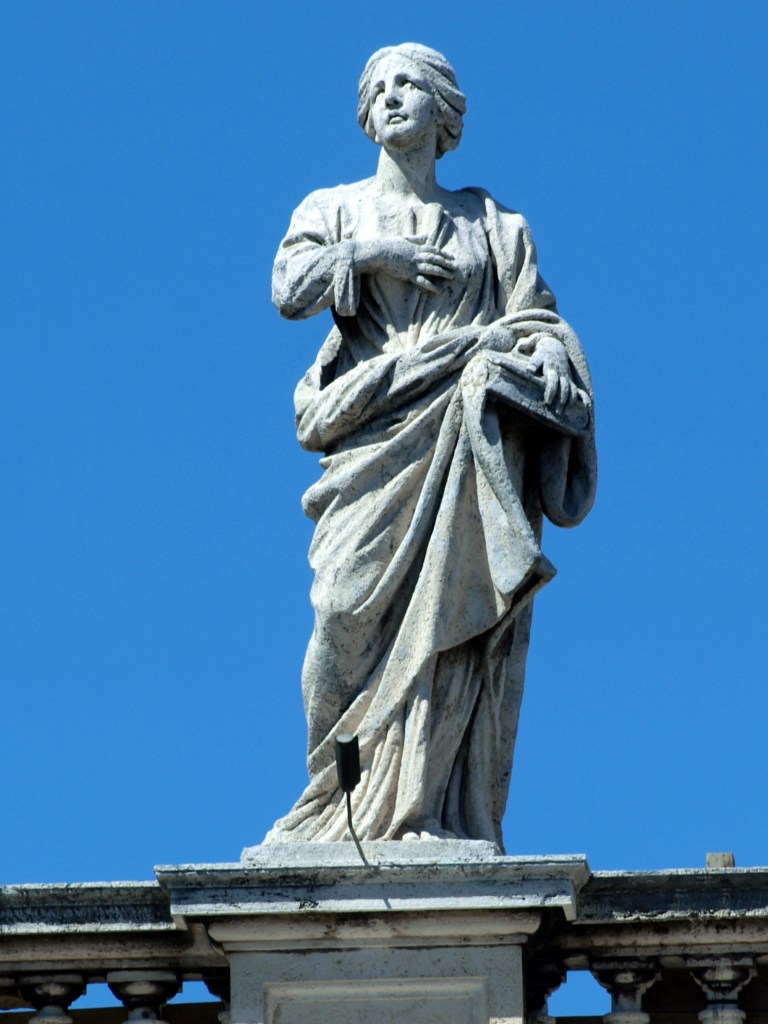
A Family Formed by Confession
Macrina was born into a family that remembered persecution not as ancient history, but as family history. Gregory says she was named after her grandmother, Macrina the Elder, who had suffered for Christ during the persecutions.
“She was named Macrina after the famous woman in our family, our father’s mother, who had confessed Christ like a noble athlete in the time of persecution.”
Gregory of Nyssa, Life of Macrina, PG 46.962A, c. 380 to 383 AD.
This is the first important distinction. The subject of this script is Macrina the Younger, the older sister of Basil and Gregory of Nyssa. But she was named after Macrina the Elder, her grandmother. That earlier Macrina had carried the family’s Christian memory through persecution, and Basil himself later testified that his theology had been shaped by the women of his household.
“The teaching about God which I received as a boy from my blessed mother and from my grandmother Macrina I have held ever since with growing conviction.”
Basil of Caesarea, Letter 223, §3, PG 32.824A, c. 375 AD.
That quote is about the older Macrina, Basil’s grandmother, not Macrina the Younger. But it helps explain the world into which Macrina the Younger was born. This was a family in which women handed down doctrine before the men became bishops.
Gregory Nazianzen gives the same impression when he speaks about Basil’s family. In his funeral oration for Basil, he says the family’s real distinction was not aristocratic blood or public rank, but piety.
“The distinction of his family on both sides was piety.”
Gregory of Nazianzus, Oration 43: Funeral Oration on Basil, §5, c. 382 AD.
He then describes Basil’s paternal ancestors as people who suffered during persecution.
“Basil’s paternal ancestors were among those whom that persecution crowned with many garlands, because they were prepared to bear whatever Christ gives to those who imitate his struggle.”
Gregory of Nazianzus, Oration 43: Funeral Oration on Basil, §§5–6, c. 382 AD.
Gregory Nazianzen says they fled into the mountains of Pontus and endured hardship for years. Gregory of Nyssa later has Macrina herself recall the same family memory near the end of her life.
“Our father’s parents had their property confiscated because they confessed Christ. Our maternal grandfather was killed by imperial wrath, and all his possessions were handed over to others.”
Gregory of Nyssa, Life of Macrina, PG 46.980D, c. 380 to 383 AD.
That memory explains much of Macrina’s life. She belonged to a household that knew property could be seized, rank could collapse, and earthly security could vanish. Her later poverty was not romantic. It was a Christian judgment about what could and could not last.
The Child Raised on Scripture
Gregory says Macrina’s mother, Emmelia, refused to educate her daughter in the usual elite way. In wealthy families, children could be formed through pagan poetry, mythology, rhetoric, and stories drawn from tragedy and comedy. Emmelia chose a different path.
“She did not train the child by the usual worldly method, which uses poetry to form the young.”
Gregory of Nyssa, Life of Macrina, PG 46.962D, c. 380 to 383 AD.
Gregory says Emmelia thought it dangerous for a young soul to be shaped by tragic passions and comic indecencies. Instead, Macrina was trained in Scripture, especially those parts that formed moral judgment.
“The parts of inspired Scripture that teach virtue became the girl’s lessons, especially the Wisdom of Solomon and whatever trained the soul toward moral excellence.”
Gregory of Nyssa, Life of Macrina, PG 46.962D to 964A, c. 380 to 383 AD.
Then Gregory gives one of the most beautiful descriptions of Macrina’s childhood discipline. Her life was organized around the Psalms.
“She knew the Psalter thoroughly. At fixed times she recited it: when she rose from bed, when she worked, when she rested, when she ate, when she left the table, when she went to sleep, and when she rose in the night for prayer. The Psalter was her constant companion, like a faithful fellow traveler who never left her.”
Gregory of Nyssa, Life of Macrina, PG 46.964A, c. 380 to 383 AD.
This is important because Macrina’s later theological strength did not appear from nowhere. Her imagination had been formed by Scripture long before it was tested by death. When she later speaks to Gregory about grief, the soul, resurrection, and purification, she is not improvising. She is drawing from a life that had been trained by prayer since childhood.
The Bridegroom Who Was Absent, Not Dead
Macrina was betrothed while still young. Her father chose a young man from a good family, a man Gregory describes as serious in character and gifted in public speaking. But before the marriage took place, the young man died.
After this, Macrina refused every later proposal. Gregory says many suitors came because of her beauty and family status, but Macrina would not be persuaded. Her reasoning was unusual and deeply theological. She considered her father’s intention to have the moral force of marriage, and she believed the man to whom she had been promised had not ceased to exist.
“She said that the man joined to her by her parents’ arrangement was not dead, but alive to God through the hope of the resurrection. He was absent, not dead.”
Gregory of Nyssa, Life of Macrina, PG 46.964D, c. 380 to 383 AD.
That sentence gives the inner logic of Macrina’s life. Resurrection was not merely a doctrine she would later discuss at the end of her life. It had shaped her choices from youth. She lived as if death was real, but not ultimate; painful, but not final.
Gregory does not present her refusal of marriage as bitterness or emotional withdrawal. He presents it as a disciplined decision rooted in Christian hope. The fiancé was absent, not dead. The body may disappear from sight, but the person is not lost to God.
This is why Macrina’s later deathbed teaching feels so consistent. She had spent her whole life practicing the belief that death does not get the last word.
The Daughter Who Became Her Mother’s Teacher
After her betrothal ended, Macrina attached herself closely to her mother Emmelia. Gregory says she resolved not to be separated from her mother even for a moment, and Emmelia used to say that she had carried her other children in the womb for a short time, but Macrina she carried always.
At first, that sounds like dependence. But Gregory quickly reverses the picture. Macrina’s closeness to her mother becomes a form of spiritual leadership.
“The mother cared for the daughter’s soul, and the daughter cared for the mother’s body.”
Gregory of Nyssa, Life of Macrina, PG 46.966A, c. 380 to 383 AD.
Then Gregory says that Macrina instructed her mother by the example of her own life.
“By her own life she greatly instructed her mother, leading her toward the same goal, the life of philosophy, and gradually drawing her toward the immaterial and more perfect life.”
Gregory of Nyssa, Life of Macrina, PG 46.966B, c. 380 to 383 AD.
In this context, “philosophy” does not mean abstract speculation. In late antique Christian language, the “philosophic life” means disciplined holiness: prayer, self-control, poverty, humility, detachment, and the pursuit of God.
Macrina becomes her mother’s teacher not by rebellion, but by holiness. Emmelia had formed Macrina in Scripture. Now Macrina forms Emmelia in renunciation. The mother raises the daughter, and then the daughter leads the mother deeper into the Christian life.
The Woman Who Took Basil in Hand
One of the most important moments in Macrina’s story is her correction of Basil. Before Basil became “the Great,” he came home from advanced education full of talent and full of himself.
Gregory is surprisingly blunt about it.
“Basil returned after his long education, already trained in rhetoric. He was puffed up beyond measure with pride in his speaking ability, and he looked down on the local dignitaries as though he were superior to the leading men of the province.”
Gregory of Nyssa, Life of Macrina, PG 46.966C, c. 380 to 383 AD.
That is an astonishing description of one of the greatest bishops in Christian history. Gregory does not hide Basil’s immaturity. Basil had education, eloquence, and social promise, but he also had vanity.
Then Gregory gives the turning point.
“Macrina took him in hand, and with great speed she drew him toward the goal of philosophy. He abandoned worldly glory, despised fame won by speech, and chose the laborious life of discipline.”
Gregory of Nyssa, Life of Macrina, PG 46.966C to 966D, c. 380 to 383 AD.
This is one of the clearest reasons Macrina matters. Basil’s later life of monastic discipline, charity, theological seriousness, and pastoral courage did not emerge in isolation. Gregory says his sister helped redirect him.
Macrina did not write Basil’s treatises. She did not preach his sermons. She did not govern his diocese. But Gregory says she helped break the spell of rhetorical vanity over him. Before Basil became a great public teacher, he had to become teachable at home.
The Household That Became a School of Equality
After Basil’s turn toward ascetic life, Macrina continued reshaping the household. Gregory says she persuaded her mother to abandon luxury, social display, and the assumptions of rank that had governed the family estate.
“Macrina persuaded her mother to give up her ordinary way of life, her showy style of living, and the service of domestics to which she had been accustomed.”
Gregory of Nyssa, Life of Macrina, PG 46.966D, c. 380 to 383 AD.
Then Gregory makes the social change explicit.
“She persuaded her to share the life of the servants, treating the slave girls and attendants as sisters and as belonging to the same rank as herself.”
Gregory of Nyssa, Life of Macrina, PG 46.966D, c. 380 to 383 AD.
This is one of the strongest passages in the Life of Macrina. Gregory is not simply saying that Macrina prayed a lot. He is saying that she changed the structure of the household. The estate no longer functioned as a stage for wealth and hierarchy. The women who had served the family were now treated as sisters in a common life.
Later Gregory describes the community’s discipline with a series of reversals.
“Self-control was their luxury. Obscurity was their glory. Poverty, and the casting away of material excess like dust from the body, was their wealth.”
Gregory of Nyssa, Life of Macrina, PG 46.970D, c. 380 to 383 AD.
This is not a private spirituality that leaves ordinary arrangements untouched. Macrina’s holiness changes food, labor, rank, possessions, speech, prayer, and the relationship between mistress and servant.
The household becomes a school of Christian re-formation.
Naucratius and the Poor Old Men
Before Gregory describes the sudden death of Naucratius, he pauses to describe the kind of life Naucratius had chosen.
Naucratius was gifted, handsome, strong, eloquent, and capable of public success. Gregory says that when he was only twenty-one, he had already impressed an audience by his speaking ability. But then he walked away from public ambition and chose a life of solitude and service.
“He was led by divine providence to despise all that was already in his grasp, and drawn by an irresistible impulse, he went off to a life of solitude and poverty.”
Gregory of Nyssa, Life of Macrina, on Naucratius, PG 46.968A, c. 380 to 383 AD.
Naucratius did not leave society in order to become useless. His solitude became a place of mercy. Gregory says he settled near the River Iris in Pontus, away from the noise of the city, the law courts, and public ambition. Then he gives a concrete detail that shows what Christian discipline looked like in this family.
“Having freed himself from the noise of cares that hinder the higher life, he looked after with his own hands some old men who were living in poverty and weakness. He considered it fitting to his way of life to make this work his care.”
Gregory of Nyssa, Life of Macrina, on Naucratius, PG 46.968B, c. 380 to 383 AD.
Then Gregory becomes even more specific.
“The generous youth went on fishing expeditions, and since he was skilled in every form of sport, he provided food by this means for those grateful dependents. At the same time, by these exercises, he was taming his own youth.”
Gregory of Nyssa, Life of Macrina, on Naucratius, PG 46.968B, c. 380 to 383 AD.
That passage matters because it shows that the family’s holiness was practical. Naucratius is not merely escaping the world. He is feeding poor old men. His asceticism has hands, labor, food, and beneficiaries.
The scene also prepares us for Macrina. In this family, renunciation does not mean indifference to the suffering. It means becoming more available to them. Naucratius leaves public ambition and ends up providing food for the poor. Macrina leaves luxury and later receives the hungry, the abandoned, and the vulnerable.
The Death of Naucratius
The death of Naucratius was one of the first great tests of Macrina’s discipline. Gregory says Naucratius died while doing the very work that had defined his ascetic life.
“He set out on one of the expeditions by which he provided necessities for the old men under his care, and he was brought back home dead, together with Chrysapius, who shared his life.”
Gregory of Nyssa, Life of Macrina, death of Naucratius, PG 46.968D, c. 380 to 383 AD.
This makes the grief sharper. Naucratius does not die in a random scene detached from his vocation. He dies while providing for the poor elderly men under his care.
The news devastated Emmelia.
“She collapsed at once and lost breath and speech, as though reason had failed under the disaster. She was thrown to the ground by the news like a noble athlete struck by an unexpected blow.”
Gregory of Nyssa, Life of Macrina, PG 46.968D to 970A, c. 380 to 383 AD.
Macrina grieved too. Gregory does not pretend she was untouched by natural affection. Naucratius was her brother, and he was a brother whose life already reflected the family’s highest ideals: renunciation, labor, service, poverty, and obedience to God.
But Gregory says Macrina became the support that kept her mother from being swallowed by despair.
“Facing the disaster with a rational spirit, she preserved herself from collapse. Becoming the support of her mother’s weakness, she raised her from the abyss of grief.”
Gregory of Nyssa, Life of Macrina, PG 46.970A, c. 380 to 383 AD.
Then he gives the point of the scene.
“By her own steadfastness, she taught her mother’s soul to be brave.”
Gregory of Nyssa, Life of Macrina, PG 46.970A, c. 380 to 383 AD.
This is one of the clearest pictures of Macrina’s strength. Her holiness is not delicate. It is able to stand inside a grieving house. She does not erase sorrow, but she disciplines sorrow by hope.
The Sister Who Raised a Bishop
Macrina also shaped the youngest brother in the family, Peter. Their father died around the time Peter was born, so Gregory says Macrina took responsibility for him almost from infancy.
“She took him from the nurse’s breast and reared him herself, educating him in a lofty training and practicing him from infancy in holy studies, so that his soul would have no leisure for empty things.”
Gregory of Nyssa, Life of Macrina, PG 46.972C, c. 380 to 383 AD.
Then Gregory describes the breadth of her role.
“She became everything to the child: father, teacher, tutor, mother, and giver of every good counsel.”
Gregory of Nyssa, Life of Macrina, PG 46.972C, c. 380 to 383 AD.
Peter later became bishop of Sebaste. Gregory says that throughout his life he looked to Macrina as his model.
“Always looking to his sister as the model of every good thing, he advanced to such a height of virtue that in later life he seemed in no way inferior to the great Basil.”
Gregory of Nyssa, Life of Macrina, PG 46.972D, c. 380 to 383 AD.
That sentence is remarkable. Basil is the great standard of comparison, and Gregory says Peter approached that standard by looking to Macrina. Once again, Macrina is not peripheral. She is forming future church leaders before they step into public office.
The Community That Fed the Hungry
Macrina’s ascetic community was not simply an inward-looking retreat. Gregory says that during a severe famine, people came from many places because the community had become known for mercy.
“When a severe famine occurred, crowds came from everywhere to the retreat where they lived, drawn by the fame of their benevolence.”
Gregory of Nyssa, Life of Macrina, PG 46.972D, c. 380 to 383 AD.
Then he gives a vivid picture of the place.
“The desert seemed like a city because of the number of visitors.”
Gregory of Nyssa, Life of Macrina, PG 46.972D, c. 380 to 383 AD.
That line is worth holding onto. The community withdrew from luxury, but not from human need. Macrina’s household did not turn poverty into isolation. It turned poverty into hospitality.
The same estate that once represented family wealth became a place where the hungry came for help. In Gregory’s account, asceticism and charity belong together. The community gives up excess not because human need is unimportant, but because human need is too important to be ignored.
Petitioners Were Never Turned Away
Gregory later gives another glimpse of Macrina’s practical charity. After describing how the family’s property had been divided among the children, he says that Macrina kept none of her own share for herself.
“When it came to Macrina herself, she kept nothing of the things assigned to her in the equal division between brothers and sisters. All her share was given into the priest’s hands according to the divine command.”
Gregory of Nyssa, Life of Macrina, Macrina recalling her life, PG 46.982A, c. 380 to 383 AD.
Then he describes the pattern of her daily life.
“Her hands never ceased to work according to the commandment. She never even looked for help from any human being, nor did human charity give her the opportunity of a comfortable existence.”
Gregory of Nyssa, Life of Macrina, Macrina recalling her life, PG 46.982A, c. 380 to 383 AD.
Then comes the strongest line.
“Petitioners were never turned away, yet she never appealed for help. God secretly blessed the little seeds of her good works until they grew into a mighty fruit.”
Gregory of Nyssa, Life of Macrina, Macrina recalling her life, PG 46.982A, c. 380 to 383 AD.
That line should shape how we understand Macrina’s poverty. She did not keep wealth for herself, but she also did not become passive or helpless. She worked. She gave. She received those who came in need.
Gregory presents her life as a paradox: she owned almost nothing, yet petitioners were not turned away. Her renunciation did not close her household. It opened it.
The Children She Found by the Roadside
One of the most moving details in the Life of Macrina appears after her death. Gregory says the women in Macrina’s community began to lament, and among the saddest were those who had known her not only as teacher, but as mother and nurse.
“Saddest of all in their grief were those who called on her as mother and nurse.”
Gregory of Nyssa, Life of Macrina, lament of the sisters, PG 46.988B, c. 380 to 383 AD.
Then Gregory explains who these women were.
“These were the ones whom she had picked up, exposed by the roadside in the time of famine. She had nursed and reared them, and led them to the pure and stainless life.”
Gregory of Nyssa, Life of Macrina, lament of the sisters, PG 46.988B, c. 380 to 383 AD.
That one sentence changes the way we see the whole community. Some of the women mourning Macrina had once been abandoned children. They had been exposed by the roadside during famine, left where hunger, weather, animals, disease, or strangers could take them.
Macrina found them, received them, nursed them, raised them, and gave them a life.
This is one of the most concrete acts of mercy in the whole account. Macrina’s household was not only a place for elite renunciation. It became a refuge for the abandoned. The women crying over her body were not merely students losing a teacher. Some were foundlings losing the woman who had saved them.
The Widow Who Chose Macrina as Guardian
Gregory also mentions a woman named Vestiana, a noble widow who had been wealthy, beautiful, and socially prominent. After her husband died, she came under Macrina’s care.
“She had married a man of high rank and lived with him a short time. Then, while her body was still young, she was released from marriage and chose the great Macrina as protector and guardian of her widowhood.”
Gregory of Nyssa, Life of Macrina, on Vestiana, PG 46.988D, c. 380 to 383 AD.
Gregory says Vestiana spent much of her time with the virgins, learning from them the life of virtue.
This is a quieter form of mercy than the exposed children, but it belongs in the same moral world. Macrina’s community sheltered more than one kind of vulnerability. It received abandoned children, poor petitioners, hungry visitors, and widows who needed a holy pattern for life after loss.
The picture becomes broader. Macrina is not only the ascetic who gives up wealth. She is the guardian of others: the grieving mother, the proud brother, the orphaned youngest child, the poor elderly men, the hungry crowds, the exposed children, and the young widow looking for a new way to live.
The Sick Child in Macrina’s Arms
Near the end of the Life of Macrina, Gregory records a story told to him by a soldier. The soldier and his wife once visited Macrina’s community with their little daughter, whose eye had been badly damaged after an illness.
“Our little daughter had been left with an affliction of the eye after an infectious illness. Her appearance was hideous and pitiable, the membrane around the eye being enlarged and whitish from the complaint.”
Gregory of Nyssa, Life of Macrina, the soldier’s story, PG 46.996D, c. 380 to 383 AD.
When the family prepared to leave, Macrina would not let the mother go immediately. Gregory says she held the little girl in her arms.
“The blessed lady would not let my wife go, but holding our little girl in her bosom, said she would not give her up before she had prepared a meal for them and entertained them with the riches of philosophy.”
Gregory of Nyssa, Life of Macrina, the soldier’s story, PG 46.998A, c. 380 to 383 AD.
Then Macrina noticed the child’s eye.
“Kissing the child, as was natural, and putting her lips to her eyes, she saw the complaint of the pupil.”
Gregory of Nyssa, Life of Macrina, the soldier’s story, PG 46.998A, c. 380 to 383 AD.
Macrina promised a remedy, but the parents left without receiving any medicine. On the way home, the mother realized what had happened.
“She has indeed given her the true drug which cures disease. It is the healing that comes from prayer. She has both given it and it has already proved effective, and nothing is left of the affliction of the eye. It is all purged away by that divine drug.”
Gregory of Nyssa, Life of Macrina, the soldier’s story, PG 46.998D, c. 380 to 383 AD.
This story has the hagiographic tone of a miracle account, and Gregory clearly wants the reader to see Macrina’s prayer as healing. But even before the miracle claim, the scene is tender. Macrina holds a sick child, kisses her eyes, feeds the family, and gives prayer as medicine.
That tenderness belongs with the rest of the portrait. Gregory’s Macrina is intellectually formidable, but she is not cold. Her theology of resurrection is joined to a household of mercy. Her philosophy includes meals, nursing, shelter, tears, children, widows, and the poor.
Basil Dies, and Gregory Comes to Macrina
The second major source for Macrina is Gregory’s On the Soul and the Resurrection. This work is different from the Life of Macrina. The Life is a biographical narrative. On the Soul and the Resurrection is a theological dialogue. Gregory presents himself as the grieving student and Macrina as the teacher who leads him through questions about death, the soul, purification, and resurrection.
The dialogue opens after Basil’s death.
“Basil, great among the saints, had departed from this life to God, and grief for him was shared by all the churches.”
Gregory of Nyssa, On the Soul and the Resurrection, opening frame, PG 46.12, c. 380 AD.
Gregory then goes to visit Macrina.
“His sister, the Teacher, was still living. So I went to her, longing to share grief over the loss of her brother.”
Gregory of Nyssa, On the Soul and the Resurrection, opening frame, PG 46.12, c. 380 AD.
The title matters. Gregory calls Macrina “the Teacher.” He does not present her as a passive recipient of his pastoral comfort. He comes to her grieving, and she becomes the one who teaches him how to think like a Christian in the presence of death.
When Gregory arrives, he discovers that Macrina herself is near death.
“When we came into each other’s presence, the sight of the Teacher awakened all my pain, for she too was lying in weakness near death.”
Gregory of Nyssa, On the Soul and the Resurrection, opening frame, PG 46.12, c. 380 AD.
The emotional situation is heavy. Basil is dead. Macrina is dying. Gregory is overwhelmed. And the dying woman becomes the one who steadies the bishop.
The Dying Woman Who Corrected Gregory’s Grief
Gregory says Macrina allowed him to grieve for a little while. Then she began to correct him.
“She yielded to me for a short time, like a skillful driver allowing the uncontrolled violence of my grief. Then she checked me by speaking and corrected the disorder of my soul with the bridle of her reasoning.”
Gregory of Nyssa, On the Soul and the Resurrection, opening frame, PG 46.12, c. 380 AD.
This is one of Gregory’s most powerful images. His grief is like an uncontrolled horse. Macrina is the driver. Her reasoning is the bridle. She is physically weak, but spiritually composed.
She reminds him of Paul’s command that Christians should not grieve like those who have no hope.
“She reminded me of the apostle’s command not to grieve over those who sleep as people do who have no hope.”
Gregory of Nyssa, On the Soul and the Resurrection, opening frame, PG 46.12, c. 380 AD.
Macrina is not saying Christians should feel nothing. Gregory is clearly grieving, and the Life of Macrina shows that Macrina herself felt loss. Her point is that Christian grief must not become hopeless grief. Death is real, but resurrection is also real. Sorrow is permitted, but despair is not allowed to rule the soul.
That becomes one of the central themes of the dialogue. Macrina does not deny the pain of death. She teaches Gregory to interpret death within the larger story of God’s restoration.
The Soul Death Cannot Swallow
In On the Soul and the Resurrection, Macrina discusses the soul with philosophical precision. Gregory asks what the soul is, and Macrina gives a definition.
“The soul is a created, living, intellectual essence. It gives to an organized and perceptive body the power of life and sensation, as long as the body’s natural structure remains together.”
Gregory of Nyssa, On the Soul and the Resurrection, definition of the soul, PG 46.29 to 32, c. 380 AD.
This is not sentimental consolation. Gregory presents Macrina as capable of serious theological and philosophical argument. She reasons about what leaves the body at death, why the body becomes motionless, and why the person is not annihilated when the body dissolves.
She also insists that Christian argument must remain governed by Scripture.
“We make Holy Scripture the rule and measure of every doctrine, and we accept what harmonizes with its intention.”
Gregory of Nyssa, On the Soul and the Resurrection, on Scripture and doctrine, PG 46.49 to 52, c. 380 AD.
This is important for understanding Macrina’s intellectual profile. Gregory does not portray her as merely repeating slogans. She reasons. She defines. She argues. But she reasons as a Christian, with Scripture as the rule.
Her confidence before death is not based on vague spirituality. It rests on the belief that the soul does not vanish when the body collapses, and that God’s creative power is not defeated by bodily dissolution.
The Passions Are Not the Deepest Truth About Us
Macrina also teaches Gregory that the passions are not the soul’s deepest identity. Anger, lust, fear, greed, and disordered desire may live in us, but they are not what the human person was made to be.
She argues that the rational and spiritual part of the human person bears the mark of God.
“The faculty of reason and thought alone, the chosen fruit of our life, bears the stamp of the divine character.”
Gregory of Nyssa, On the Soul and the Resurrection, on reason and the soul, PG 46.61 to 64, c. 380 AD.
Then she explains that anger and desire are conditions that attach themselves to the soul, not the essence of the soul itself.
“If the removal of these conditions does not harm the nature, but actually benefits it, then they must be counted as external additions and affections, not as the essence of the soul.”
Gregory of Nyssa, On the Soul and the Resurrection, on the passions, PG 46.64 to 65, c. 380 AD.
This helps explain Macrina’s ascetic life. She is not trying to destroy human nature. She is trying to free human nature from what deforms it. Her poverty, chastity, prayer, fasting, and simplicity are not hatred of the body or hatred of ordinary life. They are a disciplined attempt to uncover the true human person beneath the foreign growths of passion.
For Macrina, sin is not the deepest truth about us. It is a distortion. The soul was made for God, and whatever pulls it away from God must eventually be healed, burned away, or stripped off.
Purification as Gold in Fire
Macrina’s theology of purification is vivid. She does not describe divine judgment as arbitrary revenge. She describes it as God reclaiming what belongs to him and removing what does not belong to the soul.
“God does not bring correction upon sinners out of hatred or revenge. He is drawing back to himself what belongs to him.”
Gregory of Nyssa, On the Soul and the Resurrection, on purification, PG 46.93 to 96, c. 380 AD.
Then she uses the image of gold being refined.
“When gold is refined from dross, the alloy is melted in fire. The dross is consumed, but the gold remains.”
Gregory of Nyssa, On the Soul and the Resurrection, on purification, PG 46.96, c. 380 AD.
Then she applies the image to the soul.
“While evil is consumed by the purifying fire, the soul that has been joined to evil must also be in the fire until the foreign alloy is consumed and destroyed.”
Gregory of Nyssa, On the Soul and the Resurrection, on purification, PG 46.96, c. 380 AD.
This is one of the strongest theological passages associated with Macrina. Sin is not harmless. It attaches itself to the soul like alloy mixed with gold. Purification hurts because the soul has become attached to what harms it. But the goal is not the destruction of the soul. The goal is the removal of what does not belong to it.
That gives her asceticism a clear theological meaning. Macrina spends her life loosening the soul from earthly attachments before death forces the final separation. Her discipline is not grim self-denial for its own sake. It is preparation for freedom.
The Rope Pulled Through the Narrow Opening
Macrina gives another image for purification. She asks Gregory to imagine a rope covered with hardened clay. If the rope is pulled through a narrow opening, the clay is scraped off. The rope passes through, but the process is painful because what clings to the rope must be torn away.
“So we may picture the soul that has wrapped itself in earthly passions. When God draws what belongs to him back to himself, the foreign matter must be scraped away by force.”
Gregory of Nyssa, On the Soul and the Resurrection, on purification, PG 46.96 to 97, c. 380 AD.
The image is simple but powerful. The soul belongs to God. The mud does not. The pain comes from attachment. What should have remained loose has hardened around the soul.
This image also helps explain why Gregory remembered Macrina as a teacher. She could take a difficult theological idea and make it visible. Purification becomes a rope passing through a narrow place. Sin becomes hardened clay. God’s judgment becomes the removal of what keeps the soul from passing freely into the divine presence.
Resurrection as Restoration
Macrina’s hope is not merely that the soul survives. Her hope is resurrection. She insists that the human person is not complete as a disembodied soul forever. God restores the human being.
In the dialogue, Gregory raises objections about the body. What about old age, sickness, deformity, bodily decay, and the dissolution of the body into the earth? Macrina’s answer is that resurrection is not the endless preservation of our present broken condition. Resurrection is restoration.
“The resurrection is the reconstitution of our nature in its original form.”
Gregory of Nyssa, On the Soul and the Resurrection, on resurrection, PG 46.145, c. 380 AD.
Then she gives the basic principle.
“One thing is required for resurrection: that a human being has once lived.”
Gregory of Nyssa, On the Soul and the Resurrection, on resurrection, PG 46.148, c. 380 AD.
The person who has lived is not lost to God. The body that has dissolved is not beyond God. Death interrupts visible life, but it does not erase the creature from the Creator’s knowledge.
Macrina continues:
“The one who has once begun to live must continue to have lived, after the dissolution of death has been repaired in the resurrection.”
Gregory of Nyssa, On the Soul and the Resurrection, on resurrection, PG 46.148, c. 380 AD.
This is not vague immortality. It is Christian resurrection logic. God does not abandon what he made. The human person is wounded, dissolved, and hidden for a time, but not forgotten.
The Seed That Dies and Rises
Near the end of the dialogue, Macrina turns to the image of seed. A seed is buried. It dissolves. Its first form disappears. But from that buried seed something fuller rises.
“By the wonders performed in seeds, interpret the mystery of the resurrection.”
Gregory of Nyssa, On the Soul and the Resurrection, on resurrection and seed, PG 46.152 to 153, c. 380 AD.
Then she says resurrection is not merely restoration to weakness. It is restoration with glory.
“Divine power does not merely restore the body once dissolved. It adds splendor to it and furnishes the human being in a more magnificent way.”
Gregory of Nyssa, On the Soul and the Resurrection, on resurrection and seed, PG 46.153, c. 380 AD.
This is Macrina’s hope. The body is not trash to be discarded. The body is seed. Burial is not final disposal. It is sowing. Resurrection is not a return to the same frailty, sickness, and decay. It is the human person restored and transfigured.
That is why Macrina can face death without being spiritually conquered by it. Death is still painful. Gregory’s grief proves that. But in Macrina’s teaching, death is not the final interpreter of the body. Resurrection is.
Gregory Watches Her Die
The Life of Macrina returns to the deathbed scene in a more personal way. Gregory says Macrina continued speaking about the resurrection even as her body weakened.
“She found nothing strange in the hope of the resurrection, nor did she shrink from leaving this life. With a lofty mind, she continued until her last breath to discuss the convictions she had held from the beginning.”
Gregory of Nyssa, Life of Macrina, PG 46.982D to 984A, c. 380 to 383 AD.
Gregory is overwhelmed by what he sees.
“It seemed to me more than human.”
Gregory of Nyssa, Life of Macrina, PG 46.984A, c. 380 to 383 AD.
Then he says:
“It was as if an angel had taken human form.”
Gregory of Nyssa, Life of Macrina, PG 46.984A, c. 380 to 383 AD.
This does not mean Macrina is unreal or detached from ordinary human feeling. Gregory has already shown her grieving, serving, working, feeding, teaching, and suffering. The point is that her body is failing, but her mind is fixed on God. Fever is driving her toward death, but her hope remains ordered.
For Gregory, this is the final proof of her life. Macrina had taught resurrection for years by discipline. Now she teaches it by dying.
Her Final Prayer
As evening came, Macrina stopped speaking to the people around her and turned to God. Gregory says her bed had been turned toward the east, and she began to pray in a low voice.
“You, O Lord, have freed us from the fear of death. You have made the end of this life the beginning of true life for us.”
Gregory of Nyssa, Life of Macrina, dying prayer, PG 46.984C, c. 380 to 383 AD.
Then she prayed about the body.
“For a season you give our bodies rest in sleep, and you awaken them again at the last trumpet.”
Gregory of Nyssa, Life of Macrina, dying prayer, PG 46.984C, c. 380 to 383 AD.
That line gathers up the whole script. Death is sleep. Resurrection is awakening. The body is not abandoned. It rests for a time.
She continues:
“You give our earth, which you fashioned with your hands, back to the earth for safekeeping. One day you will take again what you have given, transforming our mortal and unsightly remains with immortality and grace.”
Gregory of Nyssa, Life of Macrina, dying prayer, PG 46.984C, c. 380 to 383 AD.
Then the prayer becomes cosmic and victorious.
“You have broken the heads of the dragon who seized us in his jaws. You have shown us the way of resurrection, broken the gates of hell, and brought to nothing the one who had the power of death.”
Gregory of Nyssa, Life of Macrina, dying prayer, PG 46.984D, c. 380 to 383 AD.
Macrina dies with battle imagery on her lips. Death is not merely a natural event. It is an enemy Christ has defeated. Hell is broken. The dragon’s jaws are shattered. The dying woman prays as someone already standing near victory.
She Closed Her Life and Her Prayer Together
Gregory says Macrina’s voice eventually failed. But even when she could no longer speak clearly, her lips and hands continued the prayer.
“Her voice died away, and only by the movement of her lips and the motion of her hands did we know that she was praying.”
Gregory of Nyssa, Life of Macrina, death scene, PG 46.986A to 986B, c. 380 to 383 AD.
A lamp was brought into the room. Macrina opened her eyes and looked toward the light. Gregory says she wanted to offer the evening thanksgiving, but her voice was gone. So she completed the prayer inwardly and with the motion of her hands.
Then Gregory gives the final moment.
“When she finished the thanksgiving, and her hand made the sign of the cross upon her face, she drew a deep breath and closed her life and her prayer together.”
Gregory of Nyssa, Life of Macrina, death scene, PG 46.986B, c. 380 to 383 AD.
That is one of the most beautiful death scenes in early Christian literature. Macrina does not merely die after praying. Gregory says her life and her prayer close together.
For Macrina, death is not an interruption of worship. It is the last movement of worship in this life.
The Treasure She Left Behind
After Macrina died, Gregory began preparing for her burial. He wanted to know whether there were garments stored away for the funeral. Lampadia, the deaconess who knew Macrina’s wishes, told him that Macrina had made no such preparations.
“The saint resolved that a pure life should be her adornment, both while she lived and when she was buried.”
Gregory of Nyssa, Life of Macrina, burial preparation, PG 46.990A, c. 380 to 383 AD.
Gregory asked whether anything could be found in storage. Lampadia’s answer is unforgettable.
“Storage? You have all her treasure before you. There is the cloak, the head-covering, and the worn shoes on her feet. This is all her wealth. These are her riches.”
Gregory of Nyssa, Life of Macrina, burial preparation, PG 46.990B, c. 380 to 383 AD.
Then she explains where Macrina had stored everything else.
“She knew only one storehouse for her wealth: the treasure in heaven. There she stored everything. Nothing was left on earth.”
Gregory of Nyssa, Life of Macrina, burial preparation, PG 46.990B, c. 380 to 383 AD.
This is Macrina’s whole life in one scene. A cloak. A head-covering. Worn shoes. Nothing else stored away. She had stripped wealth of its power before death could strip it from her.
The Sisters Lament Their Abbess
The women in Macrina’s community had restrained their grief while she was alive, almost as though they feared disobeying her even after her voice had fallen silent. But once she died, the grief broke out.
Gregory says their sorrow was like a fire smoldering inside them.
“Grief like an inward fire smoldered in their hearts, and suddenly a bitter, irrepressible cry broke forth.”
Gregory of Nyssa, Life of Macrina, lament of the sisters, PG 46.986D to 988A, c. 380 to 383 AD.
Their lament shows what Macrina had been to them.
“The light of our eyes has gone out. The lamp that guided our souls has been taken away. The safety of our life is destroyed. The seal of immortality is removed. The support of the weak has been broken. The healing of the sick has been taken away.”
Gregory of Nyssa, Life of Macrina, lament of the sisters, PG 46.988A, c. 380 to 383 AD.
This is not merely grief for a companion. They are grieving a spiritual mother. Gregory says some of them had been rescued as exposed children. Others had been guided through widowhood. Others had been formed by her discipline. The lament tells us that Macrina’s authority had not been theoretical. She had become the light, support, and healing of a whole community.
Her Funeral Became a Procession of Psalms
Gregory says the news of Macrina’s death spread quickly, and people from the surrounding countryside came to the retreat. The funeral became crowded and difficult to move, but it was marked by psalmody.
“The whole thing resembled a mystic procession, and from beginning to end the voices blended in the singing of psalms.”
Gregory of Nyssa, Life of Macrina, funeral procession, PG 46.994C, c. 380 to 383 AD.
That image brings the story full circle. As a child, Macrina had carried the Psalter through the rhythms of daily life. She prayed the Psalms when she rose, worked, rested, ate, slept, and woke in the night. Now, at her burial, the Psalms carry her body to the grave.
The woman who avoided worldly display is honored by a procession, but Gregory keeps the focus on worship. The funeral is not a performance of status. It is a procession of prayer.
The School of Virtue
Near the end of the Life of Macrina, Gregory records a story from a soldier who once visited the community with his wife. The soldier describes Macrina’s retreat with a phrase that captures the whole life she built.
“My wife and I desired to visit the school of virtue, for that is what the place where the blessed soul lived should be called.”
Gregory of Nyssa, Life of Macrina, testimony of the soldier, PG 46.996D, c. 380 to 383 AD.
That is one of the best descriptions of Macrina’s community: a school of virtue.
Not merely a house. Not merely a convent. Not merely a family estate with religious habits added on top. A school, where souls were trained.
Macrina’s poverty taught detachment. Her prayer taught endurance. Her treatment of servants as sisters taught humility. Her famine relief taught mercy. Her correction of Basil taught the danger of pride. Her care for Gregory taught how grief must be governed by hope. Her death taught resurrection.
The whole household became a curriculum.
Why Macrina Matters
Macrina matters because she changes how we tell the story of the fourth century.
That century is often told through councils, emperors, bishops, and doctrinal conflict. We think of Nicaea, Arianism, Basil, Gregory of Nazianzus, Gregory of Nyssa, Theodosius, Constantinople, and the long struggle to articulate the doctrine of the Trinity.
Those things matter. But Gregory’s portrait of Macrina shows another layer beneath the public story. Before Basil became a bishop, someone had to humble his pride. Before Gregory became a theologian of resurrection, someone had to teach him how to grieve. Before Peter became a bishop, someone had to train him as a child. Before the family estate became a place of prayer and mercy, someone had to persuade the wealthy to live simply and treat servants as sisters.
That someone was Macrina.
She did not defeat Arianism from a council chamber. She did not preach in Constantinople. She did not leave behind a body of writings under her own name. But she formed the people and the community from which much of the Cappadocian legacy emerged.
And Gregory knew it. That is why he refused to let her pass into oblivion.
Macrina as the Hidden Teacher
The most important title Gregory gives Macrina is “the Teacher.”
In On the Soul and the Resurrection, he does not present himself as the master and Macrina as the emotional patient. He presents himself as the grieving student. She is the Teacher.
She checks his grief. She defines the soul. She explains purification. She teaches resurrection. She argues from Scripture. She takes difficult ideas and makes them visible through gold, fire, rope, clay, seed, sleep, and awakening.
The dying woman teaches the bishop.
That is the striking reversal at the heart of the story. Macrina had already taught her mother, corrected Basil, raised Peter, guided widows, sheltered abandoned children, fed the hungry, and formed a community. Then, at the end of her life, she teaches Gregory how to face death.
Her theology is not detached from her life. She can speak about resurrection because she has lived as though resurrection were true. She can speak about purification because she has practiced detachment. She can speak about the soul’s freedom because she has refused to let wealth, grief, ambition, or fear rule her.
Macrina’s authority comes from the unity between her words and her life.
Conclusion: The Woman Who Made the Family Holy
Macrina’s life was not dramatic in the way imperial history is dramatic. No armies marched because of her. No emperor feared her vote. No council waited for her signature.
But her influence went into the roots.
She shaped a household before her brothers shaped theological history. She corrected Basil’s pride before he became Basil the Great. She trained Peter before he became bishop of Sebaste. She steadied Emmelia when grief nearly broke her. She received the hungry in famine. She made servants into sisters. She sheltered abandoned children. She guarded widows. She held a sick child in her arms. She turned wealth into poverty, poverty into freedom, and a family estate into a school of virtue.
Then, when Gregory came to her in grief, she became his teacher. She taught him that the soul is not swallowed by death, that sin is not the deepest truth about the human person, that purification is painful because the soul has clung to what does not belong to it, and that resurrection is not escape from the body but the restoration of the human being by God.
At the end, she died praying. Gregory says she closed her life and her prayer together.
That is why Macrina deserves more than a passing mention in the story of the Cappadocians. She is not merely Basil’s sister or Gregory’s sister. She is the teacher who helped make the family holy.
Macrina never needed a pulpit to preach.
Her life was the sermon.
Discover more from Living the Bible
Subscribe to get the latest posts sent to your email.

