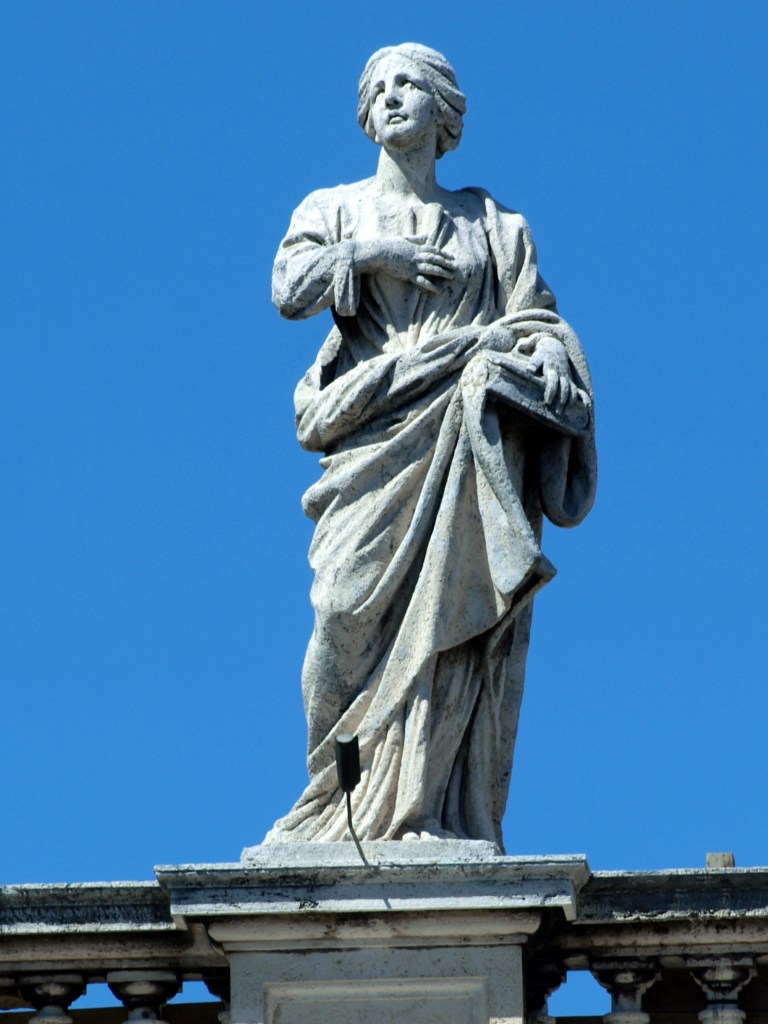
The Epistle to Diognetus does not begin with a creed, a miracle story, a martyrdom account, or a formal list of Christian doctrines. It begins with the questions of an outsider. That beginning is important because the first paragraph gives us the whole shape of the letter. Before the author explains Christian worship, before he contrasts Christians with pagans and Jews, before he gives one of the most beautiful descriptions of Christian life in the ancient world, he first tells us what Diognetus wants to know.
Diognetus wants to know what kind of people Christians are. He wants to know what God they trust, how they worship Him, why they reject the gods honored by the Greeks, why they do not simply follow Jewish religious practice, why they seem unafraid of death, why they love one another so intensely, and why this new people or practice has appeared now rather than earlier.
In other words, the opening paragraph is not only a polite introduction. It is one of the clearest windows we have into the questions educated outsiders were asking about the Christian Church in the second century.
“I see, most excellent Diognetus, that you are deeply eager to understand the religion of the Christians. You ask carefully and clearly about them: what God they trust in, how they worship Him, why they all look beyond the world and despise death, why they do not acknowledge the gods honored by the Greeks, why they do not observe the superstition of the Jews, what kind of affection they have for one another, and why this new people or practice has entered human life now, and not earlier. I welcome this eagerness in you, and I ask God, who gives both speaking and hearing, to grant me words that will make you better by listening, and to grant you hearing that will not make the speaker regret having spoken.”
Anonymous, Epistle to Diognetus 1.1 to 1.2, c. A.D. 180.
This opening is full of historical value. Diognetus is not asking an internal church question. He is not asking how bishops should be ordained, how Christians should calculate the date of Easter, or how one difficult passage of Scripture should be reconciled with another. He is asking from the outside. He has observed Christians as a social, religious, and historical phenomenon, and now he wants an explanation.
By c. A.D. 180, Christians were still a minority, and in many places they were still vulnerable. Yet they were visible enough that a cultivated outsider could ask serious questions about them. Their refusal of the gods was noticed. Their courage before death was noticed. Their brotherly affection was noticed. Their strange combination of ordinary life and heavenly citizenship was noticed. Their newness was noticed.
The author accepts the questions as an opportunity. He does not treat Diognetus as an enemy to be crushed. He treats him as a serious hearer. He even prays that God would grant both speaking and hearing. The letter begins, then, with a Christian writer receiving the honest questions of a powerful outsider and turning them into a witness to Christ.
That is the key to the whole work. The Epistle to Diognetus is not merely defending Christianity in abstract terms. It is answering the questions people were asking when they looked at the early Church and could not explain what they saw.
Most Excellent Theophilus and Most Excellent Diognetus
The opening address to Diognetus has a significant parallel in the opening of the Gospel traditionally called Luke. Both works are anonymous in the text itself. Both are written in polished Greek. Both address a named recipient. Both seem to be written for someone who is not an ordinary casual reader. Most importantly, both use the same Greek term of address: kratiste, usually translated “most excellent.”
The anonymous author traditionally called Luke opens his Gospel this way:
“Since many have undertaken to arrange an account of the things fulfilled among us, just as those who from the beginning were eyewitnesses and servants of the word handed them down to us, it seemed good to me also, having followed everything carefully from the first, to write to you in an orderly way, most excellent Theophilus, so that you may know the certainty of the things in which you have been instructed.”
Anonymous author traditionally called Luke, Gospel According to Luke 1.1 to 1.4, c. A.D. 80.
The Epistle to Diognetus opens in the same social register:
“I see, most excellent Diognetus, that you are deeply eager to understand the religion of the Christians.”
Anonymous, Epistle to Diognetus 1.1, c. A.D. 180.
The important word is “most excellent.” In Greek, it is kratiste. This is not the tone of casual conversation. It is a title of honor, the kind of address used for someone of dignity, rank, or influence. We can see that clearly because the same anonymous author who wrote Luke also uses this title in Acts for Roman officials.
When Claudius Lysias writes to the governor Felix, the letter begins:
“Claudius Lysias, to the most excellent governor Felix: greetings.”
Anonymous author traditionally called Luke, Acts of the Apostles 23.26, c. A.D. 85.
When the lawyer Tertullus flatters Felix before accusing Paul, he uses the same form of address:
“Since through you we enjoy much peace, and reforms are being made for this nation by your foresight, in every way and everywhere we welcome this with all gratitude, most excellent Felix.”
Anonymous author traditionally called Luke, Acts of the Apostles 24.2 to 24.3, c. A.D. 85.
And when Paul answers Festus, he again uses the same title:
“I am not out of my mind, most excellent Festus, but I am speaking words of truth and sober reason.”
Anonymous author traditionally called Luke, Acts of the Apostles 26.25, c. A.D. 85.
That matters for how we read Theophilus and Diognetus. In Acts, kratiste is used for Roman officials. In Luke, it is used for Theophilus. In Diognetus, it is used for Diognetus. The title does not prove every detail about either man, but it strongly suggests that they are being addressed as persons of standing.
So when the anonymous Christian writer says, “most excellent Diognetus,” we should not picture a random passerby asking a private religious question. We should picture a serious, educated, probably wealthy or influential man who has the means and social position to request an explanation in writing. In the ancient world, literary works often moved through networks of patronage. A named recipient could be the person for whom the work was written, the person who requested it, the person who helped pay for its production, or the person whose status helped it circulate.
That possibility gives the opening paragraph more weight. The Church is not merely explaining itself to a curious neighbor. It is being asked to account for itself before the kind of person whose opinion could matter in public life. Theophilus receives an orderly account of the things fulfilled among the Christians. Diognetus receives an answer to the questions raised by Christian life in the Roman world.
Both openings show the same Christian confidence. The faith can be explained. The story can be told. The questions of influential outsiders need not be feared, because Christianity is not a private superstition hiding from examination. It is a public witness to what God has done.
Anonymous Writers and a Received Witness
Both the Gospel traditionally called Luke and the Epistle to Diognetus are anonymous in the text itself. Luke’s Gospel does not begin, “I, Luke, write this.” The Epistle to Diognetus does not identify its author by personal name either.
That does not mean the writings lack confidence. It simply means the authors do not make their own names the center of the work. Luke’s Gospel points Theophilus to the things fulfilled among the believers and handed down by eyewitnesses and servants of the word. The Epistle to Diognetus points Diognetus to the God who explains the Christian people.
In the received text of Diognetus, the author describes himself not by a personal name, but by his relationship to the apostolic message.
“I do not speak of things strange to me, nor do I chase after unreasonable speculations. Having become a disciple of the apostles, I become a teacher of the nations. I minister what has been handed down to me to those who become worthy disciples of the truth.”
Anonymous, Epistle to Diognetus 11.1, c. A.D. 180.
That is enough for our purposes. The author is anonymous, but he is not rootless. He sees himself as a disciple of the apostles and a minister of what has been handed down. There is a simple Christian humility in that. He does not present Christianity as his own invention, and he does not present himself as the main figure. He is a witness passing on what he has received.
The parallel with Luke matters. The anonymous author of Luke writes so that Theophilus may know the certainty of what he has been taught. The anonymous author of Diognetus writes so that Diognetus may understand the Christians he has observed. In both cases, an unnamed Christian writer addresses a high-status recipient and gives an ordered account of the faith.
The writer’s name recedes, but the witness remains.
The Questions Were Real
The questions in the opening of Diognetus were not imaginary. Other pagan sources from the first and second centuries show that outsiders really did notice the same features of Christian life.
Around A.D. 112, Pliny the Younger wrote to the emperor Trajan because he was uncertain how to handle Christians in his province. Pliny was not sympathetic. He was a Roman official trying to decide what punishment was appropriate. Yet his letter confirms that Christians were known for refusing to deny Christ, even under threat.
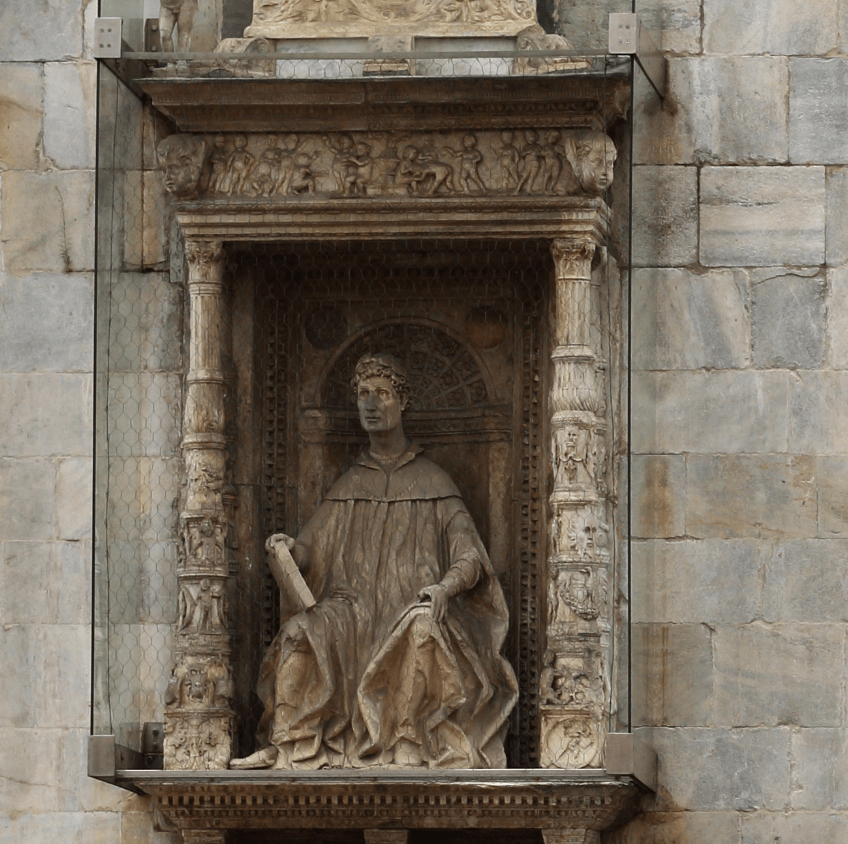
“I asked them whether they were Christians. Those who confessed, I asked a second and a third time, threatening punishment. Those who persisted, I ordered to be executed. For whatever the nature of their belief, I had no doubt that stubbornness and unyielding obstinacy deserved punishment.”
Pliny the Younger, Letters 10.96, to Trajan, c. A.D. 112.
Pliny calls Christian steadfastness “stubbornness.” Diognetus asks why Christians despise death. They are seeing the same thing from different angles. The Christian refusal to deny Christ was visible enough that Roman officials had to interpret it.
Pliny also describes what he learned about Christian worship.
“They said that the sum of their fault or error was this: they were accustomed to meet on a fixed day before dawn, to sing responsively a hymn to Christ as to a god, and to bind themselves by oath, not to commit crime, but to avoid fraud, theft, adultery, breach of trust, and refusal to return what had been entrusted to them.”
Pliny the Younger, Letters 10.96, to Trajan, c. A.D. 112.
Here we hear, from a Roman perspective, the kind of issue Diognetus raises in the first paragraph: What God do Christians trust, and how do they worship Him? Pliny’s report is brief, but it is revealing. Christians gather before dawn. They sing to Christ as to a god. They bind themselves to moral purity.
A later pagan satirist, Lucian of Samosata, gives another outside witness. He mocks Christians, but even his mockery preserves the public impression they made.
“They have persuaded themselves that they are immortal and will live forever, and because of this they despise death and many of them willingly give themselves up. Their first lawgiver persuaded them that they are all brothers, once they have denied the Greek gods, worshiped that crucified sophist, and lived according to his laws.”
Lucian of Samosata, The Passing of Peregrinus 13, c. A.D. 170.
Lucian intends insult. But he confirms the same basic questions. Christians deny the Greek gods. They worship the crucified one. They call one another brothers. They face death differently.
So when Diognetus asks about Christian worship, Christian love, Christian courage, and Christian newness, he is not asking in isolation. He is voicing questions that belonged to the public reputation of the Church.
Not Monks, but Ordinary Christians
One of the most important things to notice about these sources is that they are describing Christians in general. Pliny is not describing monks. Lucian is not describing a small ascetic faction inside the Church. The author of Diognetus is not describing a spiritual elite that has separated itself from ordinary Christian life. These writers are describing what Christians, as Christians, were known to be like.
That is easy to miss when we read the second century from the far side of later Christian history. By the fourth and fifth centuries, after Christianity became legal, favored, and eventually culturally common in many parts of the Roman world, the more radical features of Christian discipleship could begin to look like the special calling of monks, virgins, hermits, and ascetics. Those movements were deeply important, but they can also tempt later readers to misunderstand the second century. In the world of Pliny, Lucian, and Diognetus, the things being described are not yet the peculiar marks of monastic Christianity. They are the public reputation of normal Christians.
Pliny does not write to Trajan and say that he has discovered an extreme spiritual movement within Christianity. He says that those accused of being Christians gather before dawn, sing to Christ as to a god, and bind themselves to moral obedience.
“They were accustomed to meet on a fixed day before dawn, to sing responsively a hymn to Christ as to a god, and to bind themselves by oath, not to commit crime, but to avoid fraud, theft, adultery, breach of trust, and refusal to return what had been entrusted to them.”
Pliny the Younger, Letters 10.96, to Trajan, c. A.D. 112.
For Pliny, this is what Christians do. They worship Christ, refuse crimes, and order their lives around moral faithfulness. He does not present this as the lifestyle of a spiritual elite. It is the basic pattern he discovers when he investigates the Christian name.
Lucian is similar, even though his tone is mocking. He does not say that a handful of unusually zealous Christians believe they are brothers or despise death. He speaks about Christians as a recognizable people.
“Their first lawgiver persuaded them that they are all brothers, once they have denied the Greek gods, worshiped that crucified sophist, and lived according to his laws.”
Lucian of Samosata, The Passing of Peregrinus 13, c. A.D. 170.
Lucian thinks this is foolish, but he still shows us what outsiders thought they were seeing. Christians denied the Greek gods. Christians worshiped the crucified one. Christians called one another brothers. Christians faced death differently. Again, this is not a description of monks. This is the pagan world trying to explain the normal life of Christians.
That makes the testimony of Diognetus even more powerful. The author does not say, “There are some Christians who live this way.” He simply says, “Christians.” His description is sweeping because he is presenting Christian identity itself.
“Christians are not distinguished from other people by country, language, or customs. They do not live in cities of their own, or use some unusual speech, or practice a strange way of life. Their teaching was not invented by human speculation, nor do they champion a merely human doctrine.”
Anonymous, Epistle to Diognetus 5.1 to 5.3, c. A.D. 180.
He then describes their marriages, their children, their tables, their citizenship, their obedience to laws, their suffering, and their hope.
“Every foreign land is their homeland, and every homeland is foreign. They marry like everyone else and have children, but they do not expose their offspring. They share a common table, but not a common bed. They are in the flesh, but they do not live according to the flesh. They spend their days on earth, but their citizenship is in heaven.”
Anonymous, Epistle to Diognetus 5.5 to 5.9, c. A.D. 180.
This is ordinary Christian life in the second century, at least as the Church wanted to present it and as outsiders often recognized it. Christians married, had children, ate meals, lived in cities, and followed local customs in clothing and food. Yet in the middle of that ordinary life, they refused infant exposure, rejected sexual lawlessness, confessed heavenly citizenship, loved one another, and faced persecution with courage.
This point is easy to lose once Christianity becomes common. In later centuries, costly discipleship could be treated as the work of specially devoted Christians, while ordinary believers lived closer to the assumptions of the surrounding culture. But in these earlier sources, heavenly citizenship, moral distinctness, refusal of idols, brotherly love, care for children, courage before death, and burden-bearing mercy are not advanced electives in the Christian life. They are what Christians were known for.
This is part of why Diognetus asks his questions. He is not asking about a sect within Christianity. He is asking about the Christians themselves.
The Slave Women Pliny Tortured
Pliny’s letter gives us one more detail that belongs in this story. After describing Christian worship, moral discipline, and their ordinary meal together, Pliny says he wanted to discover the truth more fully. So he turned to two enslaved Christian women.
“For this reason I judged it all the more necessary to find out the truth by torture from two female slaves, who were called ministrae. But I discovered nothing else except a depraved and excessive superstition.”
Pliny the Younger, Letters 10.96, to Trajan, c. A.D. 112.
This is a chilling sentence. Pliny writes it almost casually because to a Roman governor the torture of enslaved persons could be treated as an ordinary instrument of investigation. But for our purposes, the sentence reveals something extraordinary about the Christian community.
The two women are enslaved. In Roman society, that places them near the bottom of the social order. They are also women, which in that world often meant limited public authority. Yet Pliny says they were called ministrae. The Latin word can mean female ministers, attendants, or servants, and many English translations render it “deaconesses.” We should be careful not to force a later, fully developed office of deaconess back into this moment too rigidly. But even with that caution, the point remains powerful. These enslaved women were recognized in some kind of ministry or service within the Christian community, and Pliny believed they were significant enough to interrogate for information.
That is a remarkable reversal. The Roman world saw two enslaved women as bodies that could be tortured for evidence. The Church appears to have seen them as servants of Christ with recognized responsibility among the believers.
This fits perfectly with the world described in Diognetus. Christians were not marked off by one social class. They were scattered through cities, villages, households, and ranks of society. Pliny himself says the movement had touched people of every age, every rank, and both sexes.
“Many persons of every age, every rank, and also of both sexes are and will be endangered. For the contagion of this superstition has spread not only to the cities but also to the villages and farms.”
Pliny the Younger, Letters 10.96, to Trajan, c. A.D. 112.
Pliny means this as a warning. But for the historian of the Church, it is evidence. Christianity had entered the lives of men and women, free and enslaved, city dwellers and villagers, people of rank and people without rank. And within that new people, even those whom Roman society placed at the margins could become recognized servants of the Church.
The Church was not a philosophical club for elite men. It was not a mystery society for one social class. It was not an ethnic enclave. It was a new people formed by the Word, and that new people reordered human worth around Christ. The enslaved could become ministers. Women could be recognized as servants of the Church. The poor could make many rich. Those with no standing in the empire could become living witnesses to the kingdom of God.
This does not take us away from Diognetus. It deepens the point. When the author says that Christians are not distinguished by country, language, or ordinary customs, he is describing a people whose identity cuts across the old social markers. In that people, the ancient world’s hierarchies were not erased in a simplistic way, but they were profoundly relativized. The deepest identity was no longer master or slave, male or female, rich or poor, official or peasant. The deepest identity was belonging to Christ.
Why Christians Refused the Gods
The author first answers Diognetus by explaining why Christians cannot worship the gods of the Greeks. He asks Diognetus to look honestly at the objects people call gods. They are made of stone, bronze, wood, silver, iron, and clay. They are shaped by craftsmen, guarded by men, and subject to decay.
“Is not one of them stone, like what is trampled underfoot? Another bronze, no better than the vessels made for our use? Another wood, already rotting? Another silver, needing someone to guard it lest it be stolen? Another iron, eaten away by rust? Another clay, no more honorable than what is made for the most common service?”
Anonymous, Epistle to Diognetus 2.2, c. A.D. 180.
The argument is direct. If the gods are made by human hands, they cannot be the Maker of human hands. If they need to be guarded, they cannot guard the world. If they can decay, they cannot be the source of life.
The author then makes the point sharper.
“These things you call gods. These things you serve. These things you worship. In the end, you become like them. Therefore you hate the Christians, because they do not regard these things as gods.”
Anonymous, Epistle to Diognetus 2.5 to 2.6, c. A.D. 180.
This explains why Christian refusal created hostility. Christians were not merely adding a private devotion to the religious life of the empire. They were refusing the gods everyone else honored. Their refusal exposed the idols as lifeless things.
Pliny’s test for accused Christians makes the same point. A person could prove he was not truly Christian by worshiping the gods and cursing Christ.
“Those who denied that they were or had been Christians invoked the gods in words I dictated, offered incense and wine to your image, which I had ordered brought with statues of the gods, and cursed Christ. It is said that those who are truly Christians cannot be forced to do these things.”
Pliny the Younger, Letters 10.96, to Trajan, c. A.D. 112.
This was the line Christians could not cross. They could live in Roman cities. They could marry, work, buy, sell, and obey the ordinary laws. But they could not call idols gods, and they could not curse Christ.
Again, the point is not that a few unusually zealous Christians refused idolatry while ordinary Christians found ways to blend in. Pliny treats refusal to worship the gods and curse Christ as the mark of a true Christian. The author of Diognetus says Christians are hated because they do not regard these things as gods. The refusal belonged to Christian identity itself.
That refusal made them visible.
Why Christians Were Not Simply Another Jewish Group
Diognetus also asks why Christians do not follow Jewish religious practice. This part of the letter needs careful handling because the author uses sharp polemical language about Jewish observances. It reflects an early Christian argument in the painful separation between Church and synagogue. It should not be turned into contempt for Jewish people.
The author’s theological point is that the Creator does not need to be supplied by the creatures He made.
“The one who made heaven and earth and all that is in them, and who supplies us all with what we need, cannot Himself need the very things that He supplies to those who imagine they are giving them to Him.”
Anonymous, Epistle to Diognetus 3.4, c. A.D. 180.
This helps us see how the author places Christianity. Christians are not pagans because they refuse idols. They are not simply another Jewish sect because they believe the decisive revelation of God has come through the Son. Their worship is not centered on images, and it is not defined by temple sacrifice. It is centered on the living God who has sent His Word.
That is why the question of timing matters so much. If Christians worship the ancient Creator, why does their way of life seem new? If the God of Christians is the Maker of heaven and earth, why has this people appeared now?
The author will answer that question by pointing to Christ as the eternal Word revealed in time.
Christians in the World
After saying what Christians are not, the author describes what they are. This is the most famous passage in Diognetus, and it remains one of the richest descriptions of early Christian identity.
Christians are not marked off by country, language, or clothing. They do not live in separate Christian cities. They do not speak a secret dialect. They do not withdraw from ordinary life into a private civilization.
“Christians are not distinguished from other people by country, language, or customs. They do not live in cities of their own, or use some unusual speech, or practice a strange way of life. Their teaching was not invented by human speculation, nor do they champion a merely human doctrine.”
Anonymous, Epistle to Diognetus 5.1 to 5.3, c. A.D. 180.
This is an important answer to Diognetus. Christians are not a nation in the ordinary sense. They do not belong to one ethnic group or one language. They live among the peoples of the empire, and yet their life reveals a different citizenship.
“They live in Greek and barbarian cities, as each person’s lot has been assigned, and they follow local customs in clothing, food, and the rest of life. Yet they display a wonderful and admittedly astonishing form of citizenship. They live in their own countries, but as sojourners. They share all things as citizens, yet endure all things as foreigners.”
Anonymous, Epistle to Diognetus 5.4 to 5.5, c. A.D. 180.
The author then gives one of the great summaries of Christian life in the ancient world:
“Every foreign land is their homeland, and every homeland is foreign. They marry like everyone else and have children, but they do not expose their offspring. They share a common table, but not a common bed. They are in the flesh, but they do not live according to the flesh. They spend their days on earth, but their citizenship is in heaven.”
Anonymous, Epistle to Diognetus 5.5 to 5.9, c. A.D. 180.
The point is not that Christians are strange because they reject ordinary human life. The point is that they inhabit ordinary life differently. They marry. They have children. They share meals. They live in cities. But they do not expose infants. They do not turn sexual desire into lawlessness. They do not confuse earthly citizenship with ultimate belonging.
Their difference is not chiefly in location, language, or costume. Their difference is in allegiance.
The author continues:
“They obey the established laws, and by their lives they surpass the laws. They love all people, and are persecuted by all. They are unknown and condemned. They are put to death, and restored to life. They are poor, yet make many rich. They lack everything, yet abound in everything.”
Anonymous, Epistle to Diognetus 5.10 to 5.13, c. A.D. 180.
Then comes the famous image. But the image should be heard through its conclusion, because the conclusion tells us that this is not merely how Christians happen to live. It is the place God has assigned them.
“To say it simply: what the soul is in the body, Christians are in the world. The soul is spread through all the members of the body, and Christians are scattered through the cities of the world. The soul dwells in the body, yet is not of the body; Christians dwell in the world, yet are not of the world. The invisible soul is guarded by the visible body, and Christians are known to be in the world, but their godliness remains unseen. The flesh hates the soul and wars against it, though the soul does it no harm, because the soul prevents it from indulging its pleasures. So also the world hates Christians, though they do it no wrong, because they oppose its pleasures. The soul loves the flesh that hates it, and Christians love those who hate them. The soul is enclosed in the body, yet it holds the body together. Christians are held in the world as in a prison, yet they hold the world together. The immortal soul dwells in a mortal tent, and Christians dwell as sojourners among corruptible things while waiting for incorruptibility in heaven. The soul becomes better when treated harshly in food and drink, and Christians increase daily when they are punished. God has assigned them this great post, and they are not permitted to abandon it.”
Anonymous, Epistle to Diognetus 6.1 to 6.10, c. A.D. 180.
That final sentence is crucial. Christians are not merely scattered because history happened to scatter them. They are scattered because God has assigned them this role. They are not merely in the world by accident. They have been placed there as the soul is placed in the body.
This strengthens the whole argument. The author is not describing monastic withdrawal, and he is not describing a private spiritual elite. He is describing the ordinary Christian vocation in the world. Christians marry, raise children, eat at tables, obey laws, live in cities, and work among their neighbors. Yet they do all of this as a people whose citizenship is in heaven and whose presence in the world has been appointed by God.
This is how the author answers an influential outsider. He does not say that Christians are politically dominant or socially impressive. He says that Christians have been assigned a divine post inside the same world everyone else inhabits. They are not permitted to abandon it.
The God Who Sent His Word
The author then turns from Christian life to the divine action that explains it. The Christian way of life did not arise because someone invented a better moral philosophy. It is not a merely human system. It begins with God revealing Himself.
“This was no earthly invention delivered to them. It is no merely human system of opinion that they think worthy of such careful preservation. It is not a stewardship of human mysteries that has been entrusted to them. Rather, the almighty God Himself, the Creator of all things, invisible and sovereign, sent from heaven and planted among human beings the truth, the holy and incomprehensible Word, and fixed Him firmly in their hearts.”
Anonymous, Epistle to Diognetus 7.1 to 7.2, c. A.D. 180.
This passage is crucial. Christians are not different because they discovered God by superior reasoning. They are different because God sent His Word. The Church is not the origin of the message. The Church is the result of God’s revelation.
The author then clarifies who this Word is. God did not send an angel, a servant, or a lower heavenly minister. He sent the one through whom creation itself was made and ordered.
“He did not send, as someone might suppose, a servant, or angel, or ruler, or one who governs earthly things, or one entrusted with the ordering of heaven. He sent the very Creator and Fashioner of all things, by whom He made the heavens, by whom He enclosed the sea within its bounds, whose mysteries all the elements faithfully keep.”
Anonymous, Epistle to Diognetus 7.2, c. A.D. 180.
Here the author begins to answer the deepest question in the opening paragraph. If Christianity seems new, how can it claim to reveal the ancient Creator? The answer is that the one who appeared in time is not a creature of time. He is the Word through whom the heavens were made.
The author then describes the manner of His coming.
“Did He send Him, as one might imagine, to rule by tyranny, fear, and terror? Not at all. He sent Him in gentleness and meekness. As a king sends his son, who is also a king, so He sent Him. He sent Him as God; He sent Him as to human beings; He sent Him as Savior; He sent Him to persuade, not to compel, for violence has no place in the character of God.”
Anonymous, Epistle to Diognetus 7.3 to 7.4, c. A.D. 180.
This tells us not only who Christ is, but what God is like. God does not reveal Himself by crushing the world into submission. He sends His Son in gentleness. He persuades rather than compels. He saves rather than terrifies.
This also explains why Christians are supposed to live the way they do. If the Son comes in meekness, His people cannot make coercion their highest tool. If the Son bears with sinners, His people must learn patience. If the Son gives Himself, His people must become a people of self-giving love.
Christian ethics flow from the character of the God revealed in Christ.
The Word the Gentiles Were Reaching For
There is another layer to the author’s answer that should not be missed. The Christians did not present Christ only as the fulfillment of Jewish Scripture and Jewish expectation, though He certainly was that. They also presented Him as the answer to the deepest questions of the Gentile world.
This matters because Diognetus is not being addressed as a synagogue ruler or a student of the prophets. He is addressed as “most excellent Diognetus,” probably a man of education, status, and influence in the Greek and Roman world. He asks why Christians reject the gods of the Greeks, why they do not simply become Jews, and why this new way of life has appeared now. So the author answers him in a way that speaks to Gentile categories as well. He speaks of the Word, the Creator, the Fashioner of all things, the one by whom the heavens, sea, stars, sun, moon, and all creation are ordered.
“He sent the very Creator and Fashioner of all things, by whom He made the heavens, by whom He enclosed the sea within its bounds, whose mysteries all the elements faithfully keep, from whom the sun has received the measure of the courses of the day, whom the moon obeys as He commands it to shine by night, and whom the stars obey as they follow the course of the moon.”
Anonymous, Epistle to Diognetus 7.2, c. A.D. 180.
That language does more than answer Jewish expectation. It answers Gentile longing for the rational order behind the world. Philosophers had asked what held reality together. They had spoken of reason, nature, providence, order, and the divine principle behind all things. The Christian answer was not that these longings were meaningless. The Christian answer was that the one whom Gentile wisdom sought dimly had now been revealed personally in Christ.
At the same time, Diognetus is careful. The author does not flatter pagan philosophy as though it had already arrived at the truth by itself. He criticizes those who identified God with created elements.
“Do you accept the vain and silly doctrines of those who are considered trustworthy philosophers? Some said that fire was God, calling that God to which they themselves will one day come. Others said water. Others named some other element formed by God. But if any one of these theories is worthy of approval, then every created thing might just as well be declared God.”
Anonymous, Epistle to Diognetus 8.2 to 8.4, c. A.D. 180.
The point is not that Gentile philosophy already knew God clearly. The point is that Gentile philosophy was asking real questions but could not reach the final answer on its own. According to the author, God had to reveal Himself.
“No human being has either seen Him or made Him known, but He revealed Himself. And He revealed Himself through faith, by which alone it is given to behold God.”
Anonymous, Epistle to Diognetus 8.5 to 8.6, c. A.D. 180.
This is where Diognetus fits beautifully alongside Justin Martyr. Justin, writing earlier in the second century, makes the philosophical claim more explicitly. For Justin, Christ is the Logos, the Word, in whom all peoples have shared to some degree. Therefore, whatever the philosophers saw truly, they saw because the Word was already at work.
“We have been taught that Christ is the firstborn of God, and we have declared above that He is the Word of whom every race of human beings has been a partaker. Those who lived according to reason are Christians, even though they have been thought atheists, such as Socrates and Heraclitus among the Greeks, and others like them.”
Justin Martyr, First Apology 46, c. A.D. 155.
Justin says the same thing even more directly in his Second Apology:
“Whatever things were rightly said among all people are the property of us Christians. For next to God, we worship and love the Word who is from the unbegotten and ineffable God, since He also became man for our sake, that by sharing in our sufferings He might bring us healing.”
Justin Martyr, Second Apology 13, c. A.D. 155 to 160.
That helps us understand the broader Christian claim. Christ fulfills Israel’s Scriptures, but He also fulfills the scattered hopes of the nations. He is the answer to the prophets, and He is the answer to the philosophers. The prophets saw more clearly because they received revelation. The philosophers saw partially and often confusedly because they grasped fragments of truth through reason. But both streams find their fullness in the same person: the Word who was from the beginning and appeared in time.
This makes the central line of Diognetus even stronger.
“This is He who was from the beginning, who appeared as new and was found to be ancient, and who is always being born anew in the hearts of the saints.”
Anonymous, Epistle to Diognetus 11.4, c. A.D. 180.
To the Jew, He is ancient because He is the one prepared and promised from the beginning. To the Gentile, He is ancient because He is the Logos, the divine Word, the reason and order behind creation itself. To both, He appears new because He has now come in the flesh.
That is why Christianity could stand before both synagogue and empire, before both Scripture and philosophy, and say: the one you were waiting for, and the one you were reaching for, has appeared.
Why This New People Appeared Now
Diognetus asks why this new people or practice has entered human life now and not earlier. That question is one of the most important in the whole letter.
The author’s answer is not that God only recently began to care about humanity. It is not that humanity finally became wise enough to earn revelation. The answer is that God was patient, allowing human beings to see the poverty of their own works so that His mercy would be revealed as mercy.
“In the former time, He permitted us to be carried along by disorderly impulses, drawn away by pleasures and desires. This was not because He delighted in our sins, but because He was patient with us. It was not because He approved that season of iniquity, but because He was preparing the present season of righteousness, so that, having been shown by our own works to be unworthy of life, we might now be made worthy by the goodness of God.”
Anonymous, Epistle to Diognetus 9.1, c. A.D. 180.
The delay is not indifference. It is patience. The world had to see that it could not save itself. Human beings had to learn that their own works could not make them worthy of life.
Then the author describes the appointed time of God’s mercy:
“When our wickedness had reached its fullness, and it had become clear that punishment and death were its expected reward, then came the time God had appointed to reveal His goodness and power. O the surpassing kindness and love of God! He did not hate us, reject us, or remember our evil against us. He was patient; He bore with us; in mercy He took our sins upon Himself. He gave His own Son as a ransom for us: the holy for the lawless, the innocent for the evil, the righteous for the unrighteous, the incorruptible for the corruptible, the immortal for the mortal.”
Anonymous, Epistle to Diognetus 9.2, c. A.D. 180.
This is the heart of the author’s answer. Christianity appears now because now is the appointed season of mercy. The Son has been given as a ransom. The righteous one has been given for the unrighteous. The incorruptible one has been given for the corruptible. The immortal one has been given for mortals.
Then the author cries out in wonder:
“O sweet exchange! O unsearchable work! O benefits beyond all expectation! The lawlessness of many is hidden in one righteous Man, and the righteousness of one justifies many lawless people.”
Anonymous, Epistle to Diognetus 9.5, c. A.D. 180.
This is not merely explanation. It is worship. The author is overwhelmed by the mercy he is describing.
Diognetus asks why Christians despise death. Here is part of the answer. They have come to believe that death has been answered by the immortal one who gave Himself for mortals. Diognetus asks why this new people appeared now. Here is part of the answer. The appointed time of divine kindness has arrived.
But the author still has one more answer to give. Christianity is new in its historical appearance, but Christ is ancient in His divine identity.
The Ancient Word Appearing New
The central line comes in chapter 11 of the received text. It gathers the force of the letter into one sentence. Diognetus has asked why this new people has appeared now, and the author answers by pointing to the ancient Word who has entered time and now lives in His people.
“This is He who was from the beginning, who appeared as new and was found to be ancient, and who is always being born anew in the hearts of the saints. This is He who is eternal, who today is called Son, through whom the Church is enriched and grace, spread widely, increases among the saints.”
Anonymous, Epistle to Diognetus 11.4 to 11.5, c. A.D. 180.
The author does not deny that Christianity has appeared in history. He does not pretend that the Church has always existed in the same visible form. He says something more profound. The one who appeared new is the one who was from the beginning.
Jesus was born recently in time, yet He is ancient as God. He appeared within history, yet He is not merely a historical founder. He is the eternal Son. He is the Word through whom the world was made. He is the one who seemed new because He was revealed in time, but when He was revealed, He was found to be ancient.
This is the perfect answer to Diognetus’s question. The Christian movement looks new because the incarnation occurred in time. But the Christian faith is not a novelty because the one incarnate is the eternal Word. The Church is historically recent, but Christ is not recently divine. The Son appears in the fullness of time, but He was from the beginning.
The line also says that He is “always being born anew in the hearts of the saints.” That phrase does not mean the incarnation is repeated in the same way over and over. The Word became flesh uniquely in Jesus Christ. But the life of Christ is continually formed in believers. The ancient Word who appeared in time now makes His dwelling in the hearts of the saints.
The author had already prepared us for this idea:
“The almighty God Himself, the Creator of all things, invisible and sovereign, sent from heaven and planted among human beings the truth, the holy and incomprehensible Word, and fixed Him firmly in their hearts.”
Anonymous, Epistle to Diognetus 7.2, c. A.D. 180.
The Word is sent. The Word is planted. The Word is fixed in human hearts. Then chapter 11 says He is ever born anew in the saints.
That is why Christian life itself becomes an answer to Diognetus. The Church is not merely a group of people who admire a teacher from the past. The Church is a people in whom the living Word is at work. Their love, courage, chastity, mercy, and heavenly citizenship are not separate from Christ. They are signs that the ancient Word is making people new.
Born Recently in Time, Ancient as God
The power of the sentence in chapter 11 is that it holds together truths that can easily be separated.
Jesus is born recently in time. From the perspective of c. A.D. 180, the life, death, and resurrection of Jesus belong to recent history. Christianity is not a myth buried in the distant past. It is tied to remembered events, public preaching, apostolic witness, and communities still living in the aftermath of what they claim God has done.
Luke’s Gospel tells the story in exactly this historical register. The anonymous author does not begin with vague mythic time. He writes of a child born during the days of imperial power, in a named place, within the ordinary conditions of human birth.
“While they were there, the days were fulfilled for her to give birth, and she gave birth to her firstborn Son. She wrapped Him in swaddling cloths and laid Him in a manger, because there was no place for them in the lodging place.”
Anonymous author traditionally called Luke, Gospel According to Luke 2.6 to 2.7, c. A.D. 80.
This is the newness of Christianity in its historical form. The Son is born. He enters time. He has a mother. He is wrapped in cloths. He is laid in a manger. The Christian proclamation is not embarrassed by this nearness. It does not hide the humility of the birth.
At the same time, Diognetus insists that the one born in time is ancient as God.
“He sent the very Creator and Fashioner of all things, by whom He made the heavens, by whom He enclosed the sea within its bounds, whose mysteries all the elements faithfully keep.”
Anonymous, Epistle to Diognetus 7.2, c. A.D. 180.
The one born in time is the one through whom time itself exists. The one who appeared in recent history is the one by whom the heavens were made. The Christian claim is not simply that a remarkable man appeared and founded a new movement. The claim is that the Creator’s own Word entered human history.
This is why the author can say He “appeared as new” and “was found to be ancient.” Both are true. He appeared new because He came in the flesh at a particular moment. He was found ancient because He was from the beginning.
Luke writes to Theophilus so that he may know certainty about the things fulfilled among Christians. The author of Diognetus writes to Diognetus so that he may understand the Christian people and the God who explains them. Both works are addressed to “most excellent” recipients. Both are anonymous. Both present Christian truth as something that can be set before serious, influential readers.
But Diognetus presses the question of newness with special force. If Jesus appeared recently, does that make Christianity a recent invention? The author’s answer is no. Christianity is new as revelation, but ancient as divine truth. The one born recently in time is ancient as God.
Something Divine Among Them
The line about the Word being born anew in the hearts of the saints should not be treated as a vague devotional phrase. It is the theological explanation for what outsiders were seeing in Christian life. The author of Diognetus is not merely saying that Christians remember Jesus. He is saying that the living presence of God is active within them.
That is why chapter 7 is so important. After describing Christians thrown to wild beasts and yet not overcome, the author does not say merely that Christians are brave. He says their endurance is evidence that God is present.
“Do you not see them thrown to wild beasts, so that they might be persuaded to deny the Lord, and yet they are not overcome? Do you not see that the more they are punished, the more others increase? These things do not seem to be the works of man. They are the power of God. They are proofs of His presence.”
Anonymous, Epistle to Diognetus 7.7 to 7.9, c. A.D. 180.
That phrase, “proofs of His presence,” belongs beside the central line of chapter 11.
“This is He who was from the beginning, who appeared as new and was found to be ancient, and who is always being born anew in the hearts of the saints.”
Anonymous, Epistle to Diognetus 11.4, c. A.D. 180.
The connection is powerful. Christ has died, risen, and ascended. He is no longer walking the roads of Galilee in the same visible way. Yet the author of Diognetus does not speak as though Christ has simply gone away and left Christians with memories, moral instructions, and institutions. He speaks as though the Word remains actively present in His people.
The Word is planted in their hearts. The Word is born anew in the saints. The courage of the martyrs, the love of the brethren, the refusal of idols, the bearing of burdens, and the growth of the Church under persecution are not merely human achievements. They are “the power of God” and “proofs of His presence.”
This is where Aristides helps us see that Diognetus was not alone. Writing earlier in the second century, Aristides also describes Christian conduct and then concludes that there is something divine in them.
“It is enough for us to have briefly made known to your Majesty the conduct and the truth of the Christians. For great indeed and wonderful is their teaching to the one who is willing to examine and understand it. And truly this people is a new people, and there is something divine mingled with it.”
Aristides, Apology 16, c. A.D. 125.
That phrase says almost exactly what Diognetus is showing. The Christian life is not simply admirable. It bears witness to divine presence. Outsiders can mock it, governors can interrogate it, philosophers can test it, and emperors can be asked to examine it. But the Christian claim is that something more than human discipline is at work in the Church.
The ancient Word is still living in His people.
This also helps us understand why ordinary Christian life appeared so strange. If Christianity were only a set of ideas, then it could be evaluated as one philosophy among others. If it were only a social movement, it could be explained by common loyalty, group identity, or shared pressure. But writers like Aristides and the author of Diognetus see something deeper. They see a new people, and they interpret the life of that people as evidence that God is present among them.
Christ Suffering in the Saints
The same idea appears in another second-century letter, the Letter of the Churches of Vienne and Lyons, written after the persecution in Gaul around A.D. 177 and preserved by Eusebius. This letter is not an apology addressed to an outsider like Diognetus. It is a church letter about martyrs. But it gives us the same theology of Christ’s ongoing presence in believers.
When the letter describes Sanctus enduring torture, it does not interpret his endurance as merely human courage.
“In him Christ suffering wrought great wonders, destroying the adversary, and showing for an example to the rest that there is nothing fearful where there is the Father’s love, and nothing painful where there is Christ’s glory.”
Letter of the Churches of Vienne and Lyons, preserved in Eusebius, Ecclesiastical History 5.1, c. A.D. 177.
That is very close to the logic of Diognetus. The martyr is not simply copying Christ from a distance. Christ is active in him. Christ suffers in him. Christ displays His power through him.
The same letter says something even more vivid about Blandina, an enslaved Christian woman who became one of the great witnesses of the persecution. When she was fastened to a stake, the other Christians saw in her body a living sign of the crucified Christ.
“Through her presenting the spectacle of one suspended on something like a cross, and through her earnest prayers, she inspired the combatants with great eagerness. For in the combat they saw, by means of their sister, with their bodily eyes, Him who was crucified for them.”
Letter of the Churches of Vienne and Lyons, preserved in Eusebius, Ecclesiastical History 5.1, c. A.D. 177.
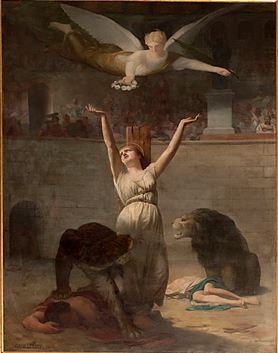
Christ is not absent from the post-ascension Church. He is present in His saints. He is not incarnate again in the same unique way as Bethlehem, but His life is being manifested again and again in His people.
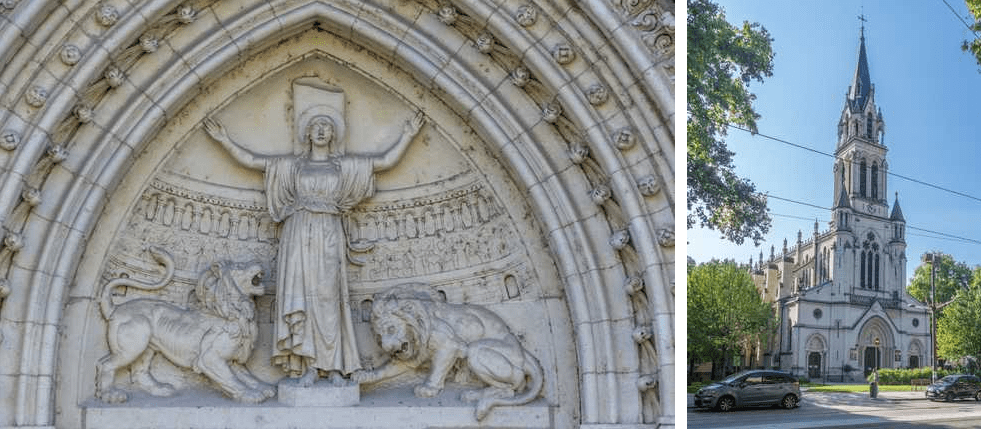
That gives more force to Diognetus 11.4. The Word who was from the beginning appeared new in history, and now He is always being born anew in the hearts of the saints. This is not only a mystical phrase. It is how early Christians interpreted the visible transformation of ordinary believers.
The slave woman becomes a witness. The tortured deacon refuses to deny Christ. The poor make many rich. The persecuted bless. The condemned are brought to life. The Church’s life becomes the place where the ascended Christ is still seen.
This also draws Pliny’s tortured slave women into the wider picture. Pliny sees enslaved women as sources of information to be extracted by force. The Church sees women like them as servants of Christ. The Lyons letter shows an enslaved woman, Blandina, becoming a living icon of the crucified Lord before the eyes of the suffering Church. In both cases, the Roman world and the Christian world are looking at the same kind of person but seeing two different realities. Rome sees low status. The Church sees the place where Christ can be made visible.
The Word Born Again in Believers
The line about the Word being “always born anew in the hearts of the saints” becomes clearer when we read it alongside the author’s description of Christian imitation.
In chapter 10, the author turns directly to Diognetus and explains what happens when someone receives the knowledge of the Father. The Christian life begins with God’s love, not with human achievement.
“If you also desire this faith, first receive the knowledge of the Father. For God loved human beings. For their sake He made the world, subjected all things on earth to them, gave them reason and understanding, permitted them alone to look upward to Him, formed them after His own image, sent to them His only-begotten Son, promised them the kingdom in heaven, and will give it to those who love Him.”
Anonymous, Epistle to Diognetus 10.1 to 10.2, c. A.D. 180.
The Christian life is rooted in divine generosity. God made, gave, formed, sent, promised, and will give. Human beings do not climb up to God by their own strength. They receive the love of the Father revealed in the Son.
Then the author describes the result:
“When you have come to know Him, with what joy do you think you will be filled? How will you love Him who first loved you so greatly? And loving Him, you will become an imitator of His goodness. Do not marvel that a human being can become an imitator of God. He can, if God wills it.”
Anonymous, Epistle to Diognetus 10.3 to 10.4, c. A.D. 180.
This is what it means for the Word to be born anew in believers. They become imitators of God’s goodness. That imitation is not domination, force, or worldly greatness. The author is careful about that.
“Happiness is not found in ruling over one’s neighbors, or in wanting to have more than the weak, or in being rich and using force against those beneath you. No one can imitate God in these things. They are foreign to His greatness.”
Anonymous, Epistle to Diognetus 10.5, c. A.D. 180.
This is a direct challenge to ordinary ancient ideas of status. The powerful man rules. The wealthy man gives from above and receives honor. The influential man gathers dependents and clients. But the Christian imitates God by bearing burdens.
“Whoever takes upon himself the burden of his neighbor, whoever is willing to benefit another who lacks what he himself has, whoever supplies to the needy what he has received from God and becomes a gift of God to those who receive it, this person is an imitator of God.”
Anonymous, Epistle to Diognetus 10.6, c. A.D. 180.
This is where the author’s theology becomes visible in ordinary life. The Word born in the heart produces people who bear the burdens of others. The ancient Christ appears newly in acts of mercy. The eternal Son becomes visible in patience, generosity, courage, and love.
So when Diognetus asks what kind of affection Christians have for one another, the answer is not merely that Christians are unusually friendly. The answer is that the Word is living in them. The love of God has taken root in human hearts, and that love has created a new kind of community.
And again, in the second-century sources, this is not presented as an optional higher path for a few unusually serious believers. This is Christian life. To receive the Father’s love is to become an imitator of His goodness. To know the Son is to bear the burdens of the neighbor. To have the Word born in the heart is to become, in some visible way, a gift of God to others.
This also connects back to the divine assignment in chapter 6. Christians are not permitted to abandon their post in the world because the Word is being born in them for the sake of the world. Their holiness is not an escape from the body of humanity. It is the soul-like presence by which God blesses the world that misunderstands them.
Why Christians Face Death Differently
Diognetus also asks why Christians despise death. The author answers that Christians do not fear bodily death as the ultimate evil because they have come to know true life in God.
“Then you will love and admire those who are punished because they will not deny God. Then you will condemn the deceit and error of the world, when you recognize the true life in heaven, when you despise what is only thought to be death here, and when you fear the true death reserved for those condemned to the eternal fire.”
Anonymous, Epistle to Diognetus 10.7, c. A.D. 180.
This is not a hatred of life or a desire for suffering. It is a reordering of fear. Christians can face earthly death because they believe the immortal one has given Himself for mortals. They believe that denying God is worse than dying. They believe that true life is found in heaven.
The author also points to martyrdom as evidence that Christianity is not merely human.
“Do you not see them thrown to wild beasts, so that they might be persuaded to deny the Lord, and yet they are not overcome? Do you not see that the more they are punished, the more others increase? These things do not seem to be the works of man. They are the power of God. They are proofs of His presence.”
Anonymous, Epistle to Diognetus 7.7 to 7.9, c. A.D. 180.
That last sentence is essential. The courage of Christians is not presented as natural bravery. It is a proof of God’s presence. Pliny saw stubbornness. Lucian saw delusion. The author of Diognetus sees the power of God at work.
This brings us back to the central line. If the Word is always being born anew in the hearts of the saints, then the courage of the martyrs is not merely admiration for a past teacher. It is the life of the risen Christ present in His people.
This courage also belongs to the general portrait of Christians. Pliny’s Christians are ordinary accused believers. Lucian’s Christians are the people he thinks he can mock as a group. Diognetus speaks broadly of Christians thrown to beasts and yet not overcome. These sources do not present courage before death as the private achievement of a spiritual elite. They present it as part of the public reputation of the Church.
That is what made the question unavoidable. The world knew how people normally behaved under threat. Christians did not always behave normally. Diognetus wanted to know why.
The Church as the Living Answer
By the end of the letter, we can see that the author answers Diognetus in two ways at once. He gives theological explanations, and he points to the Christian community as evidence.
Diognetus asks what God Christians worship. The author answers: the Creator who sent His Word. But he also points to Christians who refuse idols and worship the living God.
Diognetus asks why Christians love one another. The author answers: because God first loved them. But he also points to Christians who share tables, bear burdens, care for children, and live as brothers and sisters across the ordinary divisions of ancient society.
Diognetus asks why Christians despise death. The author answers: because the immortal one has been given for mortals. But he also points to Christians who endure punishment without denying the Lord.
Diognetus asks why this new people has appeared now. The author answers: because the appointed season of mercy has arrived. But he also points to the Church as the place where the ancient Word is being born anew.
The soul-and-body image helps us understand this. The Church is visible in the world, but the life that animates her is hidden in God. And the end of the image makes clear that this hidden life is not an optional calling. God has assigned Christians this post in the world, and they are not permitted to abandon it.
“Christians are held in the world as in a prison, yet they hold the world together. The immortal soul dwells in a mortal tent, and Christians dwell as sojourners among corruptible things while waiting for incorruptibility in heaven. The soul becomes better when treated harshly in food and drink, and Christians increase daily when they are punished. God has assigned them this great post, and they are not permitted to abandon it.”
Anonymous, Epistle to Diognetus 6.7 to 6.10, c. A.D. 180.
This is a daring claim. Christians appear weak, scattered, and vulnerable. Yet the author says they hold the world together. Not by political command, military strength, or social prestige, but by being the soul within it.
This is another place where the second-century context matters. Before Christianity became culturally common, the Church’s difference was easier to see. Christians were not yet the default religious population of the empire. They were a people whose worship, ethics, courage, family life, and mutual love stood out strongly enough to provoke questions.
And in Diognetus, the Church’s visible life is not merely a moral illustration added after the theology. It is part of the evidence. The author points to Christians and says, in effect, that their life cannot finally be explained by human invention. Their endurance is the power of God. Their courage is proof of His presence. Their love is the Word born anew in their hearts. Their place in the world is not accidental. It has been assigned by God.
That is why Diognetus is so valuable. It shows us Christianity before it became ordinary in the cultural sense. And precisely there, it shows that ordinary Christians were expected to be extraordinary by the standards of the world, not because they had abandoned ordinary life, but because God had placed them within ordinary life as the soul within the body.
Returning to Diognetus’s Opening Questions
By the end of the letter, the opening questions have all been answered.
Diognetus asks what God Christians trust. The author answers: the Creator of all things, invisible and sovereign, who sent His holy and incomprehensible Word.
Diognetus asks how Christians worship. The author answers: not by worshiping idols made of stone, bronze, wood, silver, iron, or clay, but by receiving the Word, living in faith, and becoming imitators of God’s goodness.
Diognetus asks why Christians reject the gods of the Greeks. The author answers: because those gods are lifeless works of human hands.
Diognetus asks why Christians do not simply practice religion like the Jews. The author answers, in his polemical way: because the Creator needs nothing from human hands and has now revealed Himself through His Son.
Diognetus asks what kind of affection Christians have for one another. The author answers: they love because God first loved them, and the Word is being formed in their hearts.
Diognetus asks why Christians despise death. The author answers: because the immortal one has been given for mortals, and Christians have learned to distinguish earthly death from the true death to be feared.
Diognetus asks why this new people has appeared now and not earlier. The author answers: because the appointed season of mercy has arrived, and the one who appeared new was from the beginning.
The whole letter gathers itself into this sentence:
“This is He who was from the beginning, who appeared as new and was found to be ancient, and who is always being born anew in the hearts of the saints.”
Anonymous, Epistle to Diognetus 11.4, c. A.D. 180.
That is the answer to Diognetus. The Church appears new because Christ has appeared in time. The faith is ancient because Christ is from the beginning. The Christian life continues because Christ is born anew in the hearts of the saints.
The author’s answer is not merely, “Here is what Christians believe.” It is, “Here is the one who explains Christians.”
What Later Centuries Could Obscure
The second-century witness matters because later Christian history can change how we hear these texts. Once Christianity became legal, favored, and socially normal, the contrast between Church and world could become harder to see. When large numbers of people became Christian by culture, family inheritance, imperial favor, or social expectation, the older marks of discipleship could seem less like the normal Christian life and more like the special calling of the unusually devout.
This does not mean that later monks, virgins, hermits, and ascetics were wrong. In many cases, they preserved and intensified a seriousness about discipleship that earlier Christians had regarded as basic. The problem comes when later readers project that division back into the second century and imagine that Pliny, Lucian, and Diognetus must be describing spiritual specialists.
They are not.
Pliny describes Christians who gather to worship Christ and bind themselves to moral obedience. Lucian describes Christians who deny the Greek gods, worship the crucified one, call one another brothers, and despise death. The author of Diognetus describes Christians who marry, have children, refuse infant exposure, share tables, live in cities, obey laws, suffer persecution, love all people, and confess heavenly citizenship.
These are not portraits of a monastery. They are portraits of the Church.
That is one reason the Epistle to Diognetus still has such force. It does not allow Christianity to become merely a private belief system held inside an otherwise ordinary pagan life. It presents Christianity as a whole way of being human, visible in worship, family, money, sexuality, courage, citizenship, and love.
The Word who was from the beginning does not merely give Christians new ideas. He makes them a new people.
And according to the author, He does not make them a new people only by giving them memories of something that happened long ago. He makes them new by being present in them. The ancient Word who appeared in history continues to be born anew in the hearts of the saints. That is why their life becomes evidence. That is why Aristides can say there is “something divine” mingled with this new people. That is why the Lyons martyrs can see Christ in Blandina. That is why Diognetus can call Christian endurance the power of God and proof of His presence.
The early Christian claim is not simply that Christ once lived. It is that Christ lives in His people.
And because Christ lives in His people, they are not permitted to abandon their post. The answer to a compromised world is not withdrawal into invisibility, nor surrender into sameness. The answer is the Church living as the soul in the body, scattered through the cities of the world, bearing witness to the Word who was from the beginning.
The Word Still Answers the Outsider
Every age has people like Diognetus. Some are skeptical. Some are sympathetic. Some are powerful. Some are patrons, readers, officials, intellectuals, or neighbors who have watched Christians closely enough to ask real questions.
What God do Christians trust? Why do they worship Jesus? Why do they refuse the idols everyone else accepts? Why do they speak of heaven while living on earth? Why do they call each other brothers and sisters? Why do they care for the weak? Why do they forgive enemies? Why do they face death with hope? Why does this ancient faith keep appearing new?
The Epistle to Diognetus answers those questions by pointing to Christ.
He is the Creator’s Word sent into the world. He is the Son sent not in tyranny but in gentleness. He is the righteous one given for the unrighteous, the incorruptible for the corruptible, the immortal for mortals. He is born in time, yet ancient as God. He appears new, yet He is from the beginning. He is not merely remembered by Christians; He is born anew in the hearts of the saints.
That is why the Christian people cannot be explained only as a social movement, a moral philosophy, or a religious association. The author insists that something more is happening in them. The ancient Word is making human beings new.
And because He is the Word, He answers both worlds addressed in this script. He fulfills the Scriptures of Israel, but He also answers the Gentile search for truth, reason, order, and the divine source of all things. What the prophets awaited and what the philosophers reached toward are fulfilled in the same living person.
The anonymous author does not give Diognetus a slogan. He gives him a vision of the Church as the place where the eternal Son is made visible in ordinary lives. Christians live in the world, but their citizenship is in heaven. They share tables, but not lawless beds. They have children, but do not expose them. They are persecuted, yet they love. They are put to death, yet they live. They lack everything, yet they abound.
And their place in the world is not an accident. It is an assignment.
“God has assigned them this great post, and they are not permitted to abandon it.”
Anonymous, Epistle to Diognetus 6.10, c. A.D. 180.
That line belongs beside the letter’s central confession of Christ.
“This is He who was from the beginning, who appeared as new and was found to be ancient, and who is always being born anew in the hearts of the saints.”
Anonymous, Epistle to Diognetus 11.4, c. A.D. 180.
That is the heart of the Epistle to Diognetus. It begins with the questions of a “most excellent” outsider, probably a man of influence, perhaps even the kind of patron who could request or sponsor such a written defense. It answers him not by hiding the strangeness of Christianity, but by explaining it.
The Church is strange because the Word has come. The Church is new because the eternal Son has appeared in time. The Church endures because that same Word continues to be born anew in the hearts of believers.
And in the second century, that was not supposed to describe only the rarest Christians. It was the life of the Church itself. God had placed them in the world as the soul in the body, and they were not permitted to abandon that post.