In the early fourth century AD, Christianity encountered one of the most serious intellectual challenges it would face before its legalization. This challenge did not come from rumor, satire, or popular mockery. It came from a Roman governor who believed that Christianity could be undone by reasoned comparison rather than brute denial.
That governor was Hierocles, active around AD 303 to 305 during the reign of Emperor Diocletian. Hierocles served as a provincial governor first in Bithynia and later in Egypt, regions with large and growing Christian populations. He was trained in Neoplatonic philosophy and played an active role in enforcing the Great Persecution that began in AD 303.
Hierocles did not argue that Jesus of Nazareth never existed. He did not deny that Christians claimed Jesus performed miracles. Instead, he argued that Christians had fundamentally misunderstood what miracles meant and had wrongly elevated Jesus to divine status.
If miracles justified honor, Hierocles claimed, then pagan philosophy already possessed a superior figure.
That figure was Apollonius of Tyana.
Apollonius of Tyana and the Pagan Alternative
Apollonius of Tyana was a first century philosopher, generally dated to approximately AD 15 to 100. He followed a strict Pythagorean discipline, practiced radical asceticism, and traveled widely throughout the eastern Roman world. His reputation as a wise man endured long after his death.
More than a century later, his life was written by Philostratus, a Greek sophist composing under the Severan emperors. Philostratus wrote The Life of Apollonius between approximately AD 217 and 238 at the request of Julia Domna, the wife of Emperor Septimius Severus. The work presents Apollonius as a divinely favored sage who heals the sick, casts out demons, foretells future events, and even raises a girl from death.
Yet Philostratus is careful throughout the biography to deny that Apollonius should be regarded as divine. After describing Apollonius receiving extraordinary admiration, Philostratus writes:
“Apollonius accepted none of the honors that were offered him, nor would he allow himself to be thought more than human, saying that wisdom was a gift of the gods, but that godhead itself belonged to them alone.” Life of Apollonius 8.7, written circa AD 220
Elsewhere, when rumors spread that Apollonius possessed supernatural status, Philostratus places these words in his mouth:
“I am a man, and I know the things that belong to men.” Life of Apollonius 7.38
Apollonius is therefore portrayed as a philosopher endowed with remarkable insight and power, but never as an object of worship. He teaches wisdom, rebukes excess, and models discipline, yet consistently deflects cultic devotion. This distinction lies at the heart of Hierocles’ argument.
Hierocles’ Challenge to Christian Worship
Around AD 303, Hierocles composed a work known as The Lover of Truth. Although the book itself is lost, its contents are preserved in extended form by Christian authors who responded directly to it, especially Lactantius and Eusebius of Caesarea.
According to Eusebius, writing between approximately AD 312 and 325, Hierocles argued that Apollonius performed extraordinary deeds equal to or greater than those attributed to Jesus, yet was never worshiped as a god. Eusebius summarizes the argument as follows:
“Apollonius, though he accomplished many remarkable deeds, was never thought worthy of divine honors, while Jesus, who performed nothing of the same kind, is worshiped by Christians as God.” Eusebius, Against Hierocles, written circa AD 312
The argument was carefully constructed. Hierocles conceded miracle claims. He conceded moral seriousness. What he rejected was the legitimacy of worship. In his view, Christians had irrationally crossed the boundary between admiration and deification.
The force of the challenge was not whether Jesus did powerful works, but whether such works justified calling him Lord.
Lactantius and the Question of Moral Purpose
Lactantius responded to Hierocles while the persecution was still active. Writing between approximately AD 303 and 311, Lactantius composed The Divine Institutes as a sustained defense of Christianity addressed to educated pagans. He had been trained in rhetoric and was well acquainted with philosophical argument.
Lactantius did not deny that Apollonius performed wonders. Instead, he dismantled the assumption that miracles alone established divine authority.
He writes:
“It is not by the performance of miracles that a man is proved to be righteous or divine, since even magicians are accustomed to do wonderful things. The question is to what end these works are directed and what teaching they support.” Divine Institutes 5.3
For Lactantius, the decisive issue was moral transformation. He presses this point with a series of pointed questions:
“What doctrine did Apollonius deliver that freed men from vice? What law did he establish that restrained lust, greed, pride, and cruelty? What people did he reform or what nation did he renew?” Divine Institutes 5.3
Lactantius then contrasts this with the ministry of Christ, whose works were consistently joined to ethical renewal:
“Christ did not heal to amaze, but to save. He restored sight not to astonish the crowd, but to bring men to righteousness. His power was joined to justice, his signs to truth, and his works to the reform of life.” Divine Institutes 4.13
The contrast is not subtle. Apollonius demonstrates personal discipline. Christ produces transformed communities. Apollonius instructs individuals. Christ reshapes moral life on a social scale.
Eusebius and the Question of History
Eusebius of Caesarea responded to Hierocles with an entire treatise titled Against Hierocles, written around AD 312 to 313. Eusebius’ response is notable for its historical rather than devotional focus.
He challenges Philostratus’ biography on methodological grounds, noting the distance between the events and their written account. Eusebius writes:
“Philostratus composed his narrative many years after the events, relying upon unnamed and unverifiable sources, weaving together tales more suited to dramatic entertainment than to the discipline of history.” Against Hierocles 1
Eusebius observes that the stories surrounding Apollonius grow more elaborate as time passes, a common marker of legendary development. By contrast, he argues that the Christian writings were published while eyewitnesses and hostile observers were still alive.
He states:
“The accounts concerning Jesus were published while many who had witnessed the events were still living, among both friends and enemies, and they were tested not in peace but under persecution.” Against Hierocles 2
For Eusebius, the issue is not which story is more inspiring, but which is better grounded in historical testimony.
The Moral Divide That Could Not Be Bridged
At this point, the comparison collapses under its own weight. Even within Philostratus’ account, Apollonius never produces a movement marked by moral transformation on a broad scale. He attracts admirers, students, and patrons, but he does not create communities defined by sacrificial love, sexual restraint, care for the poor, or forgiveness of enemies.
By contrast, Christian writers from the first and second centuries repeatedly describe a moral revolution that extended far beyond individual discipline. Christians abandoned infanticide, rejected sexual exploitation, cared for widows and orphans, redeemed abandoned children, and formed communities that crossed ethnic and social boundaries.
This difference explains why no one worshiped Apollonius. His life did not demand ultimate allegiance. His teaching did not claim authority over sin, judgment, or the destiny of humanity. Even his biographer carefully avoids such claims.
Eusebius presses this point with biting clarity:
“If Apollonius was so great, where are his temples? Where are his altars? Where are the men who endured torture and death rather than deny him?” Against Hierocles 3
Christians, by contrast, were willing to suffer and die not for an abstract philosophy, but for a person whom they believed had authority over life and death. Their worship was not the product of wonder, but of conviction rooted in transformed lives.
Power That Astonishes and Power That Converts
Hierocles believed Christianity could be dismantled by comparison. He assumed that once miracles were stripped of their mystique, worship would collapse. What he failed to understand was that Christianity never grounded worship in spectacle alone.
The early Christian response made a distinction that remains decisive. Power that astonishes is common. Power that converts is rare. Apollonius demonstrated personal discipline and philosophical insight, but his life did not generate a moral reordering of the world. Christ’s life, teaching, death, and resurrection claims did.
The early church did not deny that others worked wonders. It denied that wonders without moral authority, historical grounding, and transformative power deserved worship. Christians were not impressed merely by displays of power. They were persuaded by a figure whose authority produced humility, repentance, charity, and endurance under suffering.
That is why Apollonius remains a figure preserved in literary biography, while Jesus of Nazareth became the center of a movement that reshaped moral life across the Roman world.
Hierocles asked the right question, but he underestimated the answer.
Who deserves worship?
The early church answered not with spectacle, but with lives transformed at great cost. That answer has not lost its force.
Nothing in the long history of Roman hostility toward Christians compares to what unfolded under Diocletian. Earlier persecutions were real and often severe, but under Diocletian the empire launched a decade-long, organized effort to dismantle Christianity itself. His political reforms, his religious worldview, and the system he created known as the Tetrarchy all collided with a rapidly growing Christian movement that refused to participate in Rome’s sacrificial life. The result was the largest and most systematic attempt ever made to extinguish the Christian name.
Understanding why the Great Persecution erupts with such force in 303 requires beginning with the political and religious system Diocletian put into place.
The Tetrarchy and the Ideology of Unified Rule
The formal Tetrarchy was established in AD 293, but the divine pairing of Diocletian and Maximian began earlier, when they ruled together as co-emperors. This divine alignment was already well established before Galerius and Constantius were added as Caesars.
A panegyric delivered before the Tetrarchy was formally created makes this divine association unmistakable:
Panegyrici Latini 10.4 (AD 289) “Diocletian and Maximian, the one associated with Jupiter and the other with Hercules, govern the world with the majesty of the gods and the strength of heroes.”
This does not mean the emperors claimed personal divinity in the manner of Caligula or Domitian. They did not demand that sacrifices be offered to themselves. Instead, they presented themselves as ruling under Jupiter and Hercules, receiving divine legitimacy from these gods.
Under this political theology, unified worship was essential. Sacrifice maintained the gods’ favor. Refusal to sacrifice undermined the religious foundation that supported imperial stability.
When the Tetrarchy was formally created in AD 293, this divine framework expanded to include Galerius and Constantius as partners in the same cosmic order.
Diocletian’s Rise and His Vision for Stability
Fourth-century historian Aurelius Victor describes the turbulent origins of Diocletian’s reign:
Aurelius Victor, Epitome 39 (AD 360s) “Diocletian, a man of low birth but keen mind, was hailed emperor by the army after Numerian had been treacherously slain.”
Diocletian inherited an empire weakened by half a century of civil war, invasion, inflation, and constant leadership changes. For him, restoring Rome required both administrative reconstruction and the renewal of Rome’s relationship with the gods.
His public image reflected this divine partnership. Inscriptions and coins throughout his reign repeatedly invoke the gods who upheld his rule:
IOVI CONSERVATORI “To Jupiter the Protector”
HERCVLI DEFENSORI “To Hercules the Defender”
GENIVS POPVLI ROMANI “To the Guardian Spirit of the Roman People”
Obverse: IMP DIOCLETIANVS P AVG — “Emperor Diocletian, Dutiful Augustus,” radiate and cuirassed bust right. Reverse: IOVI AVGG — “To Jupiter of the Emperors,” showing Jupiter standing facing, head left, holding a scepter and Victory on a globe; eagle at his feet to the left
These inscriptions show not emperor worship but emperor alignment. Diocletian ruled under Jupiter’s protection, not as Jupiter himself. Christian refusal to sacrifice therefore struck at the foundation of the very system that legitimized the Tetrarchy.
A Rapidly Expanding Christian Movement
By the early fourth century, Christian communities were thriving. Eusebius describes this moment as a period of remarkable growth and public visibility:
Eusebius, Ecclesiastical History 8.1.1 (AD 311–325) “Before the persecution, the churches were at peace and multiplied everywhere. Rulers honored the Christians. Crowds assembled in the churches. New buildings rose from their foundations in every city.”
Archaeology confirms this account. Christian buildings became larger and more numerous; clergy gained public recognition; and Christians entered civic roles and even imperial service. A movement that once met quietly in homes now built large structures in major cities.
For an imperial system built upon unified sacrifice, this expanding Christian public life created unavoidable tension.
Galerius and the Push Toward Hostility
Lactantius, an eyewitness to these events, identifies Galerius as the chief instigator behind the coming persecution:
Lactantius, On the Deaths of the Persecutors 11 (AD 313–315) “Galerius, a man fierce in nature and hostile to the name of the Christians, urged the emperor daily to destroy the churches and to compel all to sacrifice.”
Galerius believed the empire’s troubles stemmed from neglect of the gods. Christian refusal to sacrifice was not private dissent but a direct challenge to Rome’s divine protection and the religious foundation of the Tetrarchy.
Diocletian hesitated for several years, but as pressure increased, he gradually shifted toward Galerius’s position.
Signs, Omens, and the Turning Point
Lactantius records a critical moment in AD 299, when the imperial household sought omens through a traditional sacrifice:
Lactantius, On the Deaths of the Persecutors 10 (AD 313–315) “When Diocletian and Galerius consulted the oracle, the diviners declared that the presence of Christians had disturbed the sacred rites.”
Christians in the imperial service did not participate in the gestures of reverence. The diviners blamed them for the failure of the ritual. In a political system where divine favor upheld the rulers, this carried enormous weight.
Eusebius describes the resulting shift in Diocletian’s attitude:
Eusebius, Ecclesiastical History 8.2.1 (AD 311–325) “Diocletian was persuaded that the time had come to wage war against the churches as if against enemies of the state.”
By AD 302, the decision was near. By early AD 303, it was set.
The Destruction of the Nicomedia Church
The Great Persecution opened with a symbolic act carried out at the political center of the Eastern empire. On February 23, AD 303, Diocletian ordered the destruction of the major church in Nicomedia. Lactantius, writing only a decade later, gives us a vivid description of what happened that morning:
Lactantius, On the Deaths of the Persecutors 12 (AD 313–315) “On the morning of the day appointed for the celebration of the Terminalia, when the sun had not yet risen, the prefect together with tribunes and officers arrived at the church in Nicomedia, and having broken open the doors, they searched for the image of the god of the Christians, the Scriptures, and all that they used in their worship. When they found the Scriptures, they burned them; everything else they destroyed. The soldiers were allowed to seize whatever was found inside.”
The reference to the Terminalia, a festival dedicated to boundaries, is significant. Diocletian was drawing a line between the old religious order and the presence of Christianity in public life. By choosing this date, he signaled that the empire was redrawing its religious boundaries.
Eusebius, writing from within the Eastern provinces, confirms the same event from a different vantage point:
Eusebius, Ecclesiastical History 8.2.4 (AD 311–325) “The imperial edict commanded that the church in Nicomedia be leveled to the ground. Those who were present saw the building demolished from its foundations, and the sacred Scriptures committed to the flames.”
The two accounts, one Western and Latin (Lactantius) and one Eastern and Greek (Eusebius), give us the fullest picture we have of this opening blow.
The First Edict of 303
After the church was destroyed, Diocletian issued the first of four imperial laws. Lactantius reproduces the text in summary form, and his account is our primary source for its contents. According to him, the first edict contained four major provisions:
All churches were to be destroyed.
All Scriptures were to be burned.
Christians were to lose legal rights and protections.
Those in government positions were to be removed unless they sacrificed.
Here is the full text as preserved in Lactantius:
Lactantius, On the Deaths of the Persecutors 13 (AD 313–315) “An edict was published ordering that the assemblies of the Christians should be abolished, that their churches be torn down, that the Scriptures be burned, that those who held places of honor be degraded, that servants who persisted in the Christian faith be made incapable of freedom, and that those under accusation of following Christianity be not allowed to defend themselves in court.”
The brutality of the law becomes clear as Lactantius explains its underlying logic:
Lactantius, On the Deaths of the Persecutors 13 (AD 313–315) “The emperor believed that if he took away the opportunity of meeting for worship and destroyed their Scriptures, the religion itself could be abolished.”
This is the key sentence. It shows the intent behind the Great Persecution: not merely to pressure Christians, but to erase the Christian movement by attacking its buildings, its Scriptures, and its legal status.
Refusal and Immediate Violence
Eusebius records the immediate resistance of some Christians in Nicomedia who tore down the imperial edict publicly:
Eusebius, Ecclesiastical History 8.5.1 (AD 311–325) “One of the Christians, moved with holy zeal, tore down the imperial edict that had been posted in a public place and put it into shreds as something profane and illegal.”
According to Eusebius, this man was arrested, tortured, and executed. His act represents one of the earliest martyrdoms of the Great Persecution.
Impact Across the Empire
The First Edict was carried out differently in East and West. In the East, where Galerius wielded influence, the laws were enforced strictly. Eusebius describes widespread destruction:
Eusebius, Ecclesiastical History 8.2.5 (AD 311–325) “Churches were torn down from top to bottom, and the sacred Scriptures were cast into the fire in the open marketplaces.”
In the West, Constantius enforced the law only minimally. Churches were destroyed, but he did not pursue Christians or burn Scriptures with the same severity. As Lactantius notes:
Lactantius, On the Deaths of the Persecutors 15 (AD 313–315) “Constantius, although he destroyed a few buildings, spared the Christians themselves and took no delight in their suffering.”
This divergence becomes much more pronounced in the years that follow. The edicts will be applied ruthlessly in the East and with comparative restraint in the West.
The Second Edict: Imprisonment of the Clergy
The First Edict had targeted buildings, Scriptures, and legal rights. When this failed to break Christian resolve, the imperial court issued a second command. This time, the goal was to dismantle the leadership of the churches.
Lactantius provides the clearest account:
Lactantius, On the Deaths of the Persecutors 15 (AD 313–315) “Diocletian published another edict, ordering that all the bishops and ministers should be thrown into prison.”
This marked a dramatic escalation. It was not aimed at all Christians, but at the entire structure that led and organized Christian communities.
Eusebius confirms the severity in the Eastern provinces:
Eusebius, Ecclesiastical History 8.6.1 (AD 311–325) “An edict was issued that all who were called ministers of the Word should be seized and committed to prison. And there was nothing mild in the execution of this command.”
Prisons filled rapidly. Eusebius writes:
Eusebius, Ecclesiastical History 8.6.6 (AD 311–325) “The prisons, which had previously held murderers and robbers, were now filled with bishops, presbyters, deacons, readers, and exorcists.”
This detail is important. It shows the scale of the arrests and also how the empire quickly ran out of space to hold so many clergy.
The Third Edict: Forcing the Clergy to Sacrifice
By late 303, the prisons were overflowing. Rather than release the clergy, the imperial court issued a third edict directing that all imprisoned leaders be compelled to sacrifice.
Lactantius writes:
Lactantius, On the Deaths of the Persecutors 16 (AD 313–315) “A third edict commanded that all those in prison should be forced by every means to sacrifice.”
The phrase “by every means” implies torture, starvation, deprivation, and psychological pressure. Eusebius describes what happened in the East:
Eusebius, Ecclesiastical History 8.6.8 (AD 311–325) “Some endured every form of punishment in the attempt to force them to sacrifice; they suffered rackings, burnings, and all kinds of torment.”
Some clergy yielded. Many did not. Those who refused were either kept imprisoned or executed.
The Fourth Edict: Universal Sacrifice
The fourth edict marked the full and final escalation. While the first three focused on property and clergy, the fourth edict extended to every Christian, commanding everyone to sacrifice to the gods or face punishment.
Lactantius states:
Lactantius, On the Deaths of the Persecutors 17 (AD 313–315) “A fourth edict was issued ordering that all persons, without exception, should sacrifice and taste the offerings.”
This was the heart of the Great Persecution. For the first time in Roman history, a universal law required every Christian in the empire to sacrifice on pain of imprisonment, torture, or death.
Eusebius describes the impact:
Eusebius, Ecclesiastical History 8.6.9 (AD 311–325) “The command was given that all the inhabitants of the cities should be compelled to sacrifice and pour libations to the idols. Those who refused were subjected to various punishments.”
This edict brought the entire Christian population into direct conflict with the state.
Diverging Paths: East and West
The edicts applied to the whole empire, but enforcement differed dramatically.
The Western Provinces
Constantius, ruling in Gaul and Britain, enforced only part of the First Edict. He destroyed some church buildings but refused to persecute Christians themselves.
Lactantius remarks on this restraint:
Lactantius, On the Deaths of the Persecutors 15 (AD 313–315) “Constantius, though he destroyed a few buildings, did not harm the Christians and took no pleasure in their suffering.”
Under Constantine (after 306), persecution ceased entirely in the West.
The Eastern Provinces
The East was ruled first by Diocletian and Galerius, then by Galerius alone, and finally by Maximinus Daia. Here the edicts were enforced with full severity for nearly a decade.
Eusebius records the intense suffering that followed:
Eusebius, Ecclesiastical History 8.9.1 (AD 311–325) “In the regions under the rule of Maximinus an unbroken series of evils overwhelmed the Christians.”
This distinction between East and West explains why the Great Persecution lasted much longer in some regions. The universal sacrifice edict was enforced fiercely in the East and only lightly in the West.
The Scale of the Persecution
The four edicts created the most comprehensive legal assault Christianity ever faced:
• Churches destroyed • Scriptures burned • Legal rights removed • Clergy imprisoned • Clergy forced to sacrifice • All Christians required to sacrifice • Severe punishments for refusal • Enforcement lasting nearly a decade in the East
This was not a short moment, like the requirement under Decius. This was an attempt to eradicate Christian identity, its leadership, its Scripture, and its existence as a public movement.
The Height of the Persecution
After the fourth edict extended the requirement of sacrifice to every Christian in the empire, the persecution entered its most violent phase. This period, stretching from 303 through the early 310s in the East, produced scenes of cruelty unmatched in earlier Roman history. Eusebius and Lactantius, both eyewitnesses to portions of these events, provide detailed accounts of torture, imprisonments, and executions across the provinces.
Torture and Public Punishments
Eusebius describes how the authorities attempted to break Christian resolve with punishments designed to terrify the entire population.
Eusebius, Ecclesiastical History 8.7.1 (AD 311–325) “Some were scourged with whips, torn by the rack, and stretched out upon instruments of torture; some were burned with fire; others were crucified; some were beheaded; many were condemned to the mines or to the wild beasts.”
He emphasizes that these punishments were not isolated incidents but part of a coordinated effort:
Eusebius, Ecclesiastical History 8.7.2 (AD 311–325) “The cruelty of the governors was such that no words can adequately describe the variety and severity of their torments.”
Lactantius gives similar testimony, describing how the persecutors operated with deliberate intent to inflict suffering:
Lactantius, On the Deaths of the Persecutors 18 (AD 313–315) “Those who refused to sacrifice were tortured with every kind of instrument, and the cruelty of the judges seemed to have no end.”
These statements establish the environment of terror that spread through the Eastern provinces.
The Persecution in Egypt
Egypt experienced some of the most intense violence. Eusebius, who lived in Caesarea but had deep ties to Egypt, records the ferocity of the punishments in Alexandria:
Eusebius, Ecclesiastical History 8.9.4 (AD 311–325) “In Alexandria countless numbers were put to death. Some were beheaded; others burned; others cast into the sea; others given to the sword. The massacre continued day after day.”
He describes the courage of the martyrs:
Eusebius, Ecclesiastical History 8.9.5 (AD 311–325) “Not even the women were spared; they endured the same tortures as the men, and many met their end with remarkable courage.”
Egypt’s large Christian population meant that resistance was strong, and so was the response of the authorities. The violence continued for years.
The Suffering in Palestine
Eusebius’s Martyrs of Palestine (an appendix to his Ecclesiastical History) is one of the most detailed regional martyr narratives from the ancient world. In Part 4 of the main history, he describes the beginning of the violence:
Eusebius, Ecclesiastical History 8.8.1 (AD 311–325) “In Palestine, the persecutions were incessant. Every day brought new trials, and the judges devised new forms of torture.”
Some Christians were mutilated:
Eusebius, Ecclesiastical History 8.8.3 (AD 311–325) “Some had one eye gouged out, others had the joints of their ankles burned or severed, and thereafter were sent to the copper mines.”
Others were executed publicly:
Eusebius, Ecclesiastical History 8.9.6 (AD 311–325) “Many were beheaded or burned alive, so that the flames and the sword together took their daily victims.”
These passages give a vivid picture of the relentless and creative brutality that characterized the persecution in Palestine.
The Persecution Under Maximinus Daia
When Diocletian and Maximian abdicated in AD 305, the persecution did not end. Instead, it intensified in the East under Maximinus Daia, nephew of Galerius. Eusebius portrays his rule in especially dark terms:
Eusebius, Ecclesiastical History 8.14.1 (AD 311–325) “Maximinus, more cruel than any before him, inflamed with an unbounded hatred of the Christians, drove all to madness by his tyrannical measures.”
Under Maximinus, local officials were encouraged to compete in displays of cruelty, and mobs were incited to attack Christian communities.
Eusebius writes:
Eusebius, Ecclesiastical History 9.2.1 (AD 311–325) “The provinces under Maximinus were filled with executions; the tortures were carried out not only in the cities but in every village and district.”
This period saw some of the most gruesome executions in recorded Christian history.
The Attempt to Eradicate Christian Scripture
One of the defining features of the Great Persecution was the attempt to eliminate Christian Scripture. This was a continuation of the First Edict, which targeted the sacred writings. Eusebius describes systematic searches:
Eusebius, Ecclesiastical History 8.2.5 (AD 311–325) “The sacred Scriptures were sought out with diligence, and when found, they were burned in the open squares.”
Lactantius adds:
Lactantius, On the Deaths of the Persecutors 12 (AD 313–315) “They burned the Scriptures with fire, believing that if the writings were destroyed the religion itself would perish.”
This attempt to eliminate Christian Scripture sets the Great Persecution apart from all earlier Roman actions.
The Persecution of Bishops and Teachers
Because bishops and teachers played a central role in community identity, the authorities targeted them specifically. Eusebius emphasizes how the persecution dismantled Christian leadership:
Eusebius, Ecclesiastical History 8.6.6 (AD 311–325) “The prisons, which had previously been filled with criminals, were now crowded with bishops, presbyters, deacons, readers, and exorcists.”
This was not incidental. Destroying the leadership was essential to the imperial plan. Without clergy, the Christian movement would lose cohesion. Without bishops, the sacraments could not be administered. Without teachers, instruction would cease.
Crucifixion, Mutilation, and the Mines
The Great Persecution included punishments that earlier emperors rarely used against Christians, including crucifixion. Eusebius documents instances where believers were nailed to crosses:
Eusebius, Ecclesiastical History 8.7.5 (AD 311–325) “Some were nailed to crosses, others were stretched out on them while still alive.”
Condemnation to the mines was common:
Eusebius, Ecclesiastical History 8.12.1 (AD 311–325) “Many were sent to the mines in Lebanon, Cilicia, and Palestine, with one eye mutilated and the joints of the ankles burned.”
These punishments were intended not only to kill but to degrade and terrorize.
The Emotional Weight of the Persecution
Eusebius breaks from his usual historical tone when describing the intensity of the suffering:
Eusebius, Ecclesiastical History 8.12.3 (AD 311–325) “It is impossible to recount the sufferings of the martyrs one by one, for the cruelty of the tyrants exceeded all bounds.”
This statement from an eyewitness underscores why the Great Persecution stands apart in scale and severity.
Galerius Struck with Illness
For nearly eight years after the first edict, the persecution raged most violently in the Eastern empire under Galerius and, later, Maximinus Daia. But in AD 310–311, Galerius was struck by a sudden and horrifying disease. Lactantius describes the illness in graphic detail, presenting it as divine judgment.
Lactantius, On the Deaths of the Persecutors 33 (AD 313–315) “A malignant ulcer broke out in the secret parts of Galerius’s body, which gradually spread and ate into his vitals; from it issued a stench so foul that it was impossible for any man to endure it.”
The disease worsened over time:
Lactantius, On the Deaths of the Persecutors 33 (AD 313–315) “It became a torpid mass of corrupt flesh, breeding worms which no medical skill could remove. The surgeons cut away decayed pieces, but the wound only grew larger.”
Eusebius confirms the same picture:
Eusebius, Ecclesiastical History 8.16.2 (AD 311–325) “He was reduced to such a condition by an incurable disease that even his physicians could no longer approach him because of the unbearable stench.”
In this agony, Galerius made a decision no one expected.
Galerius Issues the Edict of Toleration (AD 311)
On April 30, AD 311, Galerius issued an imperial proclamation ending the persecution he had driven for a decade. Lactantius preserves the text in full. This is the earliest surviving imperial law granting legal status to Christianity.
Here is the complete edict, without abbreviation:
Lactantius, On the Deaths of the Persecutors 34 (AD 313–315) “Among the other measures that we have taken for the advantage of the empire, we had desired first of all to set everything right in accordance with the ancient laws and public discipline of the Romans. We therefore sought to restore the worship of the gods who sustain our empire, believing that the Christians had abandoned the religion of their ancestors.
Since, however, many persisted in their purpose, and since we saw that they neither paid reverence to the gods nor worshipped them, we therefore judged it necessary to command that they return to the practices of the ancients.
Yet because many obeyed not our decrees but endured all kinds of suffering, and because they showed that they could in no way be turned from their purpose, we are compelled by our utmost indulgence to extend pardon to them, so that once more they may be Christians and may build the places in which they gather, always provided that they do nothing contrary to good order.
It will be required of them that they pray to their God for our safety and that of the empire, and for their own, so that the state may be preserved in security on every side and that they may live in peace within their own dwellings.”
This is one of the most extraordinary documents in Roman history. The man who insisted Christianity must be destroyed now publicly acknowledges:
the Christians endured suffering,
they could not be broken,
and the imperial court now permits them to exist again.
After Galerius: Maximinus Daia Continues the Persecution
Although Galerius reversed imperial policy in 311, the violence did not end everywhere. In the Eastern provinces under Maximinus Daia, persecution continued until 313.
Eusebius describes Maximinus’s renewed hostility:
Eusebius, Ecclesiastical History 9.1.2 (AD 311–325) “Maximinus, inflamed with greater rage than before, would not permit the decree of Galerius to be carried out in his provinces.”
He incited cities to petition for continued persecution:
Eusebius, Ecclesiastical History 9.2.4 (AD 311–325) “Some of the cities sent formal petitions requesting that the Christians be forbidden to inhabit their lands. Maximinus eagerly granted such requests.”
It is only after Maximinus’s military defeat in 313 that Christianity finally receives full legal protection in the East.
Constantine and Licinius End the Persecution (AD 313)
In early 313, Constantine and Licinius met in Milan and jointly agreed to extend full toleration across the empire. Although the exact text survives in a provincial copy preserved by Lactantius, its purpose is clear: to restore full freedom to Christian communities.
The proclamation states:
Lactantius, On the Deaths of the Persecutors 48 (AD 313–315) “We resolved to grant both to the Christians and to all others full authority to observe whatever worship they choose, so that whatever divinity resides in heaven may be favorable to us and to all who are under our authority.”
By this point:
Constantius had always been mild in the West
Constantine ended persecution in 306
Galerius ended the persecution in 311 in his realms
Maximinus’s defeat in 313 ended the last violent enforcement
Thus, AD 313 marks the end of the Great Persecution, nearly ten years after it began.
The Long Aftermath
Eusebius depicts the rejoicing of Christian communities once the persecution ceased:
Eusebius, Ecclesiastical History 10.2.1 (AD 311–325) “After the tyrants had been removed, God wiped away every tear from their eyes, and the festival of freedom was celebrated throughout the cities.”
Churches were rebuilt. Leaders returned from exile. Scriptures were recopied. The memory of the martyrs became foundational to Christian identity.
The Great Persecution had failed. Instead of destroying Christianity, it had purified and strengthened it.
Eyewitness Martyr Testimonies and Christian Voices During the Persecution
To understand the intensity of the Great Persecution, it is necessary to hear the voices of those who lived through it. Beyond the narratives of Lactantius and Eusebius, several eyewitness accounts survive describing the sufferings of Christians across the empire. These texts record the trials, tortures, and executions of believers who endured the decade between 303 and 313. Their voices form one of the richest collections of primary sources from early Christian history.
The Martyrs of Palestine
Eusebius’s Martyrs of Palestine is among the most detailed eyewitness accounts of martyrdom from the ancient world. Written between AD 311 and 313, it describes the executions he witnessed in Caesarea and the surrounding regions.
Apphianus
The story of Apphianus is among the most vivid:
Eusebius, Martyrs of Palestine 4.7–8 (AD 311–313) “Apphianus was struck repeatedly on the face, yet his courage did not falter. When they wrenched his limbs with instruments of torture, he remained unshaken in his purpose. They wrapped his feet in linen steeped in oil and set them on fire. Then they bound heavy stones to him and cast him into the sea.”
Procopius
Eusebius also records the martyrdom of Procopius, a reader in the church:
Eusebius, Martyrs of Palestine 1.2 (AD 311–313) “Procopius was brought before the governor. When he refused to sacrifice, he was immediately beheaded, sealing his testimony with the sword.”
Agapius and the Beasts
One of the most dramatic scenes takes place in the amphitheater:
Eusebius, Martyrs of Palestine 6.3 (AD 311–313) “Agapius was sentenced to the wild beasts. When he confessed Christ boldly, the beasts were let loose upon him, and he met his end with steadfast courage.”
Pamphilus and the Scholars
Eusebius’s own mentor and teacher, Pamphilus of Caesarea, was martyred along with a group of scholars:
Eusebius, Martyrs of Palestine 11.1 (AD 311–313) “Pamphilus, the most admirable of men, endured imprisonment for two years. After countless tortures, he and his companions were put to death.”
The Alexandrian Martyrs
Alexandria remained one of the largest Christian centers in the empire, and the persecution struck it with unusual violence.
Eusebius writes:
Eusebius, Ecclesiastical History 8.9.6 (AD 311–325) “Some were burned, some were drowned, some beheaded, some given to the sword, and others cast into the fire. The massacre continued day after day.”
Peter of Alexandria
Peter, bishop of the city, was executed in AD 311:
Eusebius, Ecclesiastical History 8.13.2 (AD 311–325) “Peter, who presided over the church in Alexandria, was arrested and beheaded, giving a noble example to the flock.”
Phileas of Thmuis
Phileas, another Egyptian bishop, wrote an eyewitness letter describing the prisons and tortures. Eusebius preserves part of it:
Eusebius, Ecclesiastical History 8.10.2–3 (AD 311–325) “Phileas wrote in detail of the sufferings of the blessed martyrs: how they stood firm under countless torments, how the judges exhausted themselves in devising new forms of cruelty, and how the martyrs endured everything with admirable patience.”
The Egyptian Confessors Sent to the Mines
Among the most horrifying scenes is the mutilation and transportation of Egyptian confessors to the mines of Palestine.
Eusebius, Ecclesiastical History 8.8.3 (AD 311–325) “Some had the one eye gouged out, others had the joints of their ankles burned or severed. Then they were sent to the mines, bearing in their bodies the marks of Christ’s sufferings.”
These punishments were intended to break morale and terrorize Christian communities.
Martyrdom in Syria and Asia Minor
While Palestine and Egypt preserve the richest martyr narratives, persecution also raged throughout Syria and Asia Minor.
Eusebius, Ecclesiastical History 8.12.1 (AD 311–325) “Throughout Syria and the regions beyond, countless numbers were sent to the mines after being mutilated in their eyes and feet.”
And in a passage describing Maximinus Daia’s reign:
Eusebius, Ecclesiastical History 9.2.1 (AD 311–325) “The provinces under Maximinus were filled with executions, both in the cities and in the villages.”
The Martyrdom of Lucian of Antioch
Lucian, a priest and renowned biblical scholar, was executed in AD 312 at Nicomedia.
Eusebius, Ecclesiastical History 9.6.3 (AD 311–325) “Lucian, a man distinguished for his skill in the divine Scriptures, sealed his testimony at Nicomedia, offering a noble example of endurance.”
Methodius of Olympus
Methodius, an important theological writer, was martyred near the end of Galerius’s reign. Though Eusebius does not describe the details, Jerome preserves the tradition:
Jerome, On Illustrious Men 83 (AD 392) “Methodius, bishop of Olympus, suffered martyrdom at the end of the reign of Galerius.”
His death represents the loss of one of the era’s great Christian thinkers.
Peter of Alexandria’s Pastoral Letters
Peter, the martyred bishop of Alexandria, wrote pastoral letters during the persecution addressing those who had lapsed under torture.
Peter of Alexandria, Canonical Letter 4 (AD 306–311) “Those who betrayed the faith under the compulsion of torture must be received with mercy after they have shown due repentance, for they fell under force and not of their own will.”
These letters show how deeply the persecution impacted Christian pastoral life and discipline.
Restoration Inscriptions and Archaeological Witnesses
After the persecution ended, inscriptions commemorated the rebuilding of destroyed churches. One from North Africa reads:
Cirta inscription (Numidia), c. 315 “Restored from the ruins of the persecution.”
Archaeological evidence also preserves burn layers, smashed furnishings, and remnants of hidden Scriptures, confirming the literary accounts of destruction.
Conclusion: The Decade Rome Tried to Erase the Church
The Great Persecution stands alone in the history of the Roman Empire. Earlier persecutions were real and often severe, but none matched the scale, duration, coordination, or intent of the measures launched between AD 303 and 313. Across the Eastern empire especially, Christians faced a comprehensive legal and physical assault designed not merely to punish them but to erase their Scriptures, dismantle their leadership, destroy their churches, and compel all believers to abandon their faith.
The laws progressed step by step until the entire Christian population fell under their weight. Churches were torn down, Scriptures burned, clergy imprisoned, clergy tortured, and finally all Christians forced to sacrifice under threat of death. The edicts touched every element of Christian life.
The purpose is stated clearly in the primary sources. Lactantius records Diocletian’s reasoning with stark precision:
Lactantius, On the Deaths of the Persecutors 13 (AD 313–315) “He believed that if he took away the opportunity of meeting for worship and destroyed their Scriptures, the religion itself could be abolished.”
No earlier emperor had attempted something so broad, so systematic, or sustained for so many years.
The Witness of the Martyrs
The eyewitness narratives from the period show Christians suffering with extraordinary courage. These testimonies were not written decades later. They are contemporary accounts of real people, recorded by those who saw them.
Apphianus in Caesarea stood firm under repeated blows, brutal torture, and finally death by drowning:
Eusebius, Martyrs of Palestine 4.7–8 (AD 311–313) “Apphianus was struck repeatedly on the face, yet his courage did not falter. When they wrenched his limbs with instruments of torture, he remained unshaken in his purpose. They wrapped his feet in linen steeped in oil and set them on fire. Then they bound heavy stones to him and cast him into the sea.”
Procopius was executed in a single stroke for refusing to sacrifice. Agapius went to the beasts and met them with fearless confession. Pamphilus, mentor of Eusebius, endured two years of imprisonment before being put to death. Phileas of Thmuis described the judges exhausting themselves in inventing new torments. The Egyptian confessors bore mutilated bodies as marks of their faith. Lucian of Antioch sealed his testimony at Nicomedia. Methodius of Olympus, a profound Christian thinker, was killed late in the persecution. Peter of Alexandria guided his flock with pastoral letters, then faced martyrdom himself.
These names, and many more whose stories survive only in fragments or inscriptions, represent a generation of Christians who stood firm when Rome sought to destroy their faith at its roots.
Eusebius summarizes their endurance with solemn simplicity:
Eusebius, Ecclesiastical History 8.13.12 (AD 311–325) “In all these trials the athletes of religion shone with patient endurance, for they held fast to their faith with unshaken resolve.”
The Failure of the Persecution
Despite the severity of the laws and the brutality of their enforcement, the persecution ultimately failed. It failed because Christians refused to abandon their faith. It failed because Scripture was recopied even while authorities burned it. It failed because the bishops and clergy held the communities together under unimaginable pressure. It failed because Christian identity proved stronger than imperial coercion.
Galerius, the chief architect of the persecution, acknowledged this failure publicly in his Edict of Toleration:
Lactantius, On the Deaths of the Persecutors 34 (AD 313–315) “Since many obeyed not our decrees but endured all kinds of suffering, and since they showed that they could in no way be turned from their purpose, we are compelled by our utmost indulgence to extend pardon to them.”
The persecutor confessed that he could not break the Christians. He allowed them once again to gather, rebuild, and worship.
Restoration After the Storm
Once Maximinus Daia was defeated in 313, the last remnants of persecution collapsed. Constantine and Licinius extended full religious freedom to all:
Lactantius, On the Deaths of the Persecutors 48 (AD 313–315) “We resolved to grant both to the Christians and to all others full authority to observe whatever worship they choose, so that whatever divinity resides in heaven may be favorable to us and to all who are under our authority.”
The rebuilding began immediately. Eusebius describes the rejoicing of Christian communities:
Eusebius, Ecclesiastical History 10.2.1 (AD 311–325) “After the tyrants had been removed, God wiped away every tear from their eyes, and the festival of freedom was celebrated throughout the cities.”
Inscriptions across the empire testify to this restoration:
Cirta inscription (Numidia), c. 315 “Restored from the ruins of the persecution.”
Churches were rebuilt larger than before. Scriptures were recopied. Clergy returned from exile. Communities gathered openly. The names of the martyrs were honored. The memory of their courage became foundational to Christian identity and theology.
A Final Reflection
The Great Persecution did not destroy Christianity. It revealed its strength. It did not silence Christian witness. It amplified it. It did not weaken the church. It purified and deepened it.
The empire had attempted to extinguish the Christian faith by burning its Scriptures, breaking its leadership, and torturing its people. Instead, Christianity emerged from this decade more unified, more resilient, and more firmly rooted in the conviction that no earthly power could overcome the truth of the gospel.
When the persecution ended, Christianity did not merely survive. It stood on the threshold of transformation. Within a single generation, emperors who once sought its destruction would support its growth and honor its martyrs.
The Great Persecution remains one of the defining moments in Christian memory: a testimony to suffering, endurance, and the unwavering faith of those who stood firm when the world pressed hardest against them.
40% Growth Then, 5% Growth Now — What We Must Learn Anew
Our goal in this session is to present the essence of the Christian faith as seen through the earliest and most significant pieces of literature from the ancient church and from the Roman world in which it emerged. We are seeking to understand what is essential for Christianity—those truths that form the common foundation of belief and moral life—as distinguished from what is diverse in local application or interpretation. From the earliest creeds of the 30s AD to the writings of Eusebius in the early 300s, the evidence will show that the rule of faith remained consistent in its core confession of God, Christ, the Spirit, resurrection, judgment, and ethical life, while at the same time the Church celebrated and respected diversity in practice and interpretation among its many communities.
Earliest Christian Creeds and Hymns
Passage
Approx. Date (Content)
Theme / Focus
Broad Scholarly Consensus
1 Cor 15:3-7
Early 30s AD
Death, burial, and resurrection of Christ
Universal — accepted by atheist and believing scholars as the earliest Christian tradition
Phil 2:6-11
Early 30s AD
Pre-existence, incarnation, and exaltation
Universal — recognized as a pre-Pauline hymn used in earliest worship
Rom 1:3-4
Early 30s AD
Son of God declared in power by resurrection
Strong — widely regarded as an early Palestinian creed
1 Thess 4:14
40s AD
Resurrection hope and life to come
Strong — early confessional formula of faith and hope
Gal 3:28
40s AD
Equality and unity of believers in Christ
Strong — baptismal or ethical confession of oneness
Rom 12:9-13
40s AD
Love and moral conduct among believers
Moderate–Strong — early ethical summary shaped by creed
Cited by Paul in Romans (AD 57-58); creed from the early 30s AD.
Concerning his Son, who was descended from David according to the flesh, and was declared to be the Son of God in power according to the Spirit of holiness by his resurrection from the dead, Jesus Christ our Lord. (Rom 1:3-4 ESV)
1 Corinthians 15:3-11
Cited by Paul in 1 Corinthians (AD 54-55); creed from the early 30s AD.
For I delivered to you as of first importance what I also received: that Christ died for our sins in accordance with the Scriptures, that he was buried, that he was raised on the third day in accordance with the Scriptures, and that he appeared to Cephas, then to the twelve. Then he appeared to more than five hundred brothers at one time, most of whom are still alive, though some have fallen asleep. Then he appeared to James, then to all the apostles. Last of all, as to one untimely born, he appeared also to me. For I am the least of the apostles, unworthy to be called an apostle, because I persecuted the church of God. But by the grace of God I am what I am, and his grace toward me was not in vain. On the contrary, I worked harder than any of them — though it was not I, but the grace of God that is with me. Whether then it was I or they, so we preach and so you believed. (1 Cor 15:3-11 ESV)
Philippians 2:6-11
Cited by Paul in Philippians (AD 55-60); chiastic hymn from the early 30s AD.
Christ Jesus, who, though he was in the form of God, did not count equality with God a thing to be grasped, but emptied himself, by taking the form of a servant, being born in the likeness of men. And being found in human form, he humbled himself by becoming obedient to the point of death, even death on a cross. Therefore God has highly exalted him and bestowed on him the name that is above every name, so that at the name of Jesus every knee should bow, in heaven and on earth and under the earth, and every tongue confess that Jesus Christ is Lord, to the glory of God the Father. (Phil 2:6-11 ESV)
1 Thessalonians 4:14
Cited by Paul in 1 Thessalonians (AD 49-50); confessional line from the 40s AD.
For since we believe that Jesus died and rose again, even so, through Jesus, God will bring with him those who have fallen asleep. (1 Thess 4:14 ESV)
Galatians 3:28
Cited by Paul in Galatians (AD 48-49); baptismal or ethical formula from the 40s AD.
There is neither Jew nor Greek, there is neither slave nor free, there is no male and female, for you are all one in Christ Jesus. (Gal 3:28 ESV)
Romans 12:9-13
Cited by Paul in Romans (AD 57-58); early ethical summary reflecting creedal life of the 40s AD.
Let love be genuine. Abhor what is evil; hold fast to what is good. Love one another with brotherly affection. Outdo one another in showing honor. Do not be slothful in zeal, be fervent in spirit, serve the Lord. Rejoice in hope, be patient in tribulation, be constant in prayer. Contribute to the needs of the saints and seek to show hospitality. (Rom 12:9-13 ESV)
Colossians 1:15-20
Quoted in the (disputed) Letter to the Colossians (AD 55-60); chiastic hymn originating in the 40s AD.
He is the image of the invisible God, the firstborn of all creation. For by him all things were created, in heaven and on earth, visible and invisible, whether thrones or dominions or rulers or authorities — all things were created through him and for him. And he is before all things, and in him all things hold together. And he is the head of the body, the church. He is the beginning, the firstborn from the dead, that in everything he might be preeminent. For in him all the fullness of God was pleased to dwell, and through him to reconcile to himself all things, whether on earth or in heaven, making peace by the blood of his cross. (Col 1:15-20 ESV)
Ignatius of Antioch
Letter to the Philadelphians 3–4 Written about AD 107 while en route to martyrdom.
Be careful to share in only one Eucharist, for there is one flesh of our Lord Jesus Christ and one cup that brings us together in His blood, one altar just as there is one bishop with the presbyters and deacons who serve with him. Whatever you do, then, do it as those who serve God.
Do not be misled by strange teachings or by old tales that are useless. If we still live according to the standards of Judaism, we admit that we have not received grace. The most divine prophets lived according to Christ Jesus, and for this reason they were persecuted; they were inspired by His grace to convince the unbelieving that there is one God who has revealed Himself through Jesus Christ His Son—His Word, who came forth from silence, and who in every way pleased the One who sent Him.
Therefore, my brothers and sisters, make every effort to share in the one Eucharist; for there is one flesh of our Lord Jesus Christ, and one cup that brings us together in His blood, one altar, as there is one bishop with the presbytery and deacons, my fellow servants. Whatever you do, do it in harmony with God. Where there is diversity, if there is unity of faith and love, there God is glorified.
Those who repent and come together in the unity of the Church will belong to God, so that they may live according to Jesus Christ. Do not let anything be done without the bishop; keep your bodies as the temple of God; love unity; avoid divisions; be imitators of Jesus Christ as He is of His Father. The Lord forgives all who repent, if they turn back to the unity of God and to the council of the bishop. I trust in the grace of Jesus Christ that He will free you from every chain.
I warn you, then, to stay away from the evil plants that Jesus Christ does not cultivate, because they are not the planting of the Father. I have not found division among you, but rather a kind of purification. For all who belong to God and Jesus Christ are with the bishop; and those who repent and return to the unity of the Church will also belong to God, that they may live according to Jesus Christ.
Historical Note
Ignatius is addressing a mixed congregation of Jewish and Gentile believers still learning how to relate the Mosaic law to the grace of Christ. His warning not to “live according to Judaism” meant that Gentile Christians must not treat the law as binding for salvation, yet his comment about diversity within unity shows that he respected those Jewish believers who continued their ancestral customs. Like James and Paul at the Jerusalem Council in Acts 15, Ignatius maintains that grace and unity in Christ are essential, while cultural practices may differ as long as they do not divide the Church.
Pliny the Younger to Emperor Trajan
Letters 10.96–97 Written about AD 112 describing the Christians of Bithynia.
It is my practice, my lord, to refer to you all matters concerning which I am in doubt. For who can better give guidance to my hesitation or inform my ignorance? I have never participated in trials of Christians; therefore I do not know what offenses are to be punished or investigated, or to what extent.
Meanwhile, in the case of those who were denounced to me as Christians, I have observed the following procedure. I interrogated them as to whether they were Christians; those who confessed I interrogated a second and a third time, threatening them with punishment; those who persisted I ordered executed. For I had no doubt that, whatever the nature of their creed, stubbornness and inflexible obstinacy surely deserve to be punished.
Those who denied that they were or had been Christians, when they invoked the gods in words dictated by me, offered prayer with incense and wine to your image, which I had ordered to be brought for this purpose together with statues of the gods, and moreover cursed Christ—none of which, it is said, those who are really Christians can be forced to do—these I thought should be discharged. Others named by the informer declared that they were Christians, but then denied it; they said that they had ceased to be so, some three years before, others many years, some as much as twenty years. They all worshiped your image and the statues of the gods, and cursed Christ.
They asserted, however, that the sum and substance of their fault or error had been that they were accustomed to meet on a fixed day before dawn and sing responsively a hymn to Christ as to a god, and to bind themselves by an oath—not to some crime, but not to commit fraud, theft, or adultery, not to falsify their trust, nor to refuse to return a deposit when called upon to do so. When this was over, it was their custom to depart and to assemble again to partake of food—but ordinary and innocent food. Even this, they affirmed, they had ceased to do after my edict, by which, in accordance with your instructions, I had forbidden political associations.
Accordingly, I judged it all the more necessary to find out what the truth was by torturing two female slaves who were called deaconesses. But I discovered nothing else but depraved, excessive superstition. I therefore postponed the investigation and hastened to consult you. For many persons of every age, every rank, and also of both sexes are and will be endangered. For the contagion of this superstition has spread not only to the cities but also to the villages and farms. But it seems possible to check and cure it.
Trajan’s Reply
You have followed the right course, my dear Secundus, in investigating the cases of those who were denounced to you as Christians, for it is not possible to lay down any general rule that would apply as a fixed standard. They are not to be sought out; if they are brought before you and the charge against them is proved, they are to be punished, with this reservation, however, that if anyone denies that he is a Christian and really proves it—that is, by worshiping our gods—he shall be pardoned on the ground of repentance. Anonymous accusations have no place in any prosecution, for this is both a bad precedent and out of keeping with the spirit of our age.
Aristides of Athens
Apology XV–XVI Written about AD 125–140 to Emperor Hadrian.
But the Christians, O King, reckon the beginning of their religion from Jesus Christ, who is named the Son of God Most High; and it is said that God came down from heaven, and from a Hebrew virgin took and clothed Himself with flesh, and that the Son of God lived in a daughter of man. This is taught in the gospel, as it is called, which a short time ago was preached among them; and you also, if you will read therein, may perceive the power which belongs to it.
This Jesus, then, was born of the race of the Hebrews; and He had twelve disciples, in order that a certain dispensation of His might be fulfilled. He was pierced by the Jews, and He died and was buried; and they say that after three days He rose and ascended to heaven.
Thereupon these twelve disciples went forth into the known parts of the world and taught concerning His greatness with all humility and soberness. And those then who still observe the righteousness which was enjoined by their preaching are called Christians.
And these are they who more than all the nations of the earth have found the truth. For they acknowledge God, the Creator and Maker of all things, in the only-begotten Son and in the Holy Spirit; and besides Him they worship no other God.
They have the commandments of the Lord Jesus Christ Himself graven upon their hearts; and they keep them, looking for the resurrection of the dead and the life of the world to come.
They do not commit adultery or fornication; they do not bear false witness; they do not covet the things of others; they honor father and mother; they do good to those who are their neighbors; and they judge uprightly.
They do not worship idols made in the likeness of man. Whatever they would not wish others to do to them, they do not practice themselves.
They do not eat of the food offered to idols, for they are pure. They comfort their oppressors and make them their friends; they do good to their enemies.
Their women are pure as virgins, and their daughters are modest. Their men abstain from all unlawful union and from all uncleanness, in the hope of a recompense to come in another world.
They love one another. They do not turn away a widow, and they rescue the orphan. He who has gives ungrudgingly to him who has not.
If they see a stranger, they take him under their roof, and they rejoice over him as over a real brother. If anyone among them is poor and needy, and they have no spare food, they fast two or three days in order to supply the needy with their necessary food.
They observe scrupulously the commandments of their Messiah. They live honestly and soberly, as the Lord their God ordered them. They give thanks to Him every hour, for all meat and drink and other blessings.
If any righteous man among them passes away from the world, they rejoice and thank God, and escort his body with songs and thanksgiving as if he were setting out from one place to another.
When a child has been born to one of them, they give thanks to God; and if it chance to die in childhood, they praise God mightily, as for one who has passed through the world without sins.
If anyone of them be a man of wealth, and he sees that one of their number is in want, he provides for the needy without boasting.
And if they see a stranger, they take him under their roof and rejoice over him as over a brother; for they do not call them brethren after the flesh, but brethren after the Spirit and in God.
Whenever one of their poor passes away from the world, each of them, according to his ability, gives heed to him and carefully sees to his burial.
Such is the law of the Christians, O King, and such is their manner of life. And verily, this is a new people, and there is something divine in them.
Epistle to Diognetus
Written about AD 150–180 by an unknown Christian author probably from Asia Minor. He refers to himself as a “disciple of the Apostles” and a “teacher of the Gentiles.”
1 – Purpose of Writing
Most excellent Diognetus: I can see that you deeply desire to learn how Christians worship their God. You have so carefully and earnestly asked your questions about them: What is it about the God they believe in, and the form of religion they observe, that lets them look down upon the world and despise death? Why do they reject the Greek gods and the Jewish superstitions alike? What about the affection they all have for each other? And why has this new group and their practices come to life only now, and not long ago? …
5 – The Manners of Christians
For the Christians are distinguished from other men neither by country, nor language, nor the customs which they observe. For they neither inhabit cities of their own, nor employ a peculiar form of speech, nor lead a life which is marked out by any singularity. The course of conduct which they follow has not been devised by any speculation or deliberation of inquisitive men; nor do they, like some, proclaim themselves the advocates of any merely human doctrines.
But, inhabiting Greek as well as barbarian cities, according as the lot of each of them has determined, and following the customs of the natives in respect to clothing, food, and the rest of their ordinary conduct, they display to us their wonderful and confessedly striking method of life. They dwell in their own countries, but simply as sojourners. As citizens, they share in all things with others, and yet endure all things as if foreigners. Every foreign land is to them as their native country, and every land of their birth as a land of strangers. They marry, as do all [others]; they beget children; but they do not destroy their offspring. They have a common table, but not a common bed. They are in the flesh, but they do not live after the flesh. They pass their days on earth, but they are citizens of heaven.
They obey the prescribed laws, and at the same time surpass the laws by their lives. They love all men and are persecuted by all. They are unknown and condemned; they are put to death, and restored to life. They are poor, yet make many rich; they are in lack of all things, and yet abound in all; they are dishonored, and yet in their very dishonor are glorified. They are evil spoken of, and yet are justified; they are reviled, and bless; they are insulted, and repay the insult with honor; they do good, yet are punished as evil-doers. When punished, they rejoice as if quickened into life; they are assailed by the Jews as foreigners, and are persecuted by the Greeks; yet those who hate them are unable to assign any reason for their hatred.
6 – The Relation of Christians to the World
To sum up all in one word — what the soul is in the body, Christians are in the world. The soul is dispersed through all the members of the body, and Christians are scattered through all the cities of the world. The soul dwells in the body, yet is not of the body; and Christians dwell in the world, yet are not of the world. The invisible soul is guarded by the visible body, and Christians are known indeed to be in the world, but their godliness remains invisible.
The flesh hates the soul, and wars against it, though itself suffering no injury, because it is prevented from enjoying pleasures; the world also hates the Christians, though in nowise injured, because they renounce pleasures. The soul loves the flesh that hates it, and [loves also] the members; Christians likewise love those that hate them. The soul is imprisoned in the body, yet keeps together that very body; and Christians are confined in the world as in a prison, and yet they keep together the world. The immortal soul dwells in a mortal tabernacle; and Christians dwell as sojourners in corruptible [bodies], looking for an incorruptible dwelling in the heavens. The soul, when but ill-provided with food and drink, becomes better; in like manner, the Christians, though subjected day by day to punishment, increase the more in number. God has assigned them this illustrious position, which it were unlawful for them to forsake.
7 – The Manifestation of Christ
For, as I said, this was no mere earthly invention which was delivered to them, nor is it a mere human system of opinion, which they judge it right to preserve so carefully, nor has a dispensation of mere human mysteries been committed to them, but truly God Himself, who is almighty, the Creator of all things, and invisible, has sent from heaven, and placed among men, [Him who is] the truth, and the holy and incomprehensible Word, and has firmly established Him in their hearts. He did not, as one might have imagined, send to men any servant, or angel, or ruler, or any one of those who bear sway over earthly things, or one of those to whom the government of things in the heavens has been entrusted, but the very Creator and Fashioner of all things — by whom He made the heavens — by whom he enclosed the sea within its proper bounds — whose ordinances all the stars faithfully observe — from whom the sun has received the measure of his daily course to be observed — whom the moon obeys, being commanded to shine in the night, and whom the stars also obey, following the moon in her course; by whom all things have been arranged, and placed within their proper limits, and to whom all are subject — the heavens and the things that are therein, the earth and the things that are therein, the sea and the things that are therein — fire, air, and the abyss — the things which are in the heights, the things which are in the depths, and the things which lie between. This [messenger] He sent to them. Was it then, as one might conceive, for the purpose of exercising tyranny, or of inspiring fear and terror? By no means, but under the influence of clemency and meekness. As a king sends his son, who is also a king, so sent He Him; as God He sent Him; as to men He sent Him; as a Savior He sent Him, and as seeking to persuade, not to compel us; for violence has no place in the character of God. As calling us He sent Him, not as vengefully pursuing us; as loving us He sent Him, not as judging us. For He will yet send Him to judge us, and who shall endure His appearing?
– There is a gap in the manuscript evidence that resumes with this below –
Do you not see them exposed to wild beasts, that they may be persuaded to deny the Lord, and yet not overcome? Do you not see that the more of them are punished, the greater becomes the number of the rest? This does not seem to be the work of man: this is the power of God; these are the evidences of His manifestation.
10 – Imitating God
… And if you love Him, you will be an imitator of His kindness. And do not wonder that a man may become an imitator of God. He can, if he is willing. For it is not by ruling over his neighbors, or by seeking to hold the supremacy over those that are weaker, or by being rich, and showing violence towards those that are inferior, that happiness is found; nor can any one by these things become an imitator of God. But these things do not at all constitute His majesty.
On the contrary he who takes upon himself the burden of his neighbor; he who, in whatsoever respect he may be superior, is ready to benefit another who is deficient; he who, whatsoever things he has received from God, by distributing these to the needy, becomes a god to those who receive it: he is an imitator of God. Then you shall see, while still on earth, that God in the heavens rules over all; then you shall begin to speak the mysteries of God; then shall you both love and admire those that suffer punishment because they will not deny God; then shall you condemn the deceit and error of the world when you shall know what it is to live truly in heaven, when you shall despise that which is here esteemed to be death, when you shall fear what is truly death, which is reserved for those who shall be condemned to the eternal fire, which shall afflict those even to the end that are committed to it. Then shall you admire those who for righteousness’ sake endure the fire that is but for a moment, and shall count them happy when you understand the nature of that fire.
Justin Martyr
First Apology 13, 14, 67 Written about AD 155–160 from Rome to Emperor Antoninus Pius.
13 – Confession of Faith
We worship the Creator of this universe, declaring that He has no need of sacrifices and libations. We have learned that He desires those who imitate the excellences which reside in Him—temperance, justice, philanthropy, and all other virtues.
We reasonably worship Jesus Christ, having learned that He is the Son of the true God Himself, and holding Him in the second place, and the prophetic Spirit in the third. We proclaim Him who was crucified under Pontius Pilate, who died, rose again, ascended into heaven, and will come again to judge the world. He is the Logos who existed before all things and through whom the Father created and orders the universe.
14 – The Moral Transformation of Christians
We who once delighted in fornication now embrace chastity alone. We who once used magical arts now dedicate ourselves to the good and unbegotten God. We who once loved the acquisition of wealth and possessions above all things now bring what we have into a common stock and share with everyone in need. We who hated and destroyed one another, and would not live with men of another tribe because of different customs, now, since the coming of Christ, live together and pray for our enemies, striving to persuade those who hate us unjustly to live according to the good precepts of Christ, so that they too may share in the same joyful hope of reward from God, the ruler of all.
67 – The Gathering of the Church on Sunday
And on the day called Sunday all who live in cities or in the countryside gather together in one place. The memoirs of the apostles or the writings of the prophets are read as long as time permits. When the reader has finished, the president gives an address, urging the imitation of these good things.
Then we all rise together and offer prayers. When our prayers are finished, bread and wine and water are brought, and the president likewise offers prayers and thanksgivings, according to his ability, and the people respond, “Amen.” There is then distributed to each a portion of the consecrated elements, and those who are absent have it carried to them by the deacons.
Those who are well-to-do, and willing, give what each thinks fit; what is collected is deposited with the president, who aids orphans and widows, those who through sickness or any other cause are in need, those who are in bonds, and strangers who sojourn among us. In a word, he is the protector of all who are in need.
Sunday is the day on which we all hold our common assembly because it is the first day on which God, transforming darkness and matter, made the world, and because Jesus Christ our Saviour rose from the dead on the same day.
Athenagoras of Athens
A Plea for the Christians 4–5, 10, 31 Written about AD 176–180 to Emperors Marcus Aurelius and Commodus.
4 – One God, the Creator and Sustainer of All
We are not atheists, for we acknowledge one God, uncreated, eternal, invisible, impassible, incomprehensible, who comprehends all things and is Himself comprehended by none. He is without beginning and without end, eternal and unchangeable, being the source of all existence and Himself the cause and maker of the universe. We know that He is not contained in space but contains all things; that He is not subject to time but is the author of time; that He is not made but is the maker. We recognize His power and majesty by the order and harmony of the things He has made and by the governance of the universe.
5 – The Son of God and the Holy Spirit
We also acknowledge a Son of God. Let no one think it strange that God should have a Son. The Son is the Word of the Father, in idea and in energy; for by Him and through Him all things were made, the Father and the Son being one. The Son is in the Father and the Father in the Son, in unity and power of the Spirit. The Son is the Father’s mind and Word. If you give close attention to the emanation of the Word, you will perceive that He is the first offspring of the Father, not as created, for God being eternal mind Himself had within Himself His Word, being eternally rational, but as coming forth to give form and order to creation.
We say also that there is a Holy Spirit, who is an effluence of God, flowing from Him and returning to Him like a ray of the sun. Who, then, would not be astonished to hear men who speak of God the Father, and of God the Son, and of the Holy Spirit, who show both their power in unity and their distinction in order, accused of atheism? The Father is the source of all, the Son is the Word through whom all things were made, and the Holy Spirit is the power that brings them into order and sustains them.
10 – The Life and Conduct of Christians
We are persuaded that there will be a life to come. Therefore we restrain ourselves from all wrongdoing, and we keep ourselves from evil deeds, words, and thoughts. We have learned to love even our enemies and to pray for those who persecute us, that all people may be counted worthy of the grace of God.
Among us you will find men and women and children of every age, who, though they may not be trained in letters, demonstrate by their actions the excellence of their lives. We do not commit murder or adultery; we do not practice sorcery; we do not worship idols of gold or silver or stone. We live chastely, we speak truthfully, and we serve one another in love, knowing that we shall give an account to God of both our thoughts and our words. We have renounced everything which is contrary to reason and have embraced everything which accords with reason. Our speech and our lives are ruled by the same law of truth.
31 – The Unity of Faith in the Triune God
Who among you, O emperors, would not be grieved if he were accused of atheism while he worships one God—the Father—and His Son, the Word, and the Holy Spirit, who are one in power: the Father in His being, the Son in His working, and the Spirit in His operation? We confess God and His Son and the Holy Spirit, showing both their unity of power and their distinction in order. We know that the life which follows this one is eternal, and therefore we seek to live purely and justly, so that we may obtain it from the God who is judge of all.
Irenaeus of Lyons
Against Heresies 1.10.1–2 Written about AD 180.
The Church, though dispersed throughout the whole world, even to the ends of the earth, has received from the apostles and their disciples this faith: One God, the Father Almighty, Maker of heaven and earth and the sea and all things that are in them; and in one Christ Jesus, the Son of God, who became incarnate for our salvation; and in the Holy Spirit, who proclaimed through the prophets the dispensations of God and the coming of the birth from a virgin and the passion and the resurrection from the dead, and the ascension into heaven in the flesh of the beloved Christ Jesus our Lord, and His manifestation from heaven in the glory of the Father to gather all things in one, and to raise up anew all flesh of the whole human race, in order that to Christ Jesus, our Lord, and God, and Savior, and King, according to the will of the invisible Father, every knee should bow of things in heaven and things in earth and things under the earth, and that every tongue should confess to Him, and that He should execute just judgment toward all; that He may send spiritual wickedness and the angels who transgressed and became apostates, together with the ungodly and unrighteous and wicked and profane among men, into everlasting fire; but may, in the exercise of His grace, confer immortality on the righteous and holy and those who have kept His commandments and have persevered in His love, some from the beginning and others from the time of their repentance, and may surround them with everlasting glory.
As I have already said, the Church, having received this preaching and this faith, although scattered throughout the whole world, yet, as if occupying but one house, carefully preserves it. She also believes these points of doctrine just as if she had but one soul and one heart, and she proclaims them and teaches them and hands them down with perfect harmony, as if she possessed only one mouth. For, although the languages of the world are different, yet the meaning of the tradition is one and the same. For the churches which have been planted in Germany do not believe or hand down anything different, nor do those in Spain, nor those in Gaul, nor those in the East, nor those in Egypt, nor those in Libya, nor those which have been established in the middle regions of the world. But as the sun, that creature of God, is one and the same throughout the whole world, so also the preaching of the truth shines everywhere and enlightens all who are willing to come to the knowledge of the truth. Nor will any one of the rulers in the churches, however eloquent he may be, teach doctrines different from these (for no one is above the Master); nor, on the other hand, will one who is weak in speech diminish the tradition. For the faith being one and the same, neither does one who can speak at length add to it, nor does one who can say little take away from it.
Irenaeus of Lyons
Letter to Victor of Rome on Easter (Preserved in Eusebius, Ecclesiastical History 5.24.13–17)
For the controversy is not only about the day, but also about the very manner of fasting. For some think that they should fast one day, others two, others still more; some count their day as forty hours of day and night together. And yet all these live in peace with one another, and their disagreement in the fast confirms the agreement in the faith.
The presbyters before Soter, who presided over the Church which you now rule—I mean Anicetus and Pius and Hyginus and Telesphorus and Xystus—did not observe it themselves; and yet they were at peace with those who came to them from the parishes in which it was observed. For the difference in the observance of the fast had not originated in our time, but long before, in the days of our forefathers; and yet they lived in peace with one another, and the difference in practice confirmed their unity in faith.
Tertullian of Carthage
Prescription Against Heretics 13 Written about AD 200.
Now, with regard to this rule of faith—that we may from this point acknowledge what it is we defend—it is that by which we believe that there is only one God, and no other besides the Creator of the world, who produced all things out of nothing through His own Word, sent forth before all things; that this Word, called His Son, was seen of the patriarchs under various forms, was ever heard in the prophets, and at last was sent by the Father through the Spirit and Power of God the Father into the Virgin Mary, was made flesh in her womb, and, being born of her, went forth as Jesus Christ; thenceforth He preached the new law and the new promise of the kingdom of heaven, worked miracles; having been crucified, He rose again the third day; was received into heaven, and sat at the right hand of the Father. He sent in His place the Power of the Holy Spiritto lead such as believe. He will come again in glory to take the saints into the enjoyment of everlasting life and of the heavenly promises, and to condemn the wicked to everlasting fire, after the resurrection of both the good and the evil, together with the restoration of their flesh. This rule, as it will be proved, was taught by Christ, and admits of no question among us, except as it be raised by those who teach heresy.
Tertullian of Carthage
On Baptism 17 Written about AD 198–200.
There is no difference in the substance of the faith, whether a person be washed in the sea or in a pool, in a river or in a fountain, in a lake or in a trough; nor is there any distinction between those whom John baptized in the Jordan and those whom Peter baptized in the Tiber. The same God is everywhere, and the same completeness of faith is everywhere the same. What matters is not the place but the faith; not the element but the name. In all things the same faith is one. In matters of discipline and ceremony there is liberty; in the substance of the faith there is unity.
Origen of Alexandria
On First Principles, Preface 3–5 Written about AD 230–240.
All who believe and are assured that grace and truth came by Jesus Christ, and who know Christ to be the truth, agree that there are certain doctrines which are clearly delivered in the teaching of the apostles. This is that doctrine which preserves the unity of the Church throughout the whole world, as the whole body of believers maintains one and the same faith. But since there are many who think they believe what the Church teaches and yet differ among themselves in matters not plainly delivered, it seems necessary to set forth what are the main points which are clearly handed down by the apostolic preaching.
First, that there is one God, who created and arranged all things, who, when nothing existed, made the universe to be; this God from whom are all things, and through whom are all things, and in whom are all things.
Secondly, that Jesus Christ Himself, who came into the world, was born of the Father before all creation, being God, and afterwards took flesh and became man, and, having assumed human nature, was both God and man at the same time; that He truly suffered and was crucified, and truly died, and truly rose again, and, having conversed with His disciples, was taken up into heaven, and sits at the right hand of the Father, and shall come again with glory to judge the living and the dead.
Thirdly, that the Holy Spirit was associated in honor and dignity with the Father and the Son; that He inspired the saints, the prophets, and the apostles, and that through Him the gifts of the Spirit are distributed to each believer as God wills.
Next, that the soul, having a substance and life of its own, shall, after departing from this world, be rewarded according to what it deserves, being destined either to obtain an inheritance of eternal life and blessedness, if its deeds have been good, or to be delivered over to eternal fire and punishment, if its crimes have been great and unrepented.
We also hold that the world was created and is governed by divine providence, and that, at its consummation, there will be a resurrection of the dead, when the body, which is now sown in corruption, shall be raised in incorruption, and every soul shall receive, according to what it deserves, either the reward of good deeds or the punishment of evil deeds.
These are the principal points which are clearly taught in the apostolic preaching. It is necessary for everyone who wishes to belong to the Church to know and believe them. But concerning other matters, which are subjects of inquiry, the holy Scriptures have not spoken clearly; and it is left to those who are skilled in the word of wisdom to exercise their understanding and by investigation to discover the meaning of Scripture. In such matters, if anyone, after diligent search, thinks differently from another who is also seeking truth, the peace and unity of the Church are not thereby broken. For the apostles left such questions open for the exercise of those who would come after, that they might show their diligence and their love of wisdom.
Cyprian of Carthage
Letter 72 to Stephen, Bishop of Rome. Written about AD 255 concerning whether Christians need to be rebaptized if they were first baptized by heretical leaders.
Cyprian and his fellow bishops to their brother Stephen, greetings in the Lord.
We have read your letter which you wrote to our colleague Pompeius, concerning those who come to us from heresy, that you do not think it necessary that they should be baptized, but that only by the laying on of hands they should receive the Holy Spirit. We, however, as far as our humble capacity allows, have judged otherwise, holding fast to the truth of the gospel and the tradition of the apostles.
For when heretics are baptized outside the Church, they have no part in the baptism of the Church, since there is but one baptism, which is in the Catholic Church alone. Therefore we think that those who come to us must be baptized, so that they may receive within the Church the remission of their sins. This we have decided in several councils and will continue to maintain; and we leave to each bishop the liberty of his own judgment, knowing that we are all to be judged by our Lord Jesus Christ for our actions.
No one among us sets himself up as a bishop of bishops, or by tyrannical terror compels his colleagues to obedience. For every bishop, according to the liberty of his own will and power, has his own right of judgment, and can no more be judged by another than he himself can judge another. But let us all await the judgment of our Lord Jesus Christ, who alone has the power both to appoint us in the government of His Church and to judge our acts.
We therefore pray that you, dear brother, would not think ill of us for maintaining this opinion, which has been established among us by long-standing custom and by many councils of bishops. We preserve unity with you and with all our brothers in faith and charity, even though in this matter our practice differs. For diversity of custom does not destroy the bond of peace and concord in the Church.
Eusebius of Caesarea
Ecclesiastical History 6.44.2–3 Written about AD 310, describing the churches after the Decian persecution.
Each of the churches took its own course in the matter: some were more lenient toward the fallen, thinking that they should be received after a reasonable time of repentance; others treated them more strictly. In this diversity of procedure, unity of faith was preserved throughout, and the Lord was glorified in all.
For the treatment of those who had fallen did not originate with the present bishops, but had been handed down from their predecessors long ago. So that, even though they differed in judgment about the healing of those who had lapsed, they were all of one mind in the same faith toward our Lord and Savior Jesus Christ.
Eusebius of Caesarea
Ecclesiastical History 10.1–2, 10.4, 10.8 Written about AD 313–314, immediately after the end of the Diocletian persecution.
When the dreadful storm had ceased, then, as after a long and dark night, a bright day shone on the churches. Their rulers in every place repaired what was destroyed, rebuilding the houses of prayer, enlarging them, and restoring unity by mutual peace. Each shepherd of the churches acted as seemed best for his own flock, yet the faith was one, and thanksgiving rose from all together to the one God through Jesus Christ.
Thus from city to city and from region to region men assembled with one accord, and great multitudes thronged the restored churches, singing hymns of praise to the God of all, the Author of their deliverance.
There was a perfect fulfillment of the divine word: “Out of the darkness light has shone.” And the Lord granted to His people peace and joy and the privilege of rebuilding the temples that had been destroyed, raising them larger and more magnificent than before. They dedicated them to the Lord with one heart and one faith, though the forms of their services varied according to the customs of each place.
Lactantius
On the Deaths of the Persecutors 48–52 Written about AD 315 from Gaul.
When liberty was restored, every man began to worship God according to his own conscience, and the altars of the Lord were rebuilt in every place. There was one religion again in the world, but many kinds of service, all directed to the same God who had overthrown the impious.
Then the worshipers of false gods were confounded; for when they saw the churches rebuilt and the people gathering together, they knew that the religion they had sought to extinguish was living again and flourishing. And so they fled, ashamed of their own folly. Peace was restored, and concord among all who called upon the name of Christ.
At last the Church, which for so long a time had been cast down, arose and spread itself over the whole world. The altars of the true God were restored, and sacrifices of praise were offered not by a few but by many nations. The people of God rejoiced, and all differences of manner and custom were reconciled in the unity of the faith. Thus the worship of the one true God was renewed in purity, and the world, long divided, was brought again into harmony under the name of Christ.
Constantine’s Letter to the Bishops at Arles
Recorded in Eusebius, Life of Constantine 2.64 Written about AD 314.
Since through the favor of Almighty God peace has been granted to the Church, it is fitting that all differences should be resolved, that faith may remain one, while customs may vary according to place and usage. For the holy doctrine of the faith is everywhere the same, though its outward forms may differ according to time and circumstance. Therefore let there be no envy or contention among the ministers of God, but let each hold to what he has received, so long as he confesses the one truth of the gospel.
Eusebius of Caesarea
Life of Constantine 2.28–30 Written about AD 325–337.
The emperor permitted each bishop to arrange the affairs of his own community, yet he himself labored unceasingly that all should hold one faith in God. For he knew that unity of faith, even among diverse customs, brings peace to the whole world.
He sought to heal every division by persuasion rather than by compulsion, reasoning that the worship of God should be voluntary and not forced. He rejoiced to see the churches filled and the people assembling for prayer; he honored those who differed in practice yet agreed in faith, knowing that the grace of God is not confined to one form of observance.
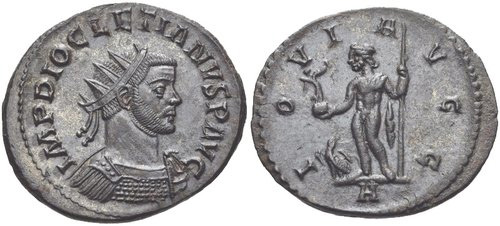
 Living the Bible