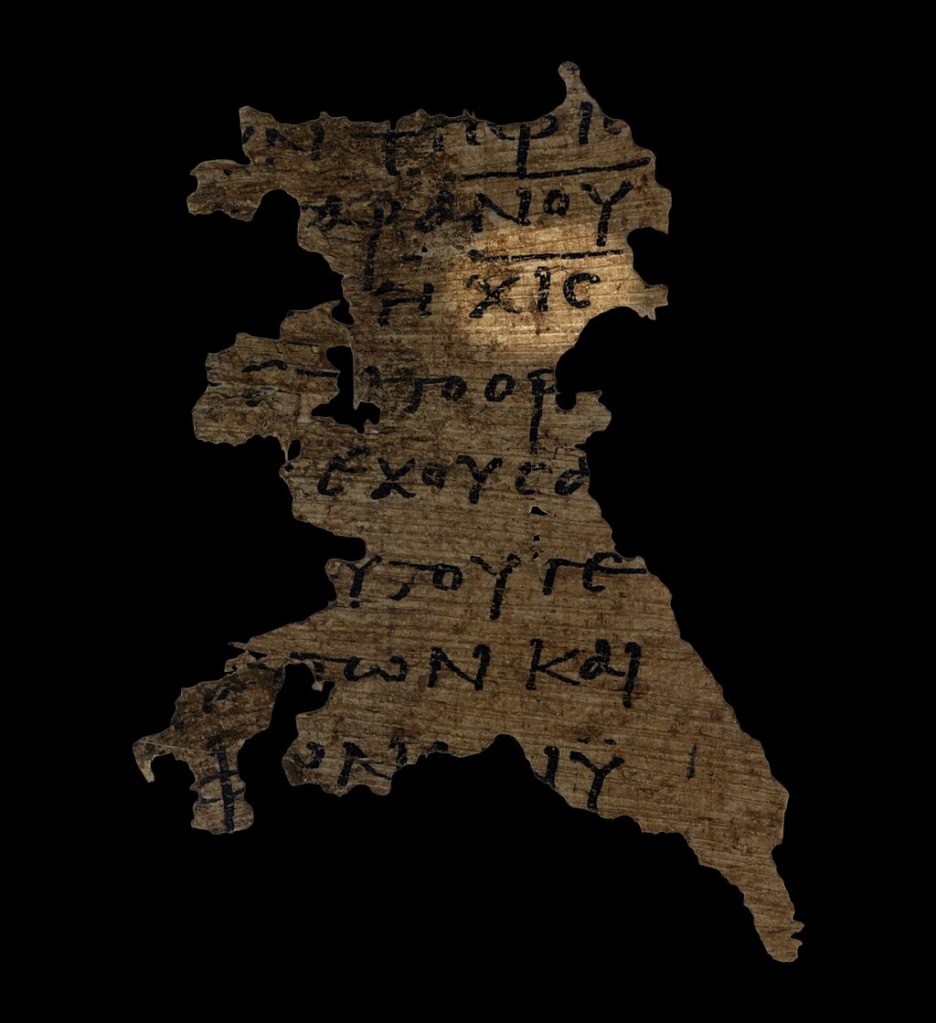
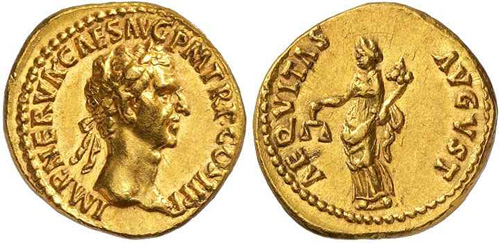
The Theodosian Code is one of the most important documents for understanding what happened when Christianity became part of the machinery of Roman government.
It is not a sermon like John Chrysostom’s preaching. It is not a creed like the Nicene Creed. It is not a church council like Nicaea or Constantinople. It is a law code, compiled in the fifth century under Theodosius II, gathering imperial constitutions from Constantine onward.
That distinction matters because people often confuse Theodosius I’s laws of 380 and 381 with the later Theodosian Code. Theodosius I issued the famous laws that defined Catholic Christianity and handed churches to Nicene bishops. Theodosius II, more than a century later, ordered those earlier laws to be gathered into a formal code.
So when we read Book XVI of the Theodosian Code, we are not reading one decree from one year. We are reading a long legal memory. Constantine’s privileges for clergy, Constantius’s laws against sacrifice, Valentinian and Valens’s rules about church disputes, Theodosius I’s Nicene settlement, Honorius’s synagogue laws, and Theodosius II’s later anti-heresy laws all appear together in one imperial collection.
That is what makes the code so revealing. It does not show Christianity entering Roman law all at once. It shows Christianity becoming legal, administrative, institutional, and coercive over time.
A Timeline of the Christian Laws in the Code
Before reading the laws thematically, it helps to see the chronology.
The laws were not all issued by Theodosius II. He compiled them into the code. The actual laws came from many emperors, beginning with Constantine and continuing through Theodosius II and Valentinian III.
| Date | Issuing emperor or emperors | Code location | What the law does | Why it appears at that moment |
|---|---|---|---|---|
| Early fourth century | Constantine | CTh. XVI.2.2 | Exempts clerics from public duties | After Christianity is legalized and favored, clergy become a protected public class. |
| 326 | Constantine | CTh. XVI.5.1 | Limits religious privileges to Catholics, not heretics or schismatics | Once the state gives privileges to the Church, it has to decide who qualifies. |
| 341 | Constantius II and Constans | CTh. XVI.10.2 | Condemns sacrifice as superstition and madness | Constantine’s sons begin using Christian imperial authority against traditional sacrifice. |
| 346, in the transmitted dating | Constantius II and Constans | CTh. XVI.10.4 | Orders temples closed and sacrifices forbidden | The state moves from Christian favor toward direct suppression of public pagan cult. |
| 373 | Valentinian I, Valens, and Gratian | CTh. XVI.6.1 | Condemns illicit repetition of baptism | The empire is drawn into Christian disputes, especially over rebaptism and rival churches. |
| 376 | Gratian, Valentinian II, and Valens | CTh. XVI.2.23 | Gives church disputes to bishops and synods, while criminal cases remain with judges | Christian institutions now require formal jurisdictional rules. |
| 377 | Gratian, Valentinian II, and Valens | CTh. XVI.6.2 | Condemns rebaptism and restores churches to Catholics | The law protects Catholic sacramental boundaries, especially against Donatist practice. |
| 379 | Gratian, Valentinian II, and Theodosius I | CTh. XVI.5.5 | Orders heresies to be silent and attacks rebaptism | Theodosius I has just entered imperial rule in the East, where church conflict is intense. |
| 380 | Gratian, Valentinian II, and Theodosius I | CTh. XVI.1.2 | Defines the approved faith as Catholic, Trinitarian, and apostolic | Theodosius I establishes Nicene Christianity as the official standard for imperial religion. |
| 381 | Gratian, Valentinian II, and Theodosius I | CTh. XVI.5.6 | Bars heretics from mysteries and defines the Nicene faith | The law reinforces the Nicene settlement around the time of the Council of Constantinople. |
| 381 | Gratian, Valentinian II, and Theodosius I | CTh. XVI.7.1 | Removes testamentary rights from Christians who become pagans | Once Christianity is the legal norm, abandoning it becomes a civil offense. |
| 381 | Gratian, Valentinian II, and Theodosius I | CTh. XVI.1.3 | Gives churches to Nicene bishops | After defining the faith, the empire decides who controls church property. |
| 381 | Gratian, Valentinian II, and Theodosius I | CTh. XVI.10.7 | Punishes forbidden sacrifice and divination | Nicene consolidation is paired with renewed suppression of pagan ritual. |
| 382 | Gratian, Valentinian II, and Theodosius I | CTh. XVI.10.8 | Preserves a temple as an art/public building while banning sacrifice | The empire sometimes preserves classical civic culture while stripping it of cultic use. |
| 383 | Gratian, Valentinian II, and Theodosius I | CTh. XVI.7.2 | Says Christians who enter pagan rites lose the power to make wills | Apostasy is treated as a loss of Roman legal standing. |
| 388 | Valentinian II, Theodosius I, and Arcadius | CTh. XVI.4.2 | Forbids public religious debate | Religious controversy is treated as a public-order danger. |
| 390 | Valentinian II, Theodosius I, and Arcadius | CTh. XVI.3.1 | Orders monks into deserted places | Monastic movements have become visible enough for the state to regulate. |
| 391 | Valentinian II, Theodosius I, and Arcadius | CTh. XVI.10.10 | Forbids sacrifice, temple visitation, and idol worship | Theodosius I intensifies the campaign against pagan cult. |
| 391 | Valentinian II, Theodosius I, and Arcadius | CTh. XVI.10.11 | Closes temple access, especially in Egypt | The state targets living centers of pagan worship. |
| 392 | Theodosius I and Arcadius | CTh. XVI.3.2 | Restores monks’ access to cities | The previous restriction on monks is reversed as too broad or impractical. |
| 392 | Theodosius I and Arcadius | CTh. XVI.4.3 | Punishes those who disturb the Catholic faith and the people | Catholic unity is now treated as part of civic order. |
| 392 | Theodosius I and Arcadius | CTh. XVI.10.12 | Forbids sacrifice, household rites, incense, lamps, and garlands | The law reaches beyond public temples into private ritual practice. |
| 393 | Theodosius I, Arcadius, and Honorius | CTh. XVI.8.9 | Says Judaism is not prohibited and restrains attacks on synagogues | Christian dominance produces violence that the state tries to control. |
| 399 | Arcadius and Honorius | CTh. XVI.10.16 | Orders rural temples destroyed without tumult | After Theodosius I, enforcement continues under his sons. |
| 399 | Arcadius and Honorius | CTh. XVI.11.1 | Gives religious matters to bishops, ordinary cases to judges | The code clarifies the relationship between church authority and civil jurisdiction. |
| 412 | Honorius and Theodosius II | CTh. XVI.8.20 | Protects synagogues and Jewish Sabbath observance | The law restrains Christian seizure of Jewish property while maintaining Christian supremacy. |
| 415 | Honorius and Theodosius II | CTh. XVI.9.3 | Allows Jews to have Christian slaves only if the slaves keep their religion | Christian identity begins to alter the legal meaning of ownership. |
| 417 | Honorius and Theodosius II | CTh. XVI.9.4 | Forbids Jews from buying or receiving Christian slaves | The earlier compromise becomes a stricter religious boundary. |
| 423 | Honorius and Theodosius II | CTh. XVI.8.25; XVI.8.27 | Protects old synagogues but forbids new ones | Judaism is contained: not abolished, but not allowed to expand publicly. |
| 423 | Honorius and Theodosius II | CTh. XVI.10.24 | Forbids Christians from attacking peaceful Jews and pagans | The state restrains Christian vigilante violence. |
| 425 | Theodosius II and Valentinian III | CTh. XVI.2.47 | Restores church privileges and protects clerics from secular judgment | After western political instability, the Christian legal order is reaffirmed. |
| 426 | Theodosius II and Valentinian III | CTh. XVI.8.28 | Protects Jewish and Samaritan converts to Christianity from disinheritance | Conversion into Christianity is protected through inheritance law. |
| 428 | Theodosius II and Valentinian III | CTh. XVI.5.65 | Lists many heretical groups and imposes legal disabilities | The age of codification produces a more systematic legal map of heresy. |
| 435 | Theodosius II and Valentinian III | CTh. XVI.10.25 | Orders remaining temples and shrines destroyed and marked with Christian signs | Near the time of the code’s compilation, the law imagines the final removal of pagan cult space. |
This timeline shows the development clearly. Constantine’s laws begin by protecting the Church. His sons begin to attack sacrifice. Valentinian and Valens regulate disputes inside Christian communities. Theodosius I defines the Catholic faith and gives churches to Nicene bishops. Arcadius and Honorius continue the enforcement after Theodosius I’s death. Honorius and Theodosius II regulate Jews, synagogues, slaves, and religious violence. Finally, Theodosius II and Valentinian III inherit this whole legal tradition and place it inside a code.
The code therefore does not represent one sudden decision. It represents more than a century of Christian imperial law arranged into one legal book.
The Code Was Compiled Later, But It Preserved Earlier Imperial Decisions
The first thing to understand is that the Theodosian Code was not issued in 381. The law from 381 is inside the code, but the code itself was compiled later.
Theodosius II ordered the compilation in the fifth century. His commissioners gathered constitutions issued by earlier Christian emperors. When those laws entered the code, they became part of a single legal memory. A reader no longer encountered Constantine, Constantius, Valens, Theodosius I, Honorius, and Theodosius II as disconnected rulers. He encountered them as parts of one Christian Roman legal tradition.
That is why the code matters so much. It does not simply preserve isolated religious decrees. It arranges them into a story of Christian government.
The early laws ask how clergy should be treated. Then the laws ask how heretics should be excluded from privileges. Then they ask how sacrifice should be punished. Then they ask which Christians are Catholic. Then they ask who owns churches. Then they ask how apostates, Jews, pagans, monks, slaves, synagogues, temples, bishops, and public festivals should fit inside the Christian empire.
The code is not only a record of laws. It is a map of what late Roman government thought Christianity required.
Constantine: Once Christianity Was Favored, the Empire Had to Define Who Benefited
The story begins with Constantine because his conversion and patronage changed the legal position of the Church. Once Christianity was no longer persecuted, Christians did not merely receive freedom. Churches received property. Clergy received privileges. Bishops received recognition.
That created an immediate legal problem: if the state gives privileges to the Church, who exactly counts as the Church?
One Constantinian law exempts clerics from public duties.
“Those who devote the ministries of religion to divine worship, that is, those who are called clerics, shall be excused from all public duties, so that they may not be drawn away from divine services by the sacrilegious envy of certain persons.”
Theodosian Code, XVI.2.2, Constantine, early fourth century.
This is one of the earliest signs of Christianity becoming a protected institution. Clergy are not treated simply as private religious men. Their service is valuable enough that the state protects their time. Public burdens are lifted from them so that divine worship may continue undisturbed.
But this privilege raised another question. Could every Christian group claim the same benefits? Could schismatics and heretics claim exemptions meant for Catholic clergy?
A later Constantinian law answers no.
“The privileges that have been granted in consideration of religion ought to benefit only the observers of the Catholic law. We desire that heretics and schismatics not only be alien from these privileges, but also be bound and subjected to various public burdens.”
Theodosian Code, XVI.5.1, Constantine, September 1, 326.
This is the beginning of a pattern that runs through Book XVI. Imperial favor creates legal boundaries. The state does not simply say, “Christians are protected.” It says that the privileges granted for religion belong to those who observe the Catholic law.
That explains why this law appears so early. Constantine’s government had made Christianity legally important. But once Christianity mattered to taxation, public service, property, and status, the state needed to distinguish approved Christians from disapproved Christians.
The code’s later laws against heresy grow out of that first Constantinian problem.
Constantius and Constans: Pagan Sacrifice Becomes a Legal Target
The next stage belongs to Constantine’s sons, especially Constantius II and Constans. Under them, the law turns more directly against traditional sacrifice.
One law says:
“Let superstition cease. Let the madness of sacrifices be abolished. Whoever, contrary to the law of our divine father and this command of our clemency, dares to celebrate sacrifices, let fitting vengeance and present sentence be brought against him.”
Theodosian Code, XVI.10.2, Constantius II and Constans, 341.
The language is important. Sacrifice is not treated as a venerable ancestral rite. It is called superstition. It is called madness. The law presents pagan ritual as something the Christian emperors must abolish.
A later law goes further and orders temples closed.
“It has pleased us that in all places and in all cities the temples be closed immediately, and that access be forbidden to all, so that the opportunity of sinning may be denied to the lost. We also desire that all abstain from sacrifices. If anyone should perhaps perpetrate anything of this kind, let him be struck down by the avenging sword.”
Theodosian Code, XVI.10.4, Constantius II and Constans, 346, according to the transmitted dating.
These laws appear when imperial Christianity is still young. The emperors are not yet producing the full Nicene legal order of Theodosius I, but they are already using Christian moral language against public pagan cult. The target is especially sacrifice, because sacrifice was the visible ritual center of the older Roman religious order.
This is why the anti-sacrifice laws belong so early in the timeline. Once Christian emperors saw themselves as guardians of true worship, traditional sacrifice became not merely old-fashioned but offensive to divine and imperial law.
Valentinian, Valens, and Gratian: The Empire Regulates Church Disputes
The next stage is less dramatic but extremely important. Under Valentinian I, Valens, Gratian, and Valentinian II, the empire increasingly has to manage Christian disputes from the inside.
One of the recurring issues is rebaptism. Some Christian groups, especially in the Donatist controversy, insisted that baptism outside their communion was invalid and therefore had to be repeated. Catholic authorities rejected this and insisted on one baptism.
The code preserves a law against repeating baptism.
“We judge that a bishop who has doubled the sanctity of baptism by illicit usurpation, and has contaminated that grace by repeating it against the institutions of all, is unworthy of the priesthood.”
Theodosian Code, XVI.6.1, Valentinian I, Valens, and Gratian, February 20, 373.
This law shows the empire enforcing a sacramental boundary. Baptism is not left as a matter of local custom or rival ecclesiastical opinion. A bishop who repeats baptism is declared unworthy of office.
Another law condemns rebaptism even more explicitly.
“We condemn the error of those who, trampling on the precepts of the apostles, do not purify but defile those who have received the sacraments of the Christian name by another baptism, polluting them under the name of washing.”
Theodosian Code, XVI.6.2, Gratian, Valentinian II, and Valens, October 17, 377.
Then the same law orders churches restored to the Catholic side.
“Your authority shall command them to cease from their miserable errors, with the churches which they hold against the faith being restored to the Catholic Church. For the institutions of those men are to be followed who have approved the apostolic faith without changing baptism.”
Theodosian Code, XVI.6.2, Gratian, Valentinian II, and Valens, October 17, 377.
The reason these laws appear when they do is that the Christian empire is no longer dealing only with paganism outside the Church. It is dealing with competing Christian claims inside the Church. Rival bishops, rival baptisms, and rival church buildings create legal disputes. The state responds by deciding which sacramental practice is legitimate and which church body is legally Catholic.
The same period also produces rules about ecclesiastical jurisdiction. A law from 376 gives church disputes to bishops and clergy, while preserving criminal matters for imperial judges.
“Whenever disputes arise among clerics from matters pertaining to religious observance, this rule shall be especially observed: when the diocesan presbyters have been summoned by the bishop, the matters that have come into controversy shall be ended by their judgment. But if anything criminal is alleged, it shall be brought to the notice of the judge in the city where the matter is being handled, so that his sentence may punish what is proved to have been criminally committed.”
Theodosian Code, XVI.2.23, Gratian, Valentinian II, and Valens, 376.
This law helps explain the direction of the code. Christian institutions had become large enough and public enough that they needed procedure. Bishops and synods could handle religious disputes among clerics. Criminal matters still belonged to ordinary judges. The empire was learning how to place church authority and civil authority inside the same legal system.
Theodosius I in 380: The Empire Names the Catholic Faith
The most famous law in Book XVI is the Edict of Thessalonica, issued in 380 by Gratian, Valentinian II, and Theodosius I. This is the law people usually mean when they say Theodosius made Nicene Christianity the official faith of the empire.
The law begins by addressing all peoples under imperial rule.
“We desire that all the peoples whom the rule of our clemency governs should live in that religion which the divine apostle Peter delivered to the Romans, as the religion handed down by him declares even now, and which it is clear that Pope Damasus follows, and Peter, bishop of Alexandria, a man of apostolic holiness.”
Theodosian Code, XVI.1.2, Gratian, Valentinian II, and Theodosius I, February 27, 380.
This opening does not describe Christianity in vague terms. It identifies the approved religion by apostolic origin and by communion with named bishops. The faith is linked to Peter, Rome, Damasus, and Peter of Alexandria. The law is therefore both theological and ecclesiastical. It says that true Christianity can be recognized by doctrine and by communion.
Then it defines the doctrine.
“That is, according to apostolic discipline and evangelical teaching, we shall believe in the one deity of the Father, the Son, and the Holy Spirit, under equal majesty and under the holy Trinity.”
Theodosian Code, XVI.1.2, Gratian, Valentinian II, and Theodosius I, February 27, 380.
This is where the law becomes unmistakably Nicene and Trinitarian. The approved faith is not Christianity in general. It is the confession of Father, Son, and Holy Spirit in one deity and equal majesty.
Then the law gives that identity a legal name.
“We command that those who follow this law shall embrace the name of Catholic Christians.”
Theodosian Code, XVI.1.2.1, Gratian, Valentinian II, and Theodosius I, February 27, 380.
The phrase “Catholic Christians” is not merely devotional here. It is a legal classification. The law says who may bear the name.
Then it says what happens to those who do not.
“But the rest, whom we judge demented and insane, shall bear the disgrace of heretical teaching. Their meeting places shall not receive the name of churches. They are to be punished first by divine vengeance, and afterward by the retribution of our own action, which we have taken up from heavenly judgment.”
Theodosian Code, XVI.1.2.1, Gratian, Valentinian II, and Theodosius I, February 27, 380.
The reason this law appears in 380 is that Theodosius I had just become emperor in the East, where church politics were divided and the Nicene position still needed imperial backing. The law provided a standard for the eastern empire: the Catholic faith was Trinitarian, Nicene, apostolic, and connected to approved bishops.
This is not simply a law about private belief. It is a law about public religious order.
Theodosius I in 381: Churches Belong to Nicene Bishops
The law you were thinking of earlier, the one from 381, comes next in the code. It is closely related to the Edict of Thessalonica, but it does something more concrete. It tells the empire who gets the churches.
The law begins with a command about church property.
“We command that all churches be handed over at once to those bishops who confess the Father, the Son, and the Holy Spirit as of one majesty and power, of the same glory and one splendor, making no profane division, but maintaining the order of the Trinity by the assertion of the persons and the unity of the divinity.”
Theodosian Code, XVI.1.3, Gratian, Valentinian II, and Theodosius I, July 30, 381.
The sentence is dense because it is doing several things at once. It defines orthodoxy in Trinitarian language. It requires confession of Father, Son, and Holy Spirit. It rejects “profane division.” It insists on both the distinction of persons and the unity of divinity.
But the legal point is possession. Churches are to be handed over to bishops who confess this faith.
Then the law turns to those outside that communion.
“All who dissent from the communion of faith of those whom this special mention has named shall be expelled from the churches as manifest heretics. From now on, no power or opportunity shall be granted to them for possessing churches, so that the priesthoods of the true and Nicene faith may remain pure.”
Theodosian Code, XVI.1.3, Gratian, Valentinian II, and Theodosius I, July 30, 381.
This law appears in 381 because the empire had moved from defining the faith to enforcing possession. The Council of Constantinople met in the same year and reaffirmed the Nicene faith in the East. The law then gave imperial force to the Nicene settlement by deciding who could lawfully hold churches.
That is why this law matters so much. It is not only about doctrine. It is about buildings, bishops, communion, and legal control. The empire does not merely say what Christians should believe. It determines which Christian leaders may occupy the churches of the empire.
Theodosius I Also Turned Apostasy Into a Civil Disability
Once the empire had legally named Catholic Christianity, it also began to punish those who abandoned it. The title “On Apostates” contains laws aimed especially at Christians who returned to pagan rites or sacrifices.
A law from 381 says:
“From those who have become pagans after being Christians, the ability and right of making a will shall be taken away, and every testament of the deceased, if any exists, shall be rescinded without condition.”
Theodosian Code, XVI.7.1, Gratian, Valentinian II, and Theodosius I, May 2, 381.
Another law from 383 expands the penalty.
“For Christians and believers who have migrated to pagan rites and cults, we forbid every power of making a will in favor of any person whatever, so that they shall be without Roman right.”
Theodosian Code, XVI.7.2, Gratian, Valentinian II, and Theodosius I, May 20, 383.
The phrase “without Roman right” shows how serious apostasy had become in the Christian empire. Religious departure now affected civil standing. A Christian who moved into pagan rites could lose the power to make a will.
The timing is important. These apostasy laws appear immediately after the empire has legally defined Catholic Christianity and assigned churches to Nicene bishops. Once Christian identity becomes a legal norm, leaving that identity is no longer treated as a merely private spiritual failure. It becomes a civil offense with consequences for property, inheritance, and status.
A later law from 426 continues this logic.
“The sacrilegious name of apostates shall be pursued by the continual voice of accusation against each of them, and the investigation of this crime shall be barred by no limits of time.”
Theodosian Code, XVI.7.7, Theodosius II and Valentinian III, April 7, 426.
Then it clarifies the type of apostasy especially being targeted.
“But lest the interpretation of this crime wander too widely through uncertain error, by the present ordinance we pursue those who, after putting on the name of Christianity, have either performed sacrifices or ordered sacrifices to be performed.”
Theodosian Code, XVI.7.7.3, Theodosius II and Valentinian III, April 7, 426.
This later law shows that the issue had not disappeared. The Christian empire continued to worry about baptized people participating in sacrifice. The code treats that as a betrayal not only of religion but of legal identity.
Theodosius I and Pagan Sacrifice: Pure Prayer Against Forbidden Rites
The laws against pagan sacrifice become especially intense under Theodosius I.
A law from December 381 punishes forbidden sacrifices and divination.
“If anyone, by day or night, like a madman and sacrilegious person, has plunged himself into forbidden sacrifices and made himself a consulter of uncertain things, and believes that a shrine or temple should be used for the execution of this kind of crime, let him know that he is to be subjected to confiscation.”
Theodosian Code, XVI.10.7, Gratian, Valentinian II, and Theodosius I, December 21, 381.
Then the law gives the religious principle behind the penalty.
“For by just instruction we warn that God must be worshiped with pure prayers, not profaned with dreadful songs.”
Theodosian Code, XVI.10.7, Gratian, Valentinian II, and Theodosius I, December 21, 381.
This sentence shows the theology of the law. There is true worship, offered to God with pure prayers. There is false worship, associated with sacrifice, divination, and dreadful songs. The code is not neutral. It has a Christian vision of worship, and that vision becomes enforceable law.
A law from 391 goes further.
“No one shall pollute himself with sacrificial victims. No one shall slaughter an innocent victim. No one shall approach shrines, wander through temples, or look up at images formed by mortal work, lest he become guilty under divine and human laws.”
Theodosian Code, XVI.10.10, Valentinian II, Theodosius I, and Arcadius, February 24, 391.
The phrase “divine and human laws” is important. Pagan ritual is now criminal in both registers. It offends God, and it offends the state.
Another law from 392 reaches into household ritual.
“No person at all, of whatever class or order of men, whether placed in power or having completed an honor, whether powerful by birth or humble by family and condition, in no place at all and in no city, shall sacrifice to senseless images, slaughter an innocent victim, or with a more secret guilt venerate the household god with fire, the genius with wine, the household spirits with incense, lighting lamps, placing incense, or hanging garlands.”
Theodosian Code, XVI.10.12, Theodosius I and Arcadius, November 8, 392.
This law appears after the empire has already forbidden public sacrifice and temple worship. The concern now extends into domestic and private ritual. Lamps, incense, garlands, household gods, and the genius of the home all enter the language of prohibition.
The law continues:
“If anyone should dare to sacrifice a victim or consult breathing entrails, he shall be accused by anyone permitted to accuse and receive a fitting sentence as one guilty according to the example of treason, even if he has asked nothing against the safety of the emperors or about their safety.”
Theodosian Code, XVI.10.12.1, Theodosius I and Arcadius, November 8, 392.
That comparison to treason shows how far the legal imagination has moved. Sacrifice is not merely mistaken worship. It is treated as a danger to the order of the empire, even when the person has not asked anything about the emperor’s life or reign.
Temples Could Be Preserved as Art, But Not as Living Cult
The code’s temple policy is more complicated than a simple command to destroy every temple immediately. Some laws preserve temple buildings when they are treated as civic monuments or works of art. Other laws order destruction when temples remain centers of pagan cult.
A law from 382 preserves a temple because of the artistic value of the images inside it.
“We decree by public counsel that a temple once dedicated to public assembly, and now common also to the people, in which images are said to be placed that must be measured by the value of their art rather than by divinity, shall remain continually open.”
Theodosian Code, XVI.10.8, Gratian, Valentinian II, and Theodosius I, November 30, 382.
Then it adds the limit.
“Let the temple be open in such a way that the use of forbidden sacrifices is not believed to have been permitted by the opportunity of this access.”
Theodosian Code, XVI.10.8, Gratian, Valentinian II, and Theodosius I, November 30, 382.
This law appears at a moment when the empire is trying to separate classical civic culture from living pagan worship. The building may remain. The art may remain. Public access may remain. But sacrifice may not return.
That distinction matters because Christianization did not always mean immediate demolition. Sometimes it meant stripping a place of cultic meaning while keeping its civic or artistic value.
But later laws become more destructive, especially against rural temples.
“If there are any temples in the fields, let them be torn down without disturbance and tumult. For when these have been thrown down and removed, all material for superstition will be consumed.”
Theodosian Code, XVI.10.16, Arcadius and Honorius, July 10, 399.
This law appears after Theodosius I’s death, under his sons Arcadius and Honorius. The anti-pagan policy continues, but the phrase “without disturbance and tumult” shows that enforcement itself could produce disorder. The state wants temples removed, but it does not want uncontrolled riot.
By 435, the law speaks as though remaining pagan shrines should finally disappear.
“We forbid all abominable immolations of victims of a pagan and criminal mind, all condemned sacrifices, and all other things prohibited by the authority of earlier sanctions. We command that all their shrines, temples, and sanctuaries, if any still remain intact, be destroyed by order of the magistrates and expiated by the placing of the sign of the venerable Christian religion.”
Theodosian Code, XVI.10.25, Theodosius II and Valentinian III, November 14, 435.
This law belongs close to the era of codification itself. It looks back on earlier sanctions and imagines a final purification of sacred space. Remaining temples and shrines are to be destroyed by magistrates and marked with the Christian sign.
That is a late stage in the timeline. The earliest anti-sacrifice laws attacked ritual. Later laws closed temples. Later still, the law imagined the physical destruction and Christian marking of the remaining sacred landscape.
Heresy Becomes a Legal Disability
The title “On Heretics” is one of the longest and harshest parts of Book XVI. Its development makes sense only when read chronologically.
At first, as under Constantine, the issue is privilege. Heretics and schismatics should not receive benefits intended for the Catholic Church.
But under Theodosius I, the law becomes more aggressive. A law from 379 says:
“Let all heresies forbidden by divine and imperial laws be silent forever. Whoever, by punishable boldness, profanely diminishes the opinion of God shall feel what harms himself alone and shall not spread what will harm others.”
Theodosian Code, XVI.5.5, Gratian, Valentinian II, and Theodosius I, August 3, 379.
Then it turns again to baptism.
“Whoever corrupts bodies redeemed by the venerable washing and restored by death, by taking away what he repeats, let him know such things for himself alone and not destroy others by wicked instruction.”
Theodosian Code, XVI.5.5, Gratian, Valentinian II, and Theodosius I, August 3, 379.
This law appears just before the Edict of Thessalonica. Theodosius I is entering an eastern empire full of theological division. Before he formally defines the Catholic faith in 380, the law is already treating heretical teaching as something that spreads harm.
A law from January 381 defines the Nicene faith as the true standard.
“Let no place for mysteries be open to heretics. Let no opportunity be available for exercising the madness of a more obstinate mind.”
Theodosian Code, XVI.5.6, Gratian, Valentinian II, and Theodosius I, January 10, 381.
Then it states the positive rule.
“Let the crowds of all heretics be barred from illicit congregations. Let the name of the one and supreme God be celebrated everywhere. Let the observance of the Nicene faith, handed down long ago by our ancestors and confirmed by the testimony and assertion of divine religion, be held forever.”
Theodosian Code, XVI.5.6.1, Gratian, Valentinian II, and Theodosius I, January 10, 381.
Then the law gives a theological definition of the true Catholic worshiper.
“He is to be accepted as an assertor of the Nicene faith and a true worshiper of the Catholic religion who confesses Almighty God and Christ the Son of God under one name: God from God, light from light; who does not violate the Holy Spirit by denial; and in whom, by the sense of undefiled faith, the undivided substance of the incorrupt Trinity remains strong.”
Theodosian Code, XVI.5.6.2, Gratian, Valentinian II, and Theodosius I, January 10, 381.
This is law doing theology. It does not merely prohibit disorderly assemblies. It defines true worship through the language of Nicene faith.
The reason this law appears in 381 is that the empire is preparing to enforce Nicene unity. The Council of Constantinople belongs to the same year. The law and the council both belong to the larger Theodosian project of making Nicene Christianity the standard of imperial religion.
By 428, the code’s heresy laws have become far more systematic. A law of Theodosius II and Valentinian III names group after group and imposes civil disabilities.
“Arians, Macedonians, and Apollinarians shall be permitted to have no church within any city. Novatians and Sabbatians shall have all license of innovation taken away from them if they should attempt any. But Eunomians, Valentinians, Montanists or Priscillianists, Phrygians, Marcianists, Borborians, Messalians, Euchites or Enthusiasts, Donatists, Audians, Hydroparastatae, Tascodrogitae, Photinians, Paulians, Marcellians, and those who have descended to the very lowest depth of wickedness, the Manichaeans, shall have no faculty of meeting and praying anywhere on Roman soil.”
Theodosian Code, XVI.5.65.2, Theodosius II and Valentinian III, May 30, 428.
Then it turns from worship to civil law.
“No right of making donations to one another shall be granted to them, no right of testament or final will at all. They shall not be able to meet in public, build churches for themselves, or devise anything to evade the laws.”
Theodosian Code, XVI.5.65.3, Theodosius II and Valentinian III, May 30, 428.
This law appears in the generation of codification. Theodosius II’s government was not only enforcing individual decisions. It was classifying religious deviance. It was creating a legal map of heresy in which different groups could be named, disabled, excluded, and prevented from assembling.
That is the difference between the early and later stages. Constantine’s law asks who gets privileges. Theodosius I’s laws define the Nicene faith. Theodosius II’s law catalogs heretical groups and assigns legal consequences to them.
Baptism Becomes a Boundary the State Will Enforce
The code’s title “That Holy Baptism Not Be Repeated” shows how sacramental theology entered law.
A law against Donatists says:
“Those whom they call Donatists are said to have advanced to such a degree of crime that, trampling on the sacred mysteries, they have repeated holy baptism with harmful rashness and have infected with the profane contagion of repetition those who, as tradition teaches, were once washed by the gift of divinity.”
Theodosian Code, XVI.6.4, Honorius and Arcadius, February 12, 405.
Then it gives the penalty.
“By this law we sanction that whoever hereafter is detected rebaptizing shall be offered to the judge who presides over the province, so that, punished by the confiscation of all his property, he may pay the penalty of poverty by which he shall be afflicted forever.”
Theodosian Code, XVI.6.4, Honorius and Arcadius, February 12, 405.
This law appears in the early fifth century because the Donatist controversy was still a legal and ecclesiastical problem, especially in North Africa. The state saw rebaptism not merely as a mistaken ritual but as an attack on the unity and sacramental identity of the Catholic Church.
The law even protects enslaved people who are forced into rebaptism.
“So that it may not be free to conceal within domestic walls the conscience of a sacrilegious crime that has been committed, slaves, if they are perhaps compelled to be rebaptized, shall have the right to flee to the Catholic Church.”
Theodosian Code, XVI.6.4.2, Honorius and Arcadius, February 12, 405.
Then it gives the principle.
“It is especially fitting that all people, without any distinction of condition or status, should be guardians of the sanctity infused from heaven.”
Theodosian Code, XVI.6.4.2, Honorius and Arcadius, February 12, 405.
The law does not abolish slavery, but it does say that baptismal sanctity crosses social status. Even slaves are described as guardians of heavenly sanctity. A master’s household cannot be used to hide sacramental violation.
This is a good example of why the code matters. It shows theology becoming enforceable through property penalties, judicial procedure, and even rules about slaves fleeing to the Catholic Church.
Judaism Is Restricted, But Synagogues Are Also Protected
The laws on Jews, Samaritans, and related groups are complicated. The code restricts Jewish public influence, protects conversion from Judaism to Christianity, limits synagogue construction, and regulates Jewish ownership of Christian slaves. But it also repeatedly forbids Christians from destroying synagogues or attacking Jews.
A law from 393 states plainly that Judaism is not prohibited by law.
“It is sufficiently established that the sect of the Jews is prohibited by no law. Therefore we are gravely disturbed that in certain places their assemblies have been forbidden.”
Theodosian Code, XVI.8.9, Theodosius I, Arcadius, and Honorius, September 29, 393.
Then it restrains Christians who attack synagogues.
“Your sublime greatness, having received this order, shall restrain with fitting severity the excess of those who, under the name of the Christian religion, presume unlawful things and attempt to destroy and plunder synagogues.”
Theodosian Code, XVI.8.9, Theodosius I, Arcadius, and Honorius, September 29, 393.
This law appears because Christian dominance could produce Christian violence. Once the state had exalted Catholic Christianity, some Christians acted as though religious zeal gave them permission to seize or destroy Jewish places of worship. The law rejects that. It does not create religious equality, but it insists that punishment and regulation belong to imperial authority, not to mobs.
A later law from 412 protects synagogue property.
“No one shall dare to violate or occupy and hold those places which are known to be frequented by Jewish assemblies and which are called synagogues, since all persons ought to retain their own possessions by undisturbed right, without dispute over religion and worship.”
Theodosian Code, XVI.8.20, Honorius and Theodosius II, July 26, 412.
Then it protects Sabbath observance from legal harassment.
“Since old custom and usage have preserved for the Jewish people the sacred day of the Sabbath, we judge that this also must be forbidden: that no agreement, under pretext of public or private business, should bind a person on that day of observance.”
Theodosian Code, XVI.8.20.1, Honorius and Theodosius II, July 26, 412.
This is not modern religious liberty. Jews are still subordinated inside a Christian legal order. But the law does preserve existing Jewish worship and property against unlawful Christian interference.
At the same time, later laws restrict Jewish expansion.
“No synagogues shall hereafter be built at once; the old ones shall remain in their existing form.”
Theodosian Code, XVI.8.25.2, Honorius and Theodosius II, February 15, 423.
Another law repeats the policy.
“They shall not ever be permitted to build new synagogues, nor shall they fear that the old ones will be taken from them.”
Theodosian Code, XVI.8.27, Honorius and Theodosius II, June 8, 423.
This is the code’s Jewish policy in miniature. Existing synagogues may remain. New synagogues may not be built. Jewish worship is not abolished, but it is contained.
That is why these laws belong to the early fifth century. By then the empire was overwhelmingly Christian in its public legal language, but Jewish communities remained part of Roman society. The state tried to subordinate them without allowing uncontrolled Christian violence to replace law.
Converts to Christianity Receive Inheritance Protection
The code also protects Jews and Samaritans who convert to Christianity from being punished by their families through inheritance.
A law from 426 says:
“If the son or daughter, grandson or granddaughter, one or more, of Jews or Samaritans should migrate by better counsel from the darkness of their own superstition to the light of the Christian religion, their parents or grandparents shall not be allowed to disinherit them, pass them over in silence in a will, or leave them less than they could have received if called to inherit without a will.”
Theodosian Code, XVI.8.28, Theodosius II and Valentinian III, April 8, 426.
The language is openly hostile toward Judaism and Samaritan religion, describing them as darkness and Christianity as light. But legally the point is inheritance. Conversion into Christianity cannot be punished by disinheritance.
This law belongs to the same fifth-century world as the synagogue laws. The state is not only regulating public worship. It is entering the family. A son, daughter, grandson, or granddaughter who becomes Christian must not lose the expected legal share because of conversion.
Christian identity is now protected through private law.
Christian Slaves Change the Rules of Ownership
The code also contains a title saying that Jews must not possess Christian slaves. These laws are among the clearest examples of how Christian identity affected slavery without abolishing slavery.
One early law says that if a Jewish owner circumcises a Christian slave, the slave receives freedom.
“If any Jew should buy and circumcise a Christian slave, or a slave of any other sect, he shall not keep the circumcised person in slavery; the one who has endured this shall obtain the privileges of liberty.”
Theodosian Code, XVI.9.1, Constantine, fourth century.
A later law from 415 permits Jewish masters to have Christian slaves, but only under a condition.
“We command, without false accusation, that Jewish masters may have Christian slaves, with this condition alone permitted: that they allow them to preserve their own religion.”
Theodosian Code, XVI.9.3, Honorius and Theodosius II, November 6, 415.
Two years later, the law becomes stricter.
“A Jew shall not buy a Christian slave, nor receive one under title of generosity. Whoever does not observe this shall lose the ownership which he has rashly acquired, and the slave himself, if he freely publishes what has been done, shall be given liberty as a reward.”
Theodosian Code, XVI.9.4, Honorius and Theodosius II, April 10, 417.
Then a law from 423 says:
“Let no one dare to purchase Christian slaves for Jews. For we judge it wicked that most religious servants should be stained by the ownership of most impious buyers.”
Theodosian Code, XVI.9.5, Honorius and Theodosius II, April 9, 423.
These laws appear in the same period as the synagogue restrictions because the fifth-century Christian empire was defining the legal consequences of religious hierarchy. Christian slaves under Jewish ownership seemed to the state like a contradiction. The slave was socially subordinate, but religiously part of the dominant Christian order. The owner was legally a master, but religiously subordinated in the Christian imagination of the code.
The result is not abolition. It is a religious restructuring of ownership. Christian identity limits what a non-Christian master may do, and in some cases it can even become the basis for freedom.
Christian Law Also Restrains Christian Violence
One of the most important laws in Book XVI is not a law against pagans, Jews, or heretics. It is a law against Christians who misuse religion as an excuse for violence.
A law from 423 says:
“We especially command this to Christians, whether they truly are Christians or are merely said to be: they must not dare, under abuse of religious authority, to lay hands on Jews and pagans who are living quietly and attempting nothing disorderly or contrary to the laws.”
Theodosian Code, XVI.10.24.1, Honorius and Theodosius II, June 8, 423.
Then it gives the penalty for plunder.
“If they have been violent against secure persons, or have plundered their goods, they shall be compelled not only to restore what they took, but after being sued to pay threefold and fourfold what they seized.”
Theodosian Code, XVI.10.24.1, Honorius and Theodosius II, June 8, 423.
This law appears because Christian empire did not automatically mean peaceful Christian order. The state had encouraged the dominance of Catholic Christianity, but that dominance could produce unauthorized violence against Jews and pagans. The law insists that Christians may not attack people who are living quietly and violating no law.
This is one of the tensions running through the whole code. The empire suppresses sacrifice, restricts heresy, limits synagogues, and privileges the Catholic Church. But it also tries to prevent private religious violence from replacing imperial judgment.
The state wants Christian order, not religious mob rule.
Christian Time Enters Civil Law
Christianity also reshaped the calendar of public life. The code does not only regulate churches, bishops, heretics, synagogues, slaves, and temples. It regulates days.
A Sunday law says:
“On the day of the sun, which our ancestors rightly called the Lord’s day, let the intention of all lawsuits, business, and agreements wholly cease. Let no one demand a public or private debt. Let there be no hearing of disputes even before arbitrators, whether they have been demanded by judgment or chosen voluntarily. And he shall be judged not only infamous, but also sacrilegious, who turns aside from the impulse and rite of holy religion.”
Theodosian Code, II.8.18, Valentinian II, Theodosius I, and Arcadius, November 3, 386.
This law appears after Christianity has become the preferred public religion. Sunday is no longer merely a day when Christians gather. It becomes a day when lawsuits, business, agreements, debt collection, and arbitration stop.
Another law restricts public spectacles on Sunday.
“On the Lord’s day, to which the name has been given from reverence itself, neither theatrical plays, nor horse races, nor anything among spectacles that was invented to soften souls shall be celebrated in any city.”
Theodosian Code, II.8.23, Arcadius and Honorius, August 27, 399.
A later law extends the same logic to Lent, Easter, Christmas, and Epiphany.
“With regard for religion, we provide and decree that spectacles shall not be presented during the seven days of Lent, the seven paschal days, by whose observances and fasts sins are purged, nor on the birthday of the Lord, nor on Epiphany.”
Theodosian Code, II.8.24, Arcadius and Honorius, February 4, 400 or 405.
These calendar laws appear because Christianity has become public rhythm. Courts, business, debt, games, and spectacles now have to make room for Christian worship and Christian seasons.
This is one of the most practical forms of Christianization. The empire does not merely say that Christianity is true. It reorganizes public time around Christian observance.
Bishops Handle Religion, Judges Handle Ordinary Law
At the end of Book XVI, the code gives a concise rule about jurisdiction.
“Whenever religion is at issue, it is fitting that bishops handle the matter. But other cases, which pertain to ordinary judges or to the use of public law, ought to be heard according to the laws.”
Theodosian Code, XVI.11.1, Arcadius and Honorius, August 20, 399.
This law appears after decades of imperial involvement in church disputes. By 399, the state has already regulated clergy, baptism, heresy, apostasy, temple sacrifice, synagogue violence, and religious assemblies. It therefore needs a principle for who handles what.
The answer is not a modern separation of church and state. Bishops handle religious matters. Ordinary judges handle ordinary legal matters. Both exist inside the imperial legal order.
A later law says that the one true Catholic faith must be retained.
“We desire that the edict which our clemency directed concerning unity through the African regions be posted in various places, so that it may be known to all that the one and true Catholic faith of Almighty God, which right belief confesses, must be retained.”
Theodosian Code, XVI.11.2, Honorius and Arcadius, March 5, 405.
And the final law of Book XVI says:
“We command that those things which either ancient times ordained concerning the Catholic law, or the religious authority of our parents established, or our serenity strengthened, shall be preserved whole and inviolate, with new superstition removed.”
Theodosian Code, XVI.11.3, Honorius and Theodosius II, October 12, 410.
That ending is fitting. The book closes by preserving Catholic law and removing new superstition. The wording is legal, imperial, and Christian at the same time.
Why the Code Matters: Persuasion, Coercion, and the Christian Empire
The reason these laws were placed in the Theodosian Code is not hard to see once the timeline is clear.
By the fifth century, Christianity had become too important to Roman public life for its laws to remain scattered in old imperial decisions, regional rulings, and individual rescripts. The empire needed an authoritative legal collection. Bishops, judges, governors, cities, churches, landowners, slaves, converts, heretics, Jews, pagans, and clerics all now stood inside a world where religious identity could affect property, status, inheritance, public office, worship, legal privilege, and punishment.
That is why Book XVI gathers the laws thematically.
The title “On the Catholic Faith” places the definition of orthodoxy first. The title “On Bishops, Churches, and Clerics” gathers the institutional privileges of the Church. The title “On Heretics” gathers the laws that exclude rival Christian groups. The title “That Holy Baptism Not Be Repeated” preserves the Catholic sacramental boundary. The title “On Apostates” explains what happens when Christians abandon the faith. The title “On Jews, Caelicolae, and Samaritans” regulates non-Christian communities still living inside the empire. The title “That a Jew Not Possess a Christian Slave” applies religious hierarchy to ownership. The title “On Pagans, Sacrifices, and Temples” gathers the long campaign against sacrifice and pagan cult. The title “On Religion” closes by assigning religious matters to bishops and ordinary legal matters to judges.
In other words, the code does not merely preserve old laws. It organizes more than a century of Christian imperial policy into one system.
Constantine gave the Church privileges. Constantius and Constans attacked sacrifice. Valentinian, Valens, and Gratian regulated church disputes and rebaptism. Theodosius I made Nicene Catholic Christianity the imperial standard. Arcadius and Honorius continued enforcement. Honorius and Theodosius II managed the conflicts created by Christian dominance, including synagogue violence, Jewish restrictions, Christian slaves, and religious unrest. Theodosius II and Valentinian III inherited this whole tradition and gave it codified form.
But this is where the deeper question appears.
Christianity had always depended on persuasion. The apostles preached. The martyrs witnessed. The bishops exhorted. The saints argued, pleaded, rebuked, taught, and tried to move the conscience. Someone like John Chrysostom could speak with extraordinary severity, but his instrument was still the word. In On the Priesthood, he says that the wrongdoer must be corrected “not by force, but by persuasion.” That sentence captures the difference between pastoral Christianity and imperial Christianity.
Chrysostom wanted people to see sin and repent. The law wanted people to obey.
A preacher could say, “Do not go to the theater, because it wounds the soul.”
The government could say, “No spectacles on the Lord’s Day.”
A preacher could say, “Do not abandon Christ for idols.”
The government could say, “If a Christian returns to pagan rites, he loses the power to make a will.”
A preacher could say, “One baptism.”
The government could say, “The person who rebaptizes may lose his property.”
A preacher could say, “Do not worship in temples.”
The government could say, “Temples must be closed, destroyed, or marked with the Christian sign.”
A preacher could say, “The Catholic faith is true.”
The government could say, “Only those who follow this law may be called Catholic Christians, and the rest may not call their meeting places churches.”
That is the great difference this code reveals.
The saints tried to persuade the public to follow their vision of Christ. The government tried to make the public conform to it.
The Theodosian Code is therefore not simply evidence that Christianity became influential. It is evidence that Christianity became enforceable. The Trinity appears in law. Baptism becomes a legal boundary. Apostasy affects inheritance. Heresy affects property and public assembly. Sunday changes the court calendar. Church buildings are assigned to approved bishops. Pagan sacrifice becomes a crime. Synagogues are protected from mob violence but restricted from expansion. Bishops are given authority over religious matters, while judges retain ordinary public law.
This does not mean the Christian empire was only coercive. The code also restrains violence. It tells Christians not to attack peaceful Jews and pagans. It protects existing synagogues from seizure. It insists that punishment belongs to lawful authority, not to mobs acting under the name of religion. But even that restraint belongs to the same imperial framework. The state is deciding what may be tolerated, what must be punished, what must be preserved, and what must be suppressed.
That is why the Theodosian Code is such an important document for the history of Christianity. It shows the faith no longer only preached, confessed, debated, and defended, but administered.
In Chrysostom’s sermons, Christianity speaks to the conscience. In the Theodosian Code, Christianity speaks through the governor, the judge, the property register, the inheritance law, the public calendar, and the imperial command.
That is the world the code reveals: a Roman world learning to govern in Christian language, and a Christian faith now facing the danger that persuasion might be replaced by coercion.